
|
|
|
|
|
|
|---|---|---|---|---|---|
 |
 |
 |
|---|---|---|
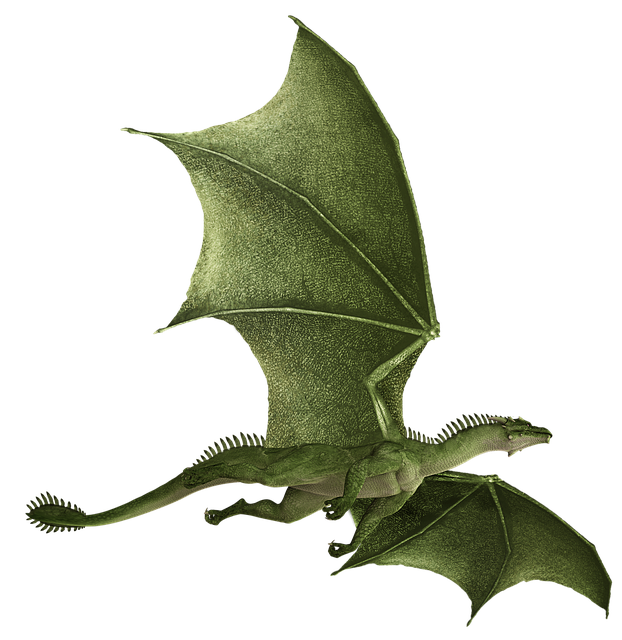
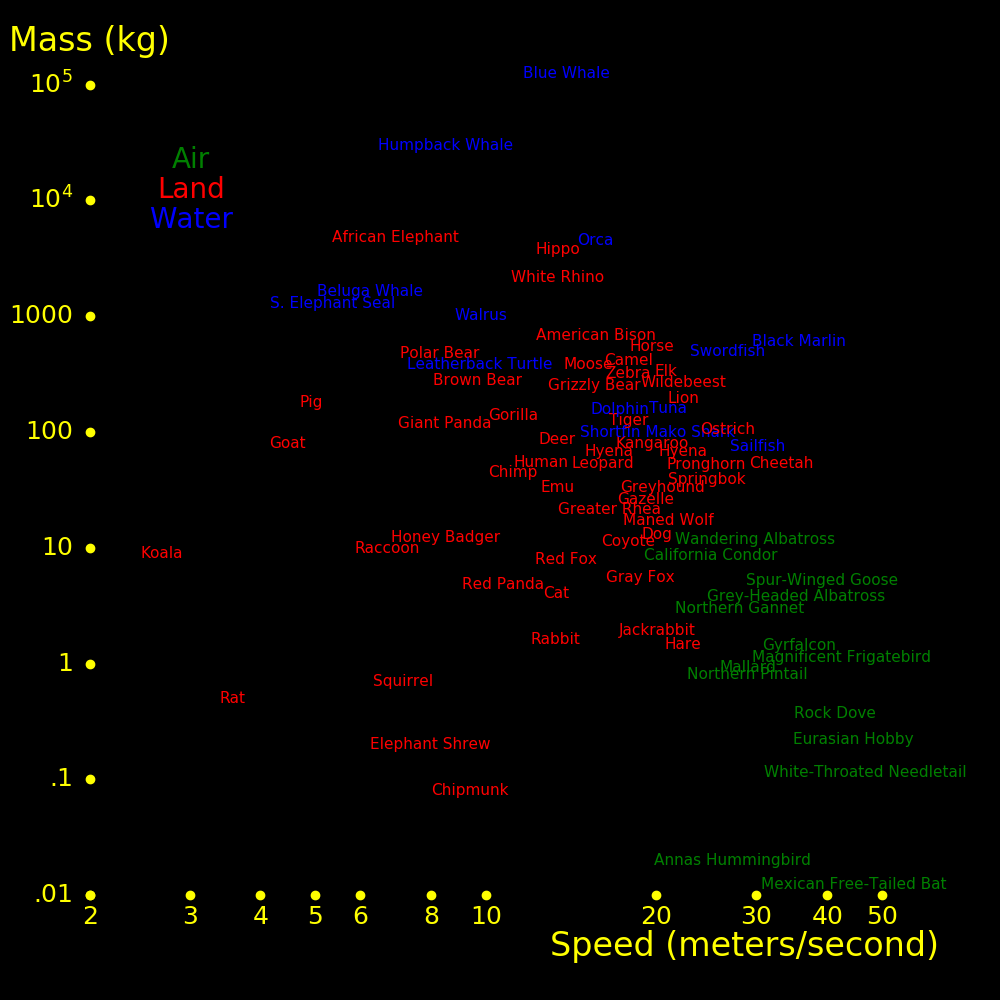
The largest flying birds have a mass of 13 kg. The laws of flight are such that the heavier you are, the harder it is to fly.
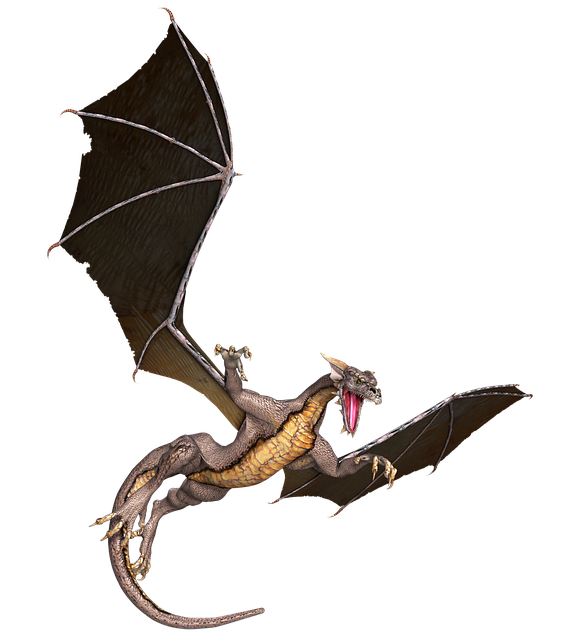
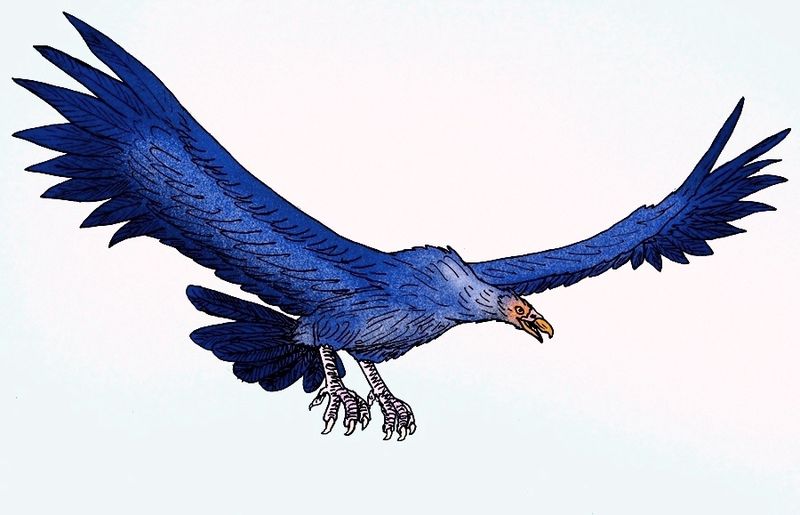
In the age of dinosaurs, it was easir to fly because the oxygen density was larger and the air density was larger. The maximum mass of a flying bird was 5.6 times larger than today, so birds of up to 73 kg could fly.
 |
|---|
For fixed-wing flight, the minimum power/mass required to fly scales as:
Mass                       =  M
Power/mass required to fly =  pfly  ~  M1/6
Define "p" as the power/mass that a bird can exert for extended duration. The mass scaling is:
Mass        =  M
Power/mass  =  p  ~  M-1/6
Define "flight prowess" as the bird power divided by the minimum power for flight "pfly". If the flight prowess is greater than 1 then the bird is capable of cruising flight.
Flight prowess = Q = p/pfly ~ M-1/3
For birds, Q=1 corresponds to M=13 kg.
Increasing air density makes it easier to fly.
Increasing oxygen density increases a bird's power to mass ratio, making it easier to fly.
We add air density and oxygen density to the flight prowess scaling:
Air density                    =  ρ  = 1.22 kg/meter2
Oxygen density                 =  γ  =  .26 kg/meter2
Gravity                        =  g  = 9.8  meter/second2
Flight prowess                 =  Q  ~  γ ρ½ g-3/2 M-1/3
Flight advantage               =  q  =  γ ρ½ g-3/2
The table shows the flight advantage for a variety of planets, including the fiction moon Pandora from "Avatar". For planets with no oxygen in the atmosphere, we assume scuba gear with oxygen at Earth density. "Maximum mass" is the maximum mass of a flying bird.
                   Oxygen   Air density   Gravity   Flight advantage   Maximum mass
                  kg/meter2  kg/meter2      m/s2        (Earth=1)           kg

Earth, today        .26        1.22         9.8          1                 13
Earth, age of dinos .43        1.39         9.8          1.78              73
Titan               .26        5.27         1.35        45            1200000
Mars                .26         .020        3.72          .61               3.0
Venus               .26       67            8.87         9.5            11000
Pandora             .26        1.46         8            1.49              43
Pandora             .6         1.46         8            3.54             600
The scalings predict that the maximum mass of a bird in the age of dinosaurs is 73 kg.
A blue whale is 105 tons. On titan, a bird with a mass of 1200 tons can fly.
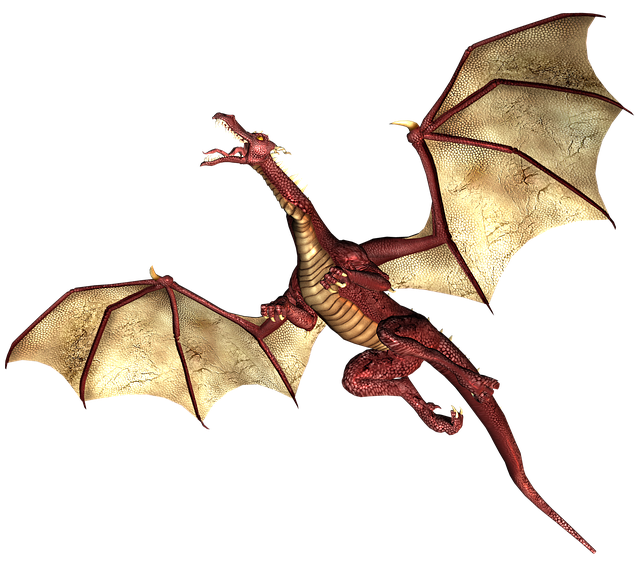
Pandora has flying organisms with a mass more than 1 ton. If the oxygen density is the same as the Earth's, then the maximum mass of a flying organism is 43 kg. Therefore the oxygen density of Pandora is likely higher than Earth's. This is reasonable, because oxygen density is proportional to biomass density, and Pandora has dense biomass.
If Pandora's oxygen density is .6 kg/meter3, then the maximum flying mass is 600 kg.
Atmosphere of Pandora:
               Fraction

Nitrogen          ?
Oxygen            ?
Carbon Dioxide     .18     Toxic to humans
Xenon              .055    Causes narcosis
Methane           >.01
Hydrogen Sulfide  >.01     Toxic to humans
The total density and pressure are 1.2 times that for Earth.
Humans can't handle carbon dioxide above .05 and they can't handle hydrogen sulfide above .00005.
Carbon dioxide and xenon are narcotics, and both are dense enough to cause narcosis on Pandora.
Define the narcosis power of a gas as
Gas pressure          = P        (bar)
Gas narcosis constant = C        (Nitrogen=1)
Gas narcosis power    = N = P C  (bar)
Humans lose functionality from narcosis if the narcosis power is above 3 bars.
               Pressure   Narcosis constant   Narcosis power
                 bar        (Nitrogen=1)           bar

Carbon dioxide    .22           80               18
Xenon             .066          26                1.7
Define "cruising speed" as the speed that minimizes the power required for level flight. The mass scalings are:
Flying power/mass    = pfly   ~  M1/6
Cruising speed       = V      ~  M1/6
Maximum flight time  = T      ~  M-1/6
Flight range         = R = VT ~  M0
The maximum flight range is independent of mass. Large and small birds are on equal footing for migration.
See the flight textbook for a discussion of the physics of flight.
 |
 |
 |
 |
 |
 |
|---|---|---|---|---|---|
 |
 |
 |
 |
|---|---|---|---|
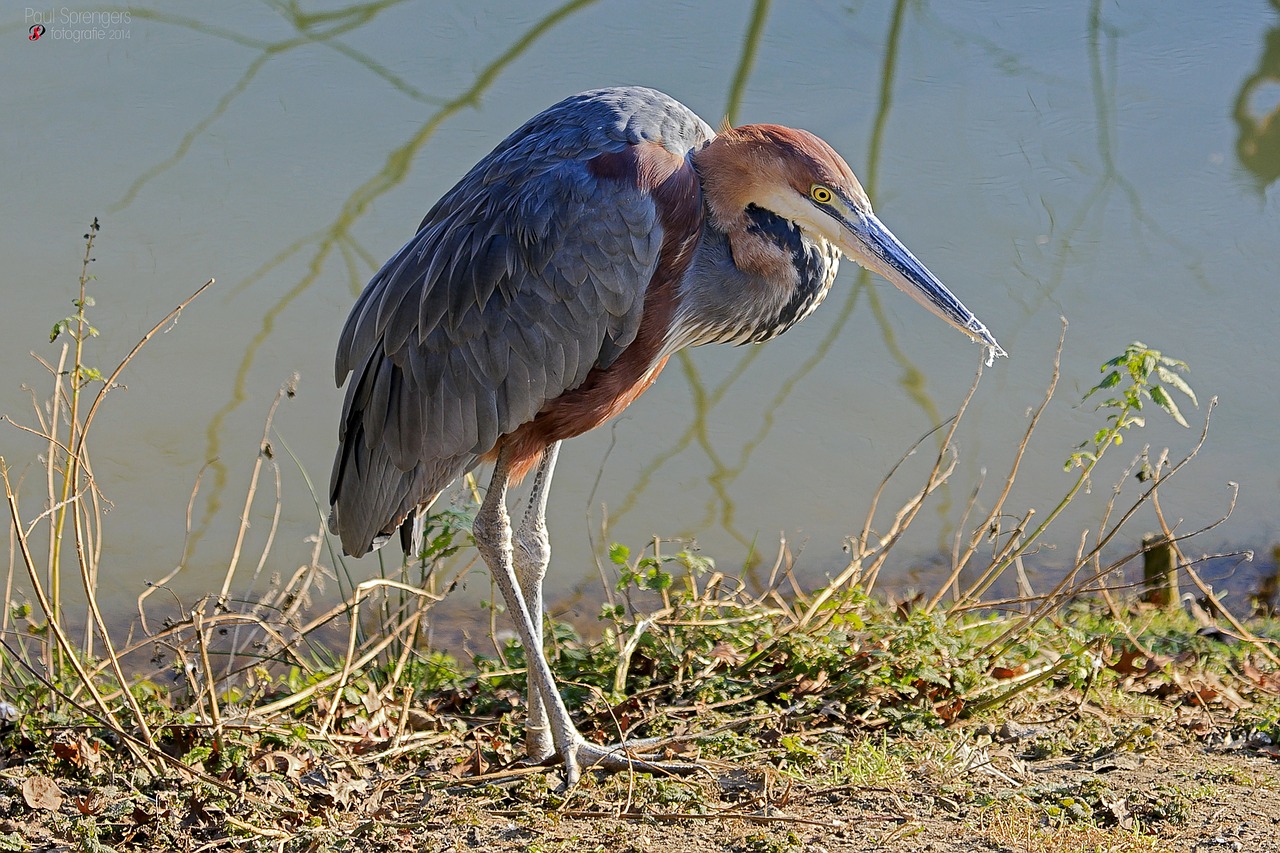 |
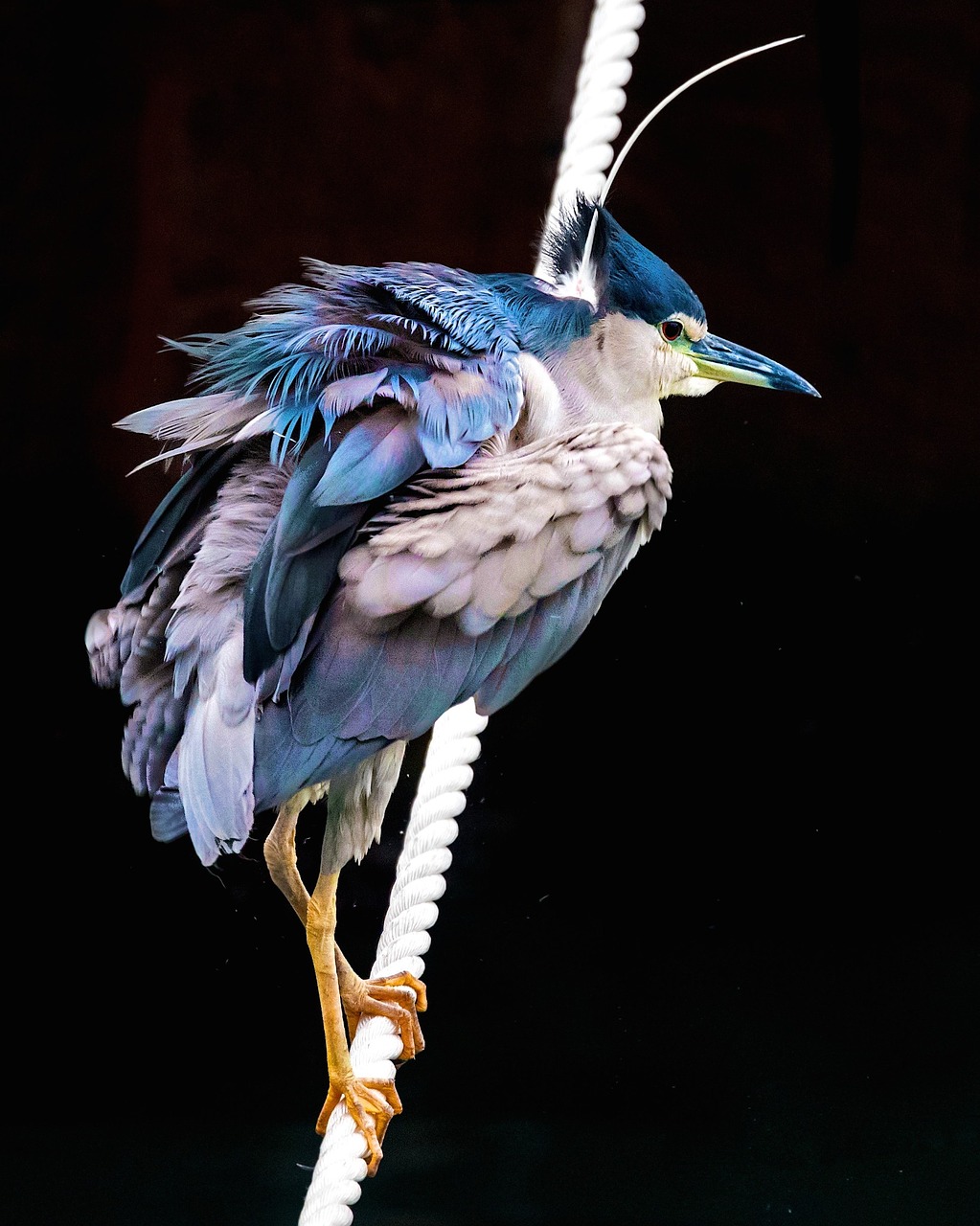 |
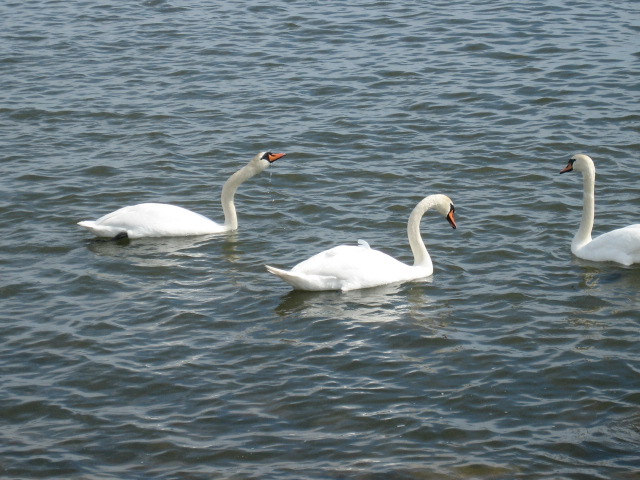 |
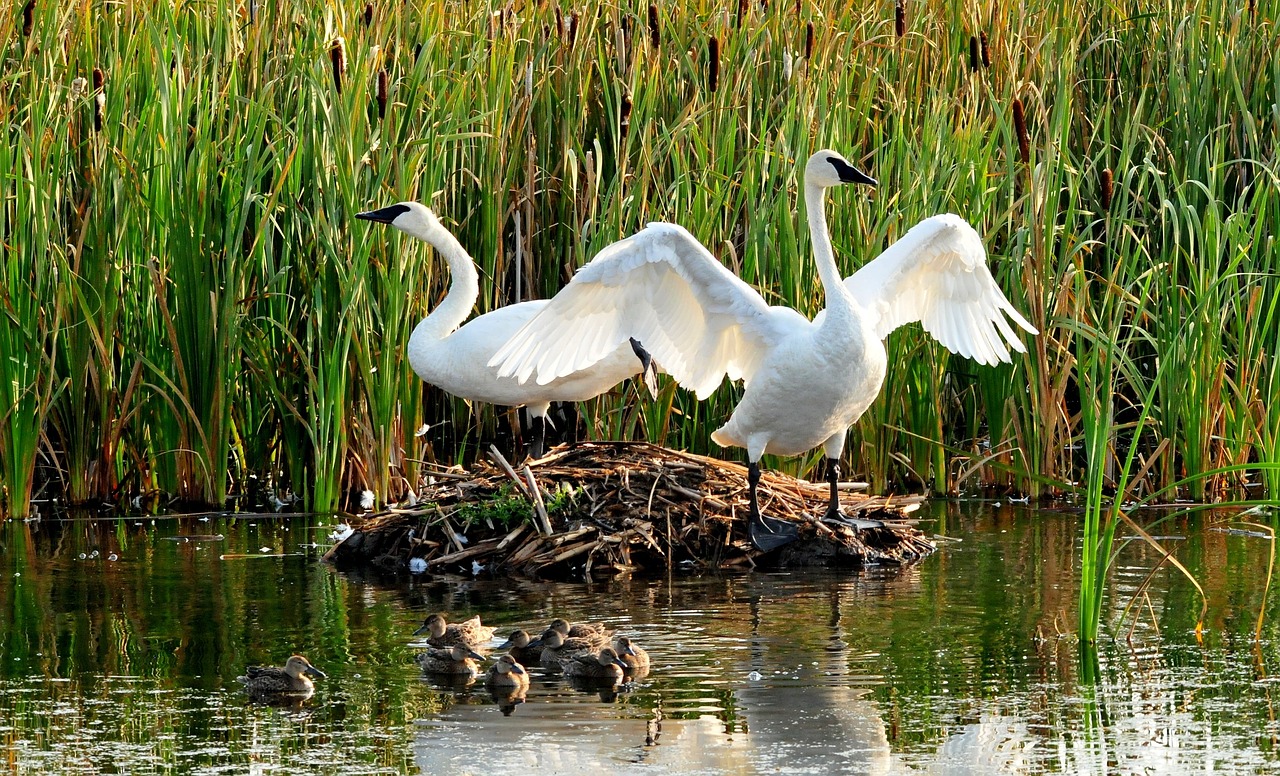 |
 |
 |
|---|---|---|---|---|---|
 |
 |
 |
|---|---|---|
 |
 |
 |
 |
 |
|---|---|---|---|---|
                Mass (kg)   Flighted

Ostrich              104
Somali ostrich        90
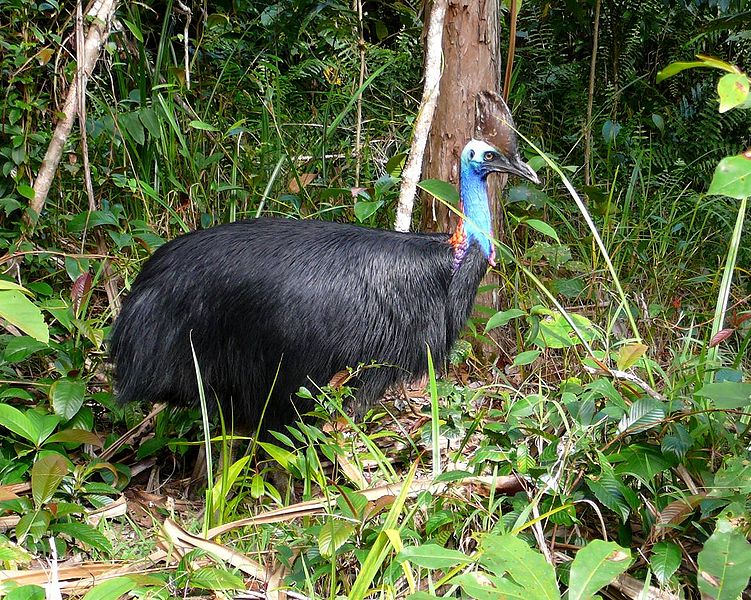
Southern cassowary    45
Northern cassowary    44
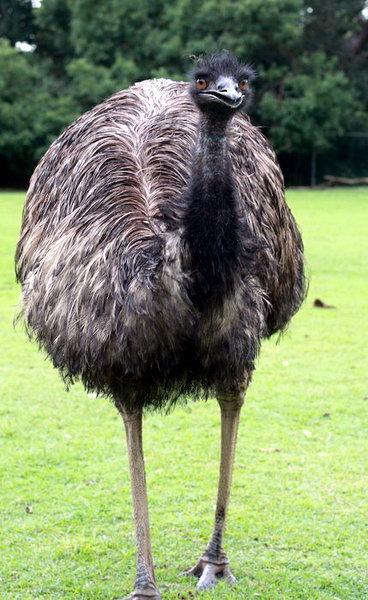
Emu                   33
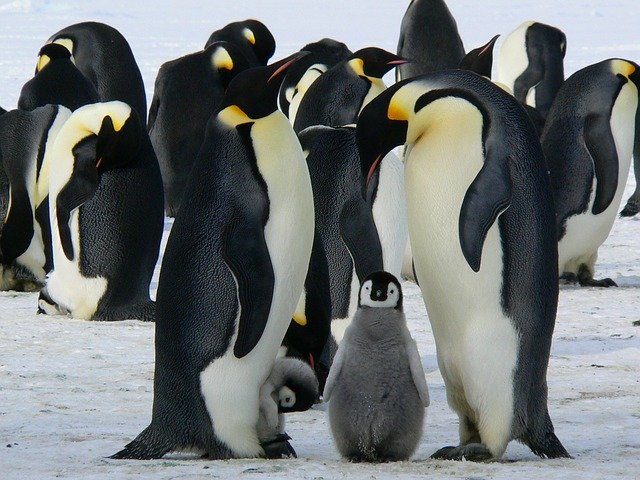
Emperor penguin       32
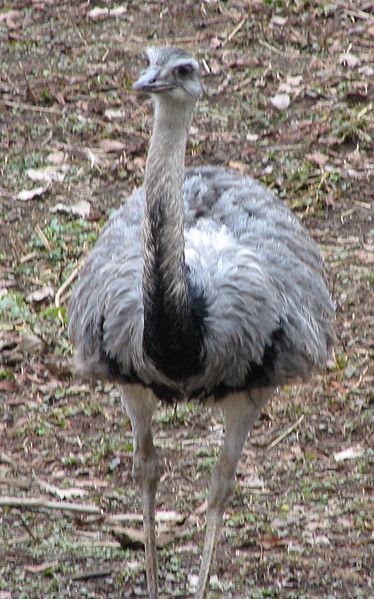
Greater rhea          23
Dwarf cassowary       19.7
Lesser rhea           19.6
King penguin          13.6
Turkey                13.5    *
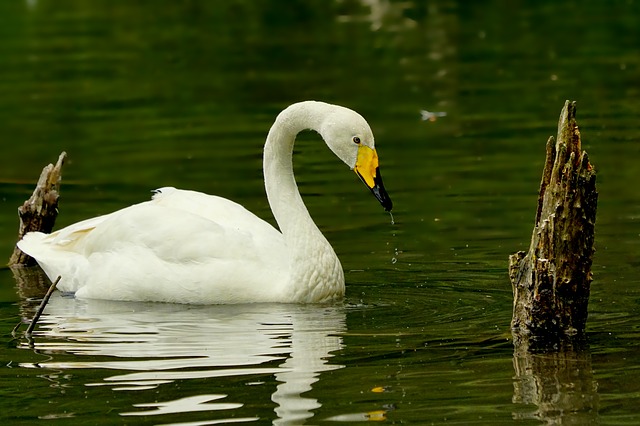
Mute swan             11.9    *
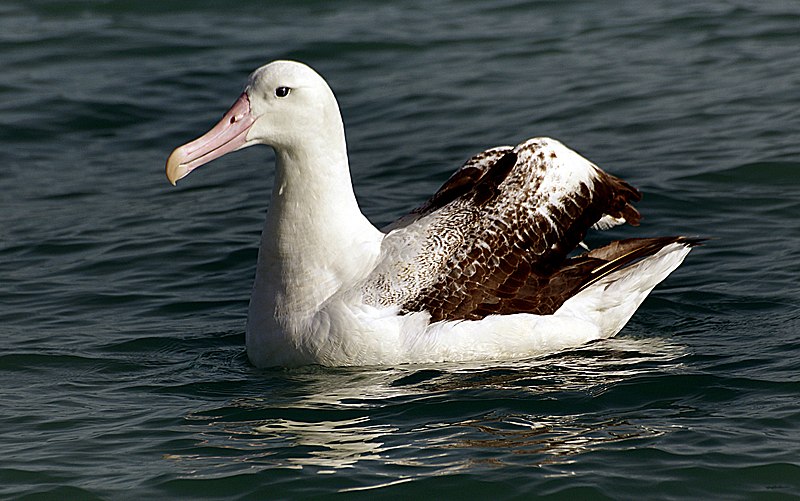
Wandering albatross   11.9    *
Trumpeter swan        11.6    *
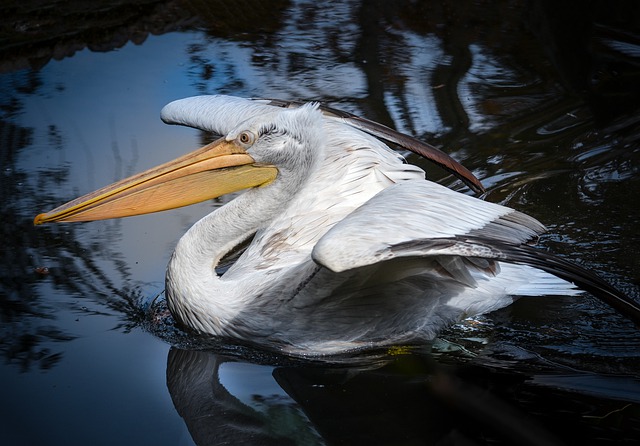
Dalmatian pelican     11.5    *
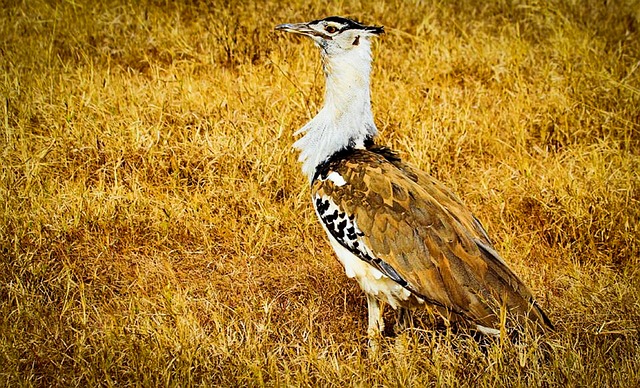
Kori bustard          11.4    *
Whooper swan          11.4    *
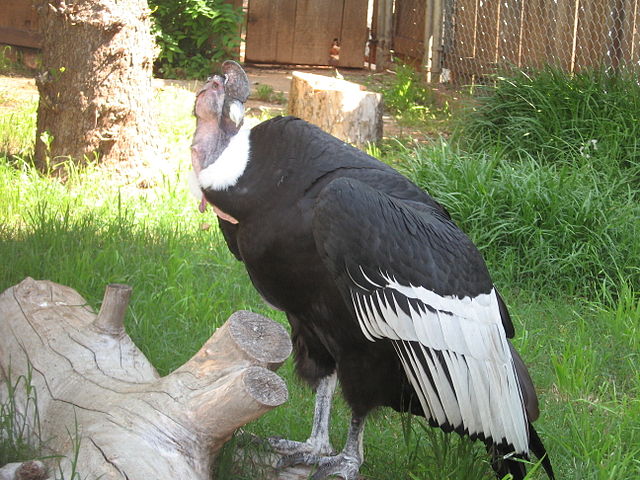
Andean condor         11.3    *
Great bustard         10.6    *
Cinereous vulture      9.5    *   Black vulture. Monk vulture
Cape vulture           8.8    *
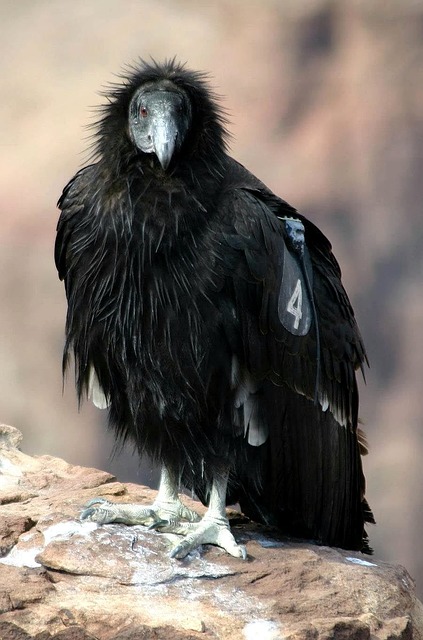
California condor      8.5    *
Siberian crane         8      *
Red-billed crane       8      *
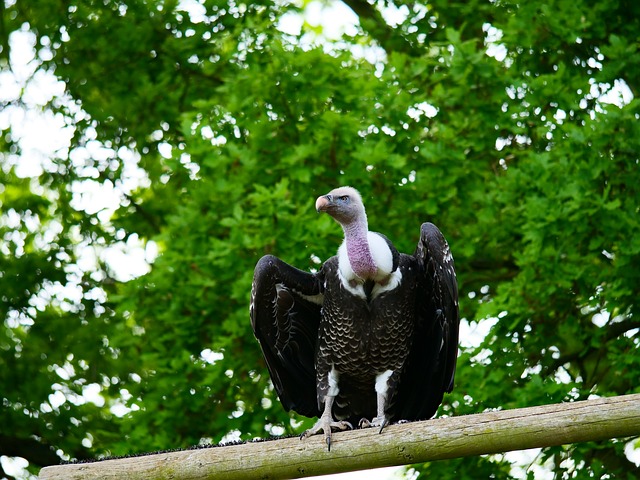
Ruppell's vulture      7.6    *
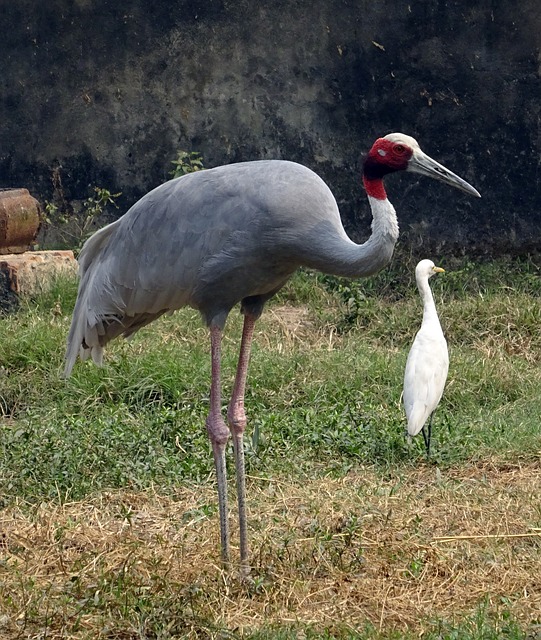
Sarus crane            7      *
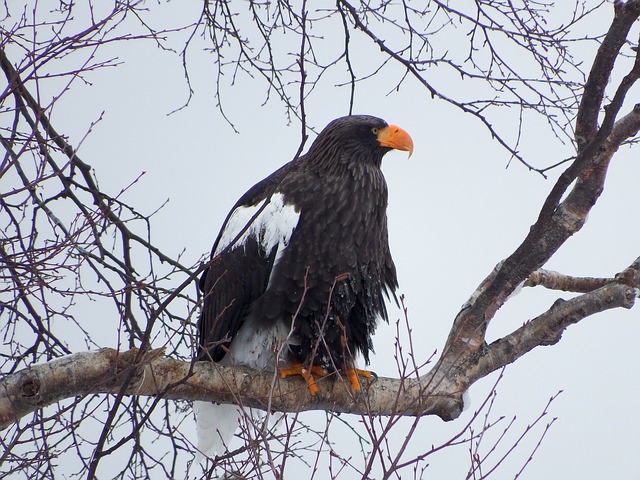
Steller's sea eagle    6.7    *
Black swan             6      *
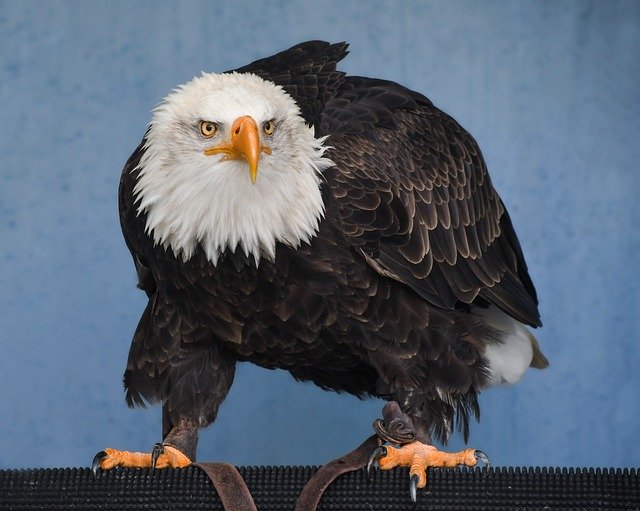
Bald eagle             4.85   *
Canadian goose         3.8    *
Mallard                1.2    *
Extinct birds:
                Mass (kg)   Flighted

Dromornis stirtoni   500
Elephant bird        400
Brontornis           375
Kelenken             300
Giant moa            240
Titanis waleri       150
Argentavis            72      *
New Zealand penguin   90
Pelagornis sandersi   30      *
Sylviornis            30
Haast's eagle         12      *    1400 CE
Cuban giant owl        9      *
Gases cause narcosis. A human scuba diver functions normally down to 35 meters depth, below which narcosis occurs.
The narcotic power of gases is:
                       Narcosis/Density  Mass  Atmosphere height   Cost
                          Nitrogen=1     AMU          km           $/kg

He         Helium                .32      4.00        56            24
Ne         Neon                  .42     20.18        11.1         240
Ar         Argon                1.62     39.79         5.7           2
Kr         Krypton              2.37     83.80         2.67        300
Xe         Xenon                5.46    131.29         1.71       2000

N2         Nitrogen             1        28.02         8.0           2
O2         Oxygen               1.49     32.00         7.0           2
N2O        Nitrous oxide        7.64     44.01         1.3
H2         Hydrogen             8.34      2.016      111             2
CO2        Carbon dioxide      13        44.01         5.1           0

CF4        Perfluoromethane      .25     88.00         2.55
C2F6       Perfluoroethane       .47    138.01         1.62
C3F8       Perfluoropropane      .45    188.02         1.19
C4F10      Perfluorobutane       .71    238.03          .94
SF6        Sulfur hexafluoride   .77    146.06         1.53

CCl2F2     DiCldiFlmethane      2.0     120.91
C2H4       Ethylene            10        28.05
C3H2ClF5O  Enfluorane          28       184.49
C3H2F6O    Desfluorane         76       168.04
C3H6       Cyclopropane       220        42.08
(C2H5)2O   Diethyl ether      350        74.12
C4H5F3O    Fluoroxene         350       126.08
C3H2ClF5O  Isofluorane        390       184.5
CF3CHClBr  Halothane          570       197.38
CHCl3      Chloroform        1400       119.37
C4H3F7O    Sevofluorane      2300       200.06
C3H4Cl2F2O Methoxyfluorane   3200       164.97
Atmospheric scale height is inversely proportional to molecular mass.
                   Narcosis/Density  Narcosis/Pressure  Mass  Oil/Gas   MAC      Boil
                      Nitrogen=1        Nitrogen=1      AMU                       C

He         Helium                .32        .045       4.00      .015
Ne         Neon                  .42        .3        20.18      .02
Ar         Argon                1.62       2.3        39.79      .15
Kr         Krypton              2.37       7.1        83.80      .5      7
Xe         Xenon                5.46      25.6       131.29     1.9       .95

N2         Nitrogen             1.00       1.0        28.02      .072   60
O2         Oxygen               1.49       1.7        32.00
H2         Hydrogen             8.34        .6         2.016
H2         Carbon dioxide      50         80          44

CF4        Carbon tetrafluoride  .25        .8        88.00      .052   25      -127.8
C2F6       Perfluoroethane       .47       2.3       138.01      .146   15
C3F8       Perfluoropropane      .45       3         188.02      .208    8       -36.7
C4F10      Perfluorobutane       .71       6         238.03      .437    1.2      -1.7
C5F12      Perfluoropentane                          288                          28
C6F14      Perfluorohexane                           338                          56
SF6        Sulfur hexafluoride   .77       4         146.06      .280    8
CCl2F2     DiCldiFlmethane      2.0        9         120.91     6        3.5
C4F8       Perfluorocyclobutane                      200.03                       -6
N2O        Nitrous oxide        7.64      12          44.01     1.4      1.3
C2H4       Ethylene            10         10          28.05              1.2
CO2        Carbon dioxide      13         20          44.01
C3H2ClF5O  Enfluorane          28        184         184.49    98         .0163
C3H2F6O    Desfluorane         76        450         168.04    18.7       .066
C3H6       Cyclopropane       220        330          42.08    11.5       .092
(C2H5)2O   Diethyl ether      350        940          74.12    65         .032
C4H5F3O    Fluoroxene         350       1560         126.08    60         .02
C3H2ClF5O  Isofluorane        390       2560         184.5     97         .0117
CF3CHClBr  Halothane          570       4000         197.38   224         .0075
CHCl3      Chloroform        1400       6000         119.37   400         .005
C4H3F7O    Sevofluorane      2300       1700         200.06    42         .018
C2HCl3     Trichloroethylene                         131.38   714
C3H4Cl2F2O Methoxyfluorane   3200      19000         164.97   950         .0016
CBr2F2     DiBrDiFlmethane                           209.8                        22.8
C2F4Br2                                              259.8                        47.3
C6F12      Perfluorocyclohexane                      300.05                       59.5
C10F18     Perfluorodecalin                          462                         142
"Oil/Gas" is the oil/gas partition coefficient, which is unitless. The narcotic power of a gas is inversely proportional to the coefficient. The coefficient is the ratio of the concentration of a gas dissolved in oil, divided by the concentration of the gas.
"MAC" is the "Minimum alveolar concentration", which is inversely proportional to anaesthetic power.
 |
|---|