
|
|
|
|
|
|
|---|---|---|---|---|---|
 |
 |
 |
 |
|---|---|---|---|
               MJoules  Rocket  Shock  Density  Boil
                 /kg     km/s   km/s   g/cm3  Kelvin

Beryllium+ O2    23.2   5.3
Aluminum + O2    15.5
Magnesium+ O2    14.8
Hydrogen + O2    13.2   4.56             .07    20
Kerosene + O3    12.9
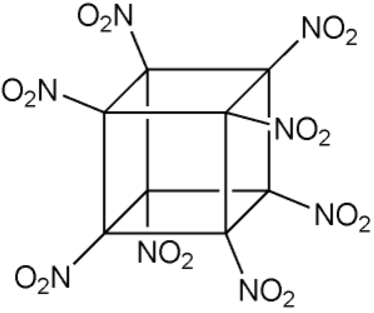
Octanitrocubane  11.2          10.6     1.95
Methane  + O2    11.1   3.80             .42   112  CH4
Octane   + O2    10.4                    .70   399  C8H18
Kerosene + O2    10.3   3.52             .80   410  C12H26
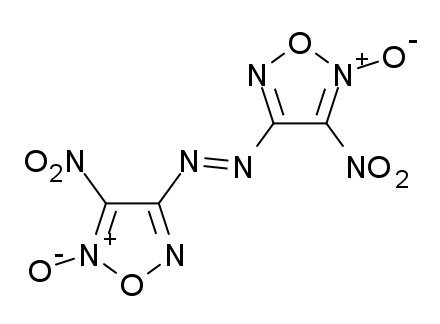
Dinitrodiazeno.   9.2          10.0     1.98
C6H6N12O12        9.1                   1.96        China Lake compound
Kerosene + H2O2   8.1   3.2
Kerosene + N2O4   8.0   2.62
HMX (Octogen)     8.0   3.05    9.1     1.86
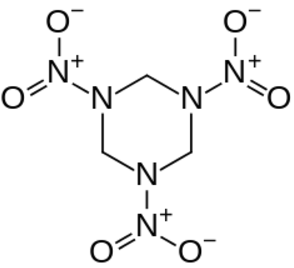
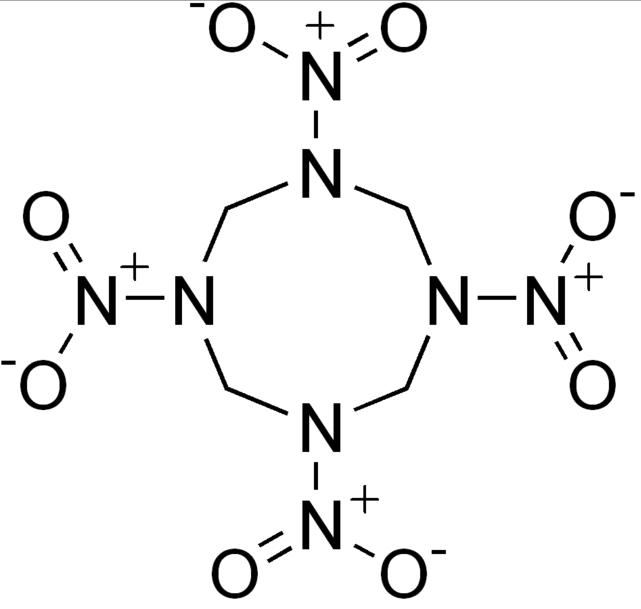
RDX (Hexagen)     7.5   2.5     8.7     1.78
Al + NH4NO3       6.9
Nitroglycerine    7.2           8.1     1.59        Unstable
PLX               6.5                   1.14        95% CH3NO2 + 5% C2H4(NH2)2
Composition 4     6.3           8.04    1.59        91% RDX. "Plastic explosive"
Kerosene + N2O    6.18
Dynamite          5.9           7.2     1.48        75% Nitroglycerine + stabilizer
PETN              5.8           8.35    1.77
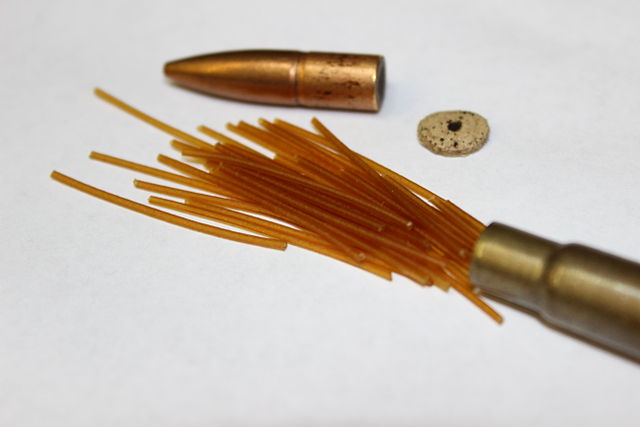
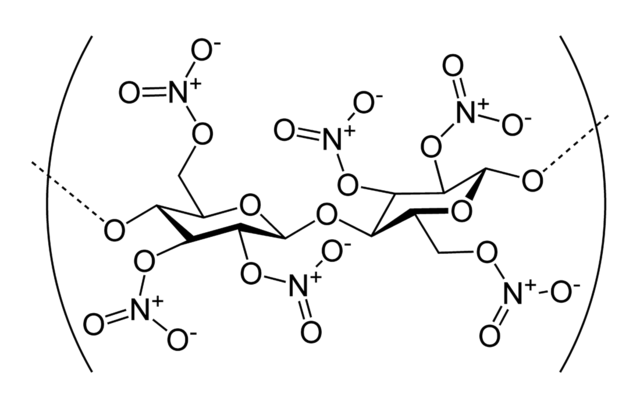
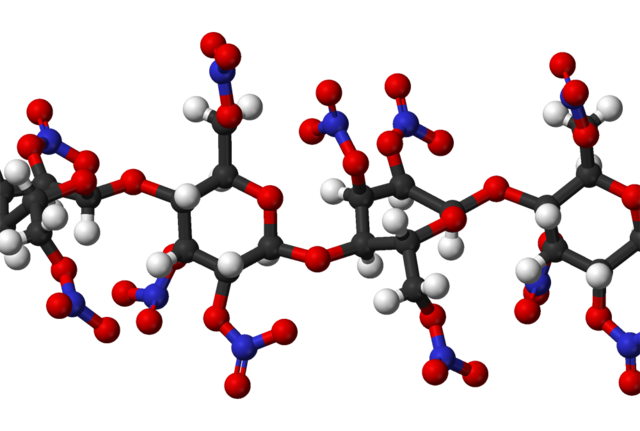
Smokeless powder  5.2           6.4     1.4         Used after 1884. Nitrocellulose
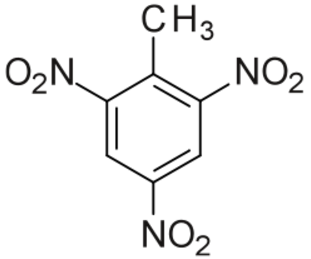
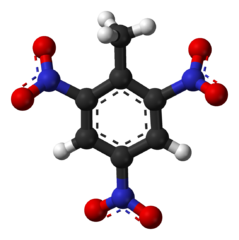
TNT               4.7           6.9     1.65        Trinitrotoluene
Al + Fe2O3        4.0                               Thermite
H2O2              2.7   1.59            1.45   423  Hydrogen peroxide
Black powder      2.6            .6     1.65        Used before 1884
Al + NH4ClO4            2.6
NH4ClO4                 2.5
N2O               1.86  1.76
N2H4              1.6   2.2             1.02   387  Hydrazine
Bombardier beetle  .4                               Hydroquinone + H2O2 + protein catalyst
N2O4               .10                  1.45   294

Rocket: Rocket exhaust speed
Shock:  Shock speed
 |
 |
 |
 |
 |
 |
|---|---|---|---|---|---|
 |
 |
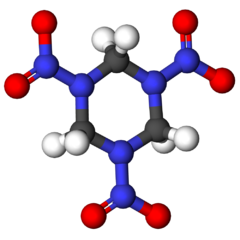 |
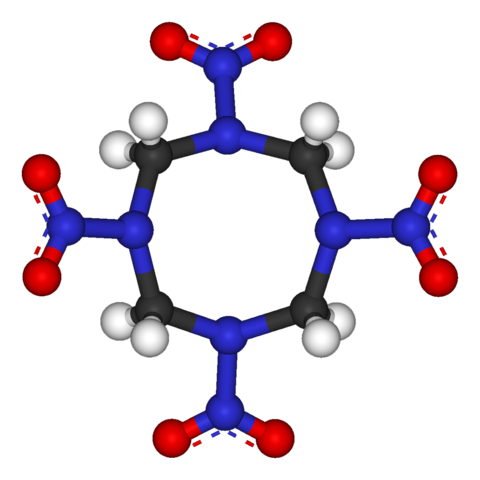 |
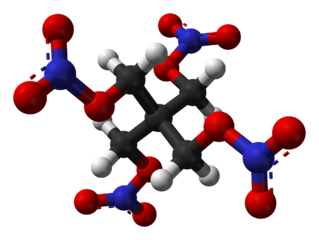 |
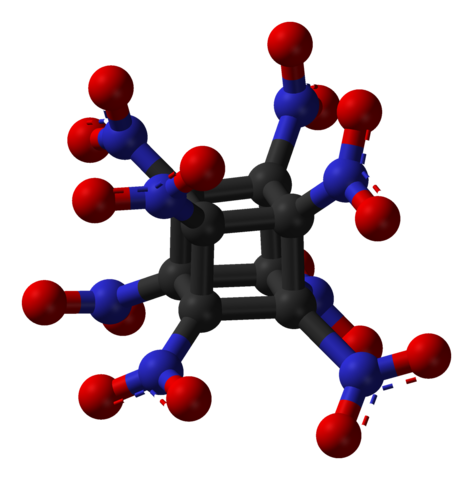 |
|---|---|---|---|---|---|
 |
 |
|---|---|
High explosives have a large shock velocity.
                MJoules   Shock  Density
                  /kg     km/s    g/cm3

Octanitrocubane    11.2   10.6     1.95
Dinitrodiazeno.     9.2   10.0     1.98
C6H6N12O12          9.1            1.96    China Lake compound
HMX (Octogen)       8.0    9.1     1.86
RDX (Hexagen)       7.5    8.7     1.78
PLX                 6.5            1.14    95% CH3NO2 + 5% C2H4(NH2)2
Composition 4       6.3    8.04    1.59    91% RDX. "Plastic explosive"
Dynamite            5.9    7.2     1.48    75% Nitroglycerine + stabilizer
PETN                5.8    8.35    1.77
The best oxidizer is liquid oxygen, and the exhaust speed for various fuels when burned with oxygen is:
                Exhaust  Energy   Density of fuel + oxidizer
                 speed   /mass
                 km/s    MJ/kg      g/cm3

Hydrogen   H2      4.46   13.2    .32
Methane    CH4     3.80   11.1    .83
Ethane     C2H6    3.58   10.5    .9
Kerosene   C12H26  3.52   10.3   1.03
Hydrazine  N2H4    3.46          1.07
Liquid hydrogen is usually not used for the ground stage of rockets because of
its low density.
We use kerosene as a standard fuel and show the rocket speed for various oxidizers. Some of the oxidizers can be used by themselves as monopropellants.
    Energy/Mass       Energy/Mass        Rocket           Rocket         Boil    Density
   with kerosene   as monopropellant  with kerosene  as monopropellant  Kelvin   g/cm3
       MJoule/kg         MJoule/kg          km/s             km/s

O3        12.9           2.97                                              161
O2        10.3           0                  3.52             0             110     1.14
H2O2       8.1           2.7                3.2              1.6           423     1.45
N2O4       8.00           .10               2.62                           294     1.44
N2O        6.18          1.86                                1.76          185
N2H4       -             1.58                                2.2           387     1.02
               MJoules  Rocket   Density
                 /kg     km/s    g/cm3

C6H6N12O12        9.1             1.96        China Lake compound
HMX (Octogen)     8.0   3.05      1.86
RDX (Hexagen)     7.5   2.5       1.78
Al + NH4ClO4            2.6
NH4ClO4                 2.5
NH3OHNO3                2.5       1.84        Hydrxyammonium nitrate
Al + NH4NO3       6.9
NH4NO3            1.4   2.0       1.12        Ammonium nitrate
~808  Qing Xuzi publishes a formula resembling gunpower, consisting of
      6 parts sulfur, 6 parts saltpeter, and 1 part birthwort herb (for carbon).
~850  Incendiary property of gunpower discovered
1132  "Fire lances" used in the siege of De'an, China
1220  al-Rammah of Syria publishes "Military Horsemanship and Ingenious War
        Devices", describes the purification of potassium nitrate by
        adding potassium carbonate with boiling water, to precipitate out
        magnesium carbonate and calcium carbonate.
1241  Mongols use firearms at the Battle of Mohi, Hungary
1338  Battle of Arnemuiden.  First naval battle involving cannons.
1346  Cannons used in the Siege of Calais and the Battle of Crecy
1540  Biringuccio publishes "De la pirotechnia", giving recipes for gunpowder
1610  First flintlock rifle
1661  Boyle publishes "The Sceptical Chymist", a treatise on the
      distinction between chemistry and alchemy.  It contains some of the
      earliest modern ideas of atoms, molecules, and chemical reaction,
      and marks the beginning of the history of modern chemistry.
1669  Phosphorus discovered
1774  Lavoisier appointed to develop the French gunpowder program.  By 1788
         French gunpowder was the best in the world.
1832  Braconnot synthesizes the first nitrocellulose (guncotton)
1846  Nitrocellulose published
1847  Sobrero discovers nitroglycerine
1862  LeConte publishes simple recipes for producing potassium nitrate.
1865  Abel develops a safe synthesis of nitrocellulose
1867  Nobel develops dynamite, the first explosive more powerful than black powder
      It uses diatomaceous earth to stabilize nitroglycerine
1884  Vieille invents smokeless gunpowder (nitrocellulose), which is 3 times
         more powerful than black powder and less of a nuisance on the battlefield.
1902  TNT first used in the military.  TNT is much safer than dynamite
1930  RDX appears in military applications
1942  Napalm developed
1949  Discovery that HMX can be synthesized from RDX
1956  C-4 explosive developed (based on RDX)
1999  Eaton and Zhang synthesize octanitrocubane and heptanitrocubane

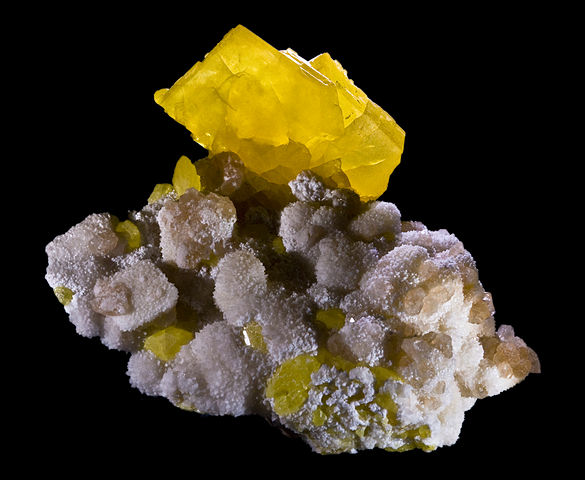
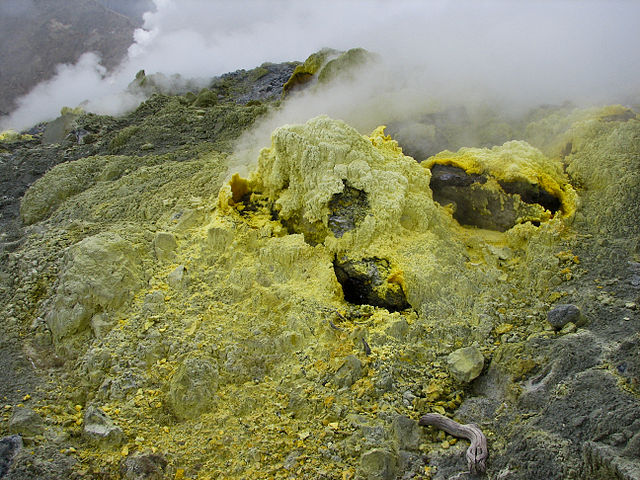
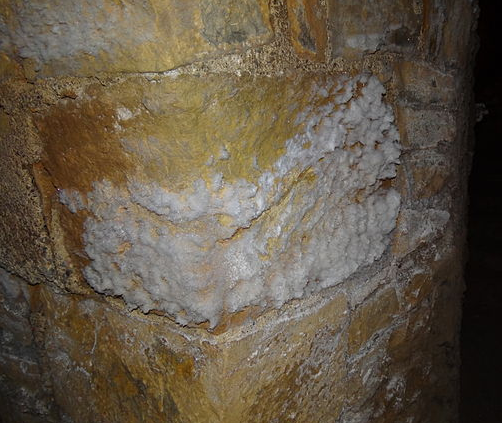
Black powder           =  .75 KNO3  +  .19 Carbon  +  .06 Sulfur
Above 550 Celsius, potassium nitrate decomposes. 2 KNO3 ↔ 2 KNO2 + O2.
 |
 |
 |
 |
|---|---|---|---|
 |
 |
 |
 |
|---|---|---|---|
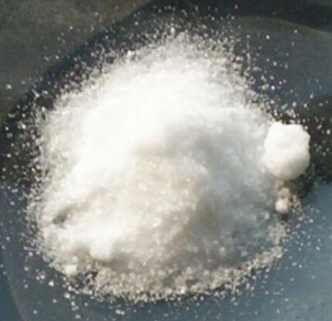
Potassium nitrate  KNO3     75%       (Saltpeter)
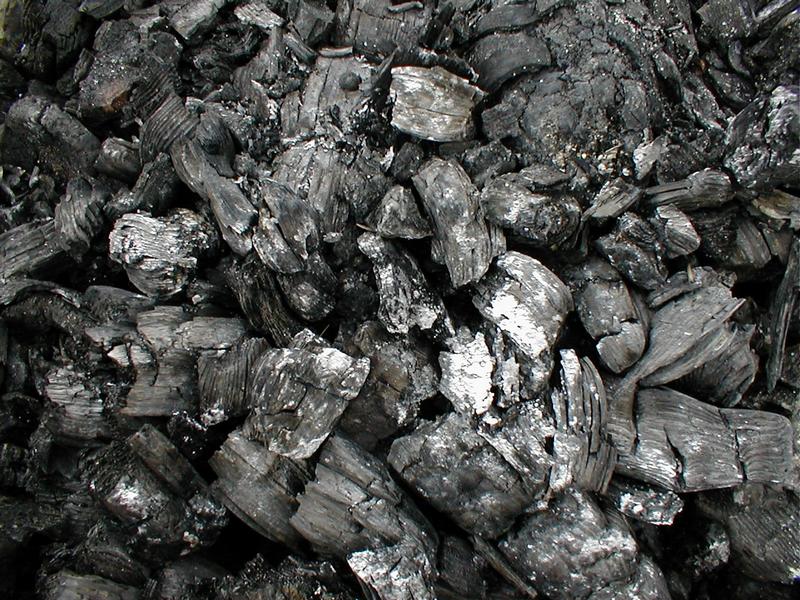
Charcoal           C7H4O    15%
Sulfur             S        10%

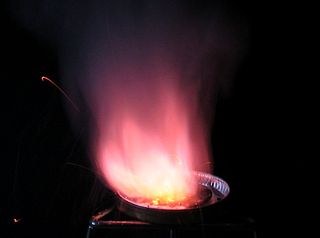
Oversimplified equation:  2 KNO3 + 3 C + S  →  K2S + N2 + 3 CO2

Realistic equation:       6 KNO3 + C7H4O + 2 S  →  KCO3 + K2SO4 + K2S + 4 CO2 + 2 CO + 2 H2O + 3 N2
Nitrite (NO3) is the oxidizer and sulfur lowers the ignition temperature.
                   MJoules
                     /kg

Hydrogen + Oxygen     13.16
Gasoline + Oxygen     10.4


        Mass   Energy    Energy/Mass
         kg      MJ         MJ/kg

MOAB    9800   46000        4.7               8500 kg of fuel
 |
 |
 |
|---|---|---|
 |
 |
 |
|---|---|---|
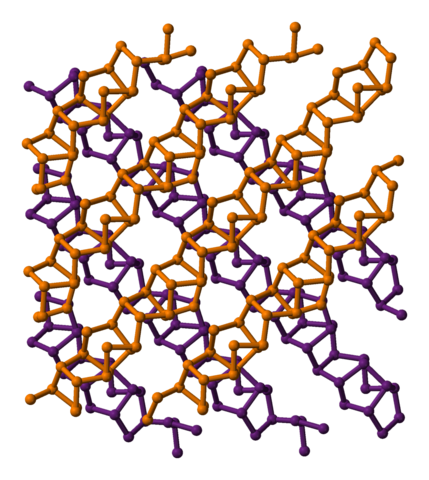
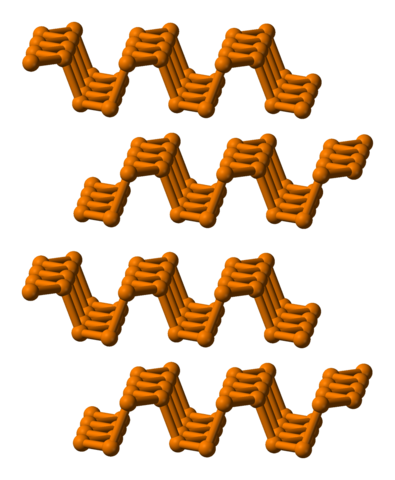
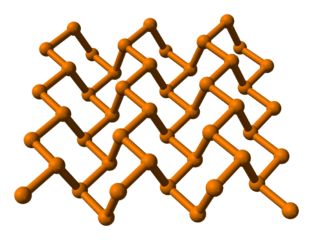
Form      Ignition    Density
          (Celsius)

White        30        1.83
Red         240        1.88
Violet      300        2.36
Black                  2.69
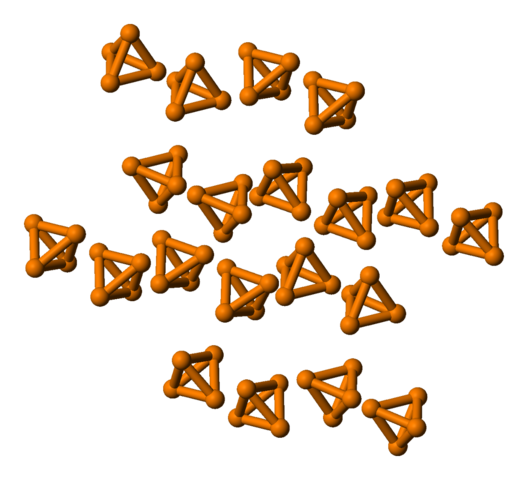
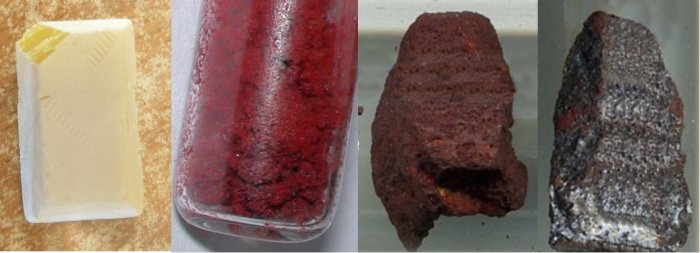
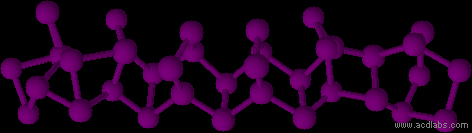
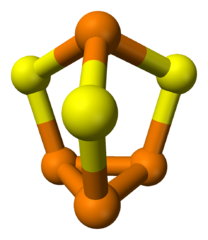
Red phosphorus is formed by heating white phosphorus to 250 Celsius or by
exposing it to sunlight. Violet phosphorus is formed by heating red phosphorus
to 550 Celsius. Black phosphorus is formed by heating white phosphorus at a
pressure of 12000 atmospheres. Black phosphorus is least reactive form and it
is stable below 550 Celsius.
 |
 |
 |
 |
 |
 |
|---|---|---|---|---|---|
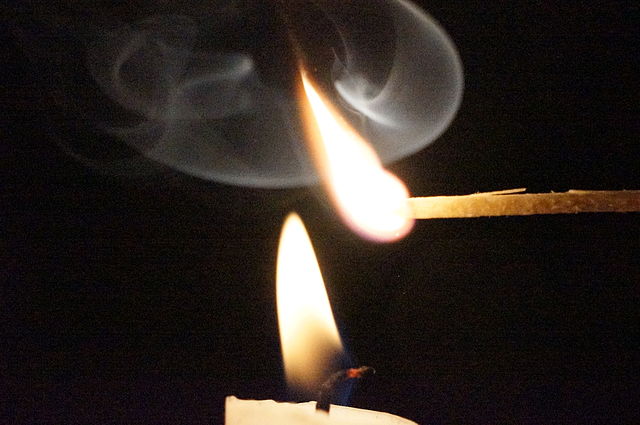
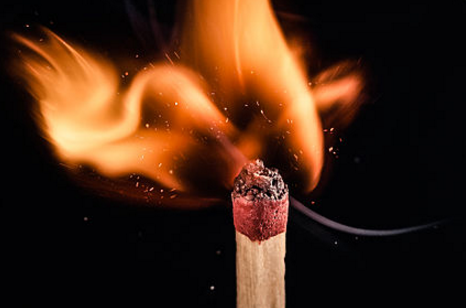
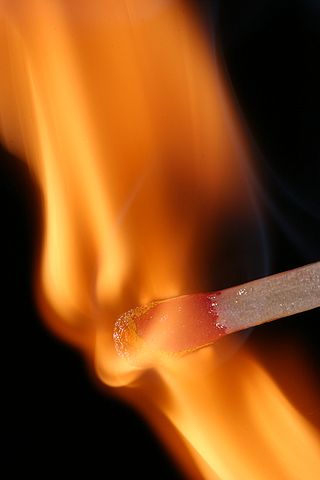
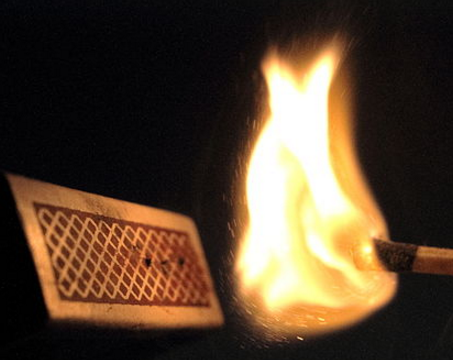
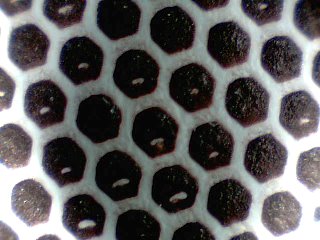
The safety match was invented in 1844 by Pasch. The match head cannot ignite by itself. Ignitition is achieved by striking it on a rough surface that contains red phosphorus. When the match is struck, potassium chlorate in the match head mixes with red phosphorus in the abrasive to produce a mixture that is easily ignited by friction. Antimony trisulfide is added to increase the burn rate.
Match head                 Fraction             Striking surface   Fraction

Potassium chlorate    KClO3  .50                Red phosphorus      .5
Silicon filler        Si     .4                 Abrasive            .25
Sulfur                S      small              Binder              .16
Antimony3 trisulfide  Sb2S3  small              Neutralizer         .05
Neutralizer                  small              Carbon              .04
Glue                         small
A "strike anywhere" match has phosphorus in the match head in the form of phosphorus sesquisulfide (P4S3) and doesn't need red phosphorus in the striking surface. P4S3 has an ignition temperature of 100 Celsius.
 |
 |
.jpg) |
|---|---|---|
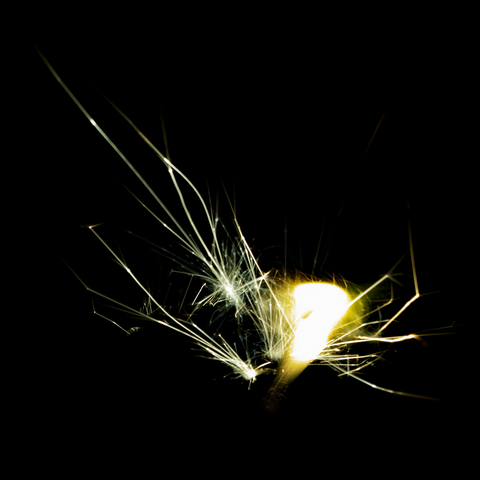
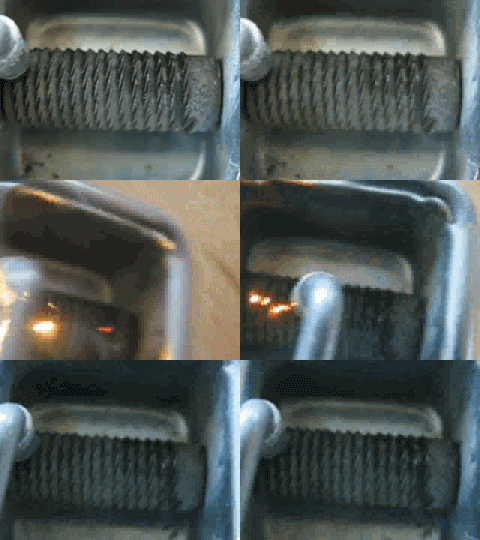
Before the invention of iron, fires were started by striking flint (quartz) with pyrite to generate sparks. Flintlock rifles work by striking flint with iron. With the discovery of cerium, ferrocerium replaced iron and modern butane lighters use ferrocerium, which is still referred to as "flint".
Cerium        .38      Ignition temperature of 165 Celsius
Lanthanum     .22
Iron          .19
Neodymium2    .04
Praseodymium  .04
Magnesium     .04
 |
|---|
Nitrous oxide is stored as a cryogenic liquid and injected along with gaoline into the combustion chamber. Upon heating to 300 Celsius the nitrous oxide decomposes into nitrogen and oxygen gas and releases energy. The oxygen fraction in this gas is higher than that in air (1/3 vs. .21) and the higher faction allows for more fuel to be consumed per cylinder firing.
Air density                  =  .00122 g/cm3
Nitrous oxide gas density    =  .00198 g/cm3
Diesel density               =  .832   g/cm3
Gasoline density             =  .745   g/cm3
Diesel energy/mass           =  43.1   MJoules/kg
Gasoline energy/mass         =  43.2   MJoules/kg
Nitrous oxide boiling point  = -88.5   Celsius
Air oxygen fraction          =  .21
Nitrous oxide oxygen fraction=  .33
Nitrous oxide decompose temp =  300    Celsius
Nitrous oxide liquid pressure=   52.4  Bars     Pressure required to liquefy N2O at room temperature
 |
 |
 |
|---|---|---|
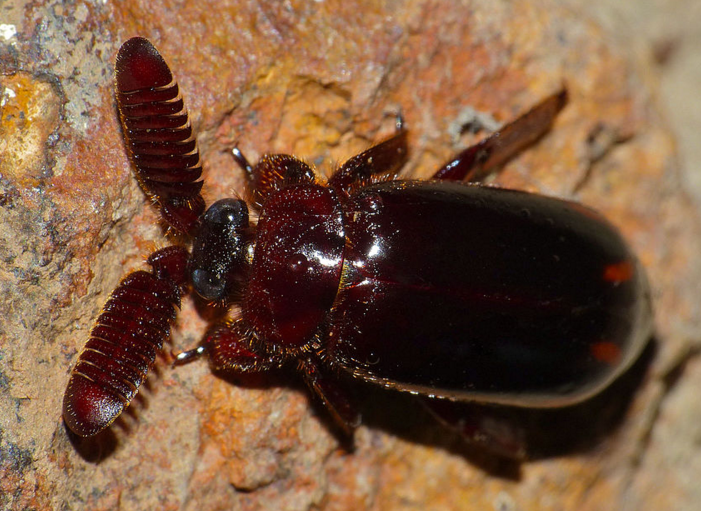
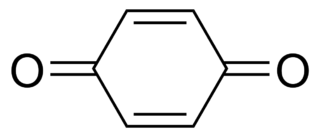
Hydroquinone and peroxide are stored in 2 separate compartments are pumped into the reaction chamber where they explode with the help of protein catalysts. The explosion vaporizes 1/5 of the liquid and expels the rest as a boiling drop of water, and the p-quinone in the liquid damages the foe's eyes. The energy of expulsion pumps new material into the reaction chamber and the process repeats at a rate of 500 pulses per second and a total of 70 pulses. The beetle has enough ammunition for 20 barrages.
2 H2O2  →  2 H2O +  O2           (with protein catalyst)
C6H4(OH)2  →  C6H4O2 + H2        (with protein catalyst)
O2 + 2 H2  →  2 H2O

Firing rate                     = 500 pulses/second
Number of pulses in one barrage =  70
Firing time                     = .14 seconds
Number of barrages              =  20
 |
 |
 |
 |
 |
|---|---|---|---|---|
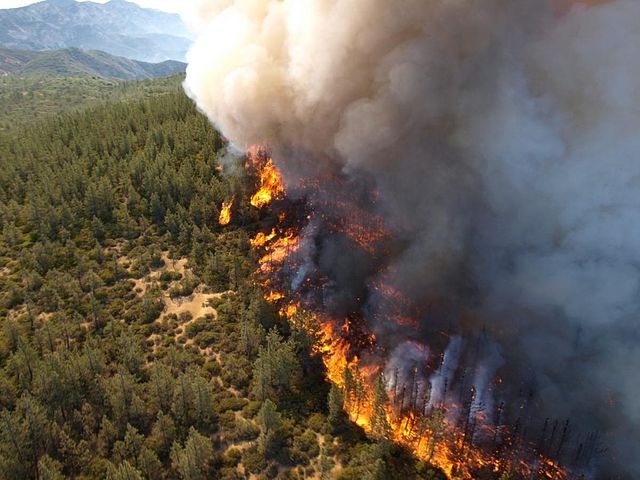
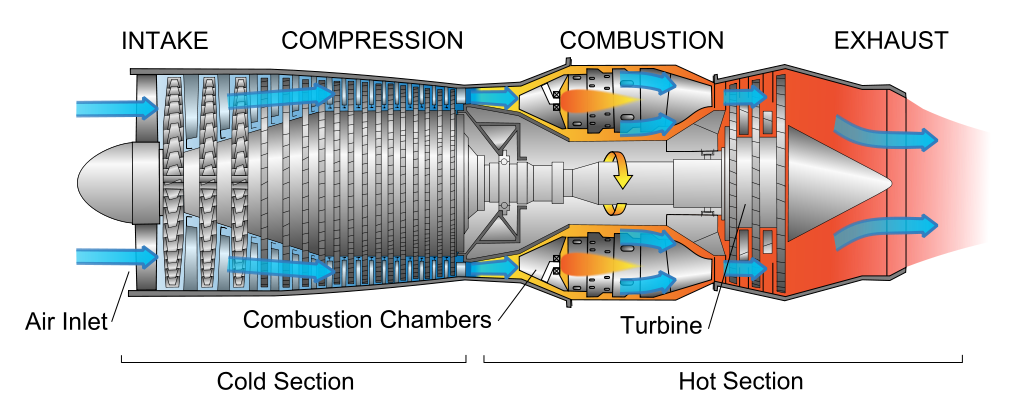
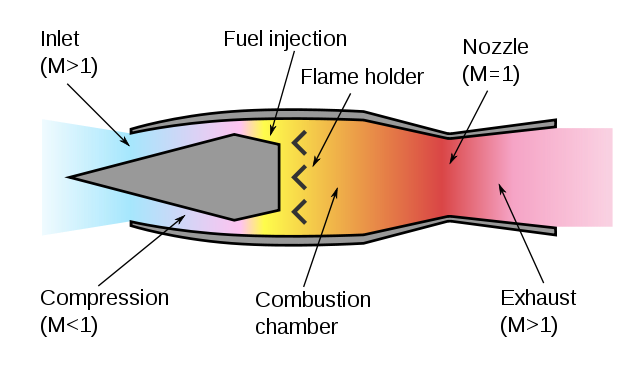
A turbojet engine compresses air before burning it to increase the flame speed and make it burn explosively. A ramjet engine moving supersonically doesn't need a turbine to achieve compression.
 |
 |
|---|---|
Airbus A350 compression ratio  =  52
Air density at sea level       = 1    bar
Air density at 15 km altitude  =  .25 bar
Air density in A350 engine     =  13  bar
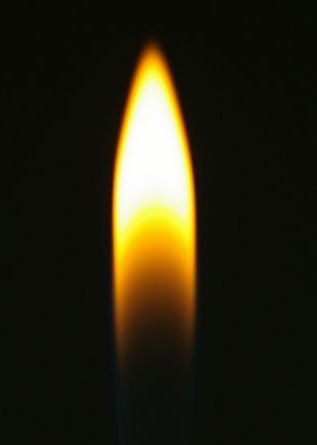
From the thermal flame theory of Mallard and Le Chatelier,
Temperature of burnt material    =  Tb
Temperature of unburnt material  =  Tu
Temperature of ignition          =  Ti
Fuel density                     =  Dfuel
Oxygen density                   =  Doxygen
Reaction coefficient             =  C
Reaction rate                    =  R  =  C Dfuel Doxygen
Thermal diffusivity              =  Q  = 1.9⋅10-5 m2/s
Flame speed                      =  V

V2  =  Q C Dfuel Doxygen (Tb - Ti) / (Ti - Tu)
 |
 |
 |
 |
 |
|---|---|---|---|---|
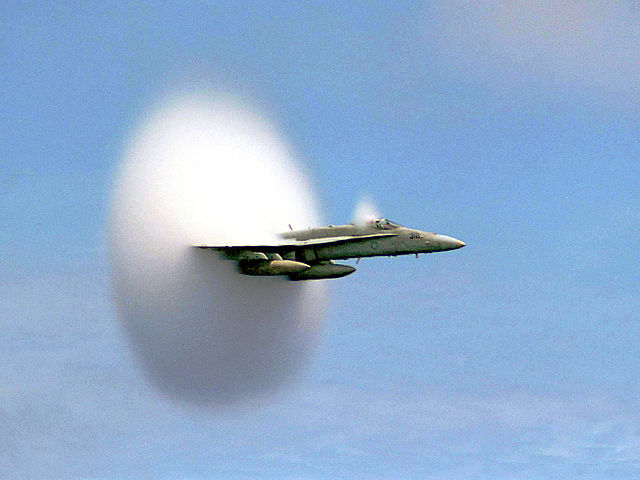
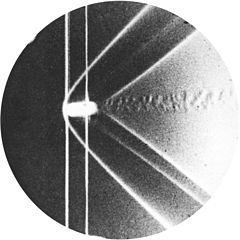
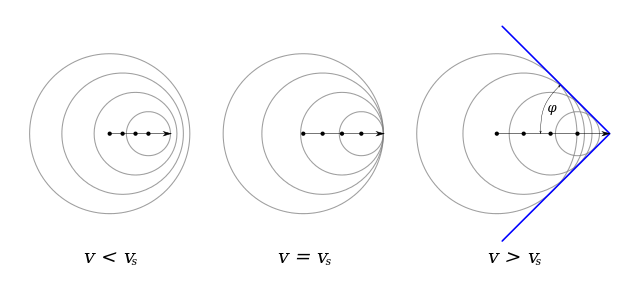
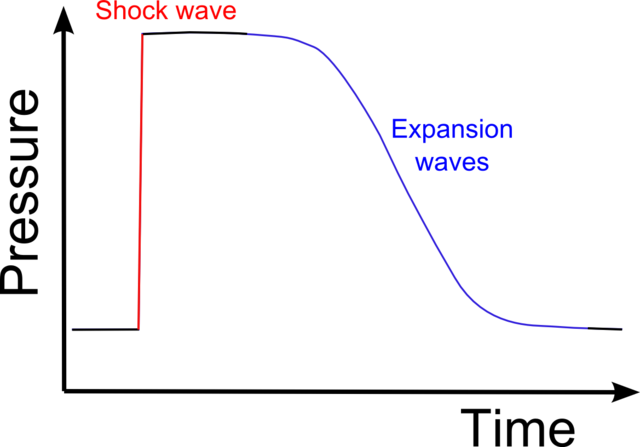
If the pressure front moves supersonically then the front forms a discontinuous shock, where the pressure makes a sudden jump as the shock passes.
Metal powder is often included with explosives.
        Energy/mass    Energy/mass
        not including  including
        oxygen         oxygen
        (MJoule/kg)    (MJoule/kg)

Hydrogen    113.4      12.7
Gasoline     46.0      10.2
Beryllium    64.3      23.2
Aluminum     29.3      15.5
Magnesium    24.5      14.8
Carbon       12.0       3.3
Lithium       6.9       3.2
Iron          6.6       4.6
Copper        2.0       1.6
 |
 |
 |
 |
 |
|---|---|---|---|---|
 |
 |
 |
 |
 |
 |
 |
|---|---|---|---|---|---|---|
 |
 |
 |
 |
 |
 |
 |
|---|---|---|---|---|---|---|
 |
 |
 |
 |
 |
|---|---|---|---|---|
 |
|---|
An oxygen candle is a mixture of sodium chlorate and iron powder, which when ignited smolders at 600 Celsius and produces oxygen at a rate of 6.5 man-hours of oxygen per kilogram of mixture. Thermal decomposition releases the oxygen and the burning iron provides the heat. The products of the reaction are NaCl and iron oxide.
 |
|---|