
|
|
|
|
|
|
|---|---|---|---|---|---|
 |
 |
 |
 |
|---|---|---|---|
 |
|
 |
|
 |
|
 |
|
 |
|---|---|---|---|---|---|---|---|---|
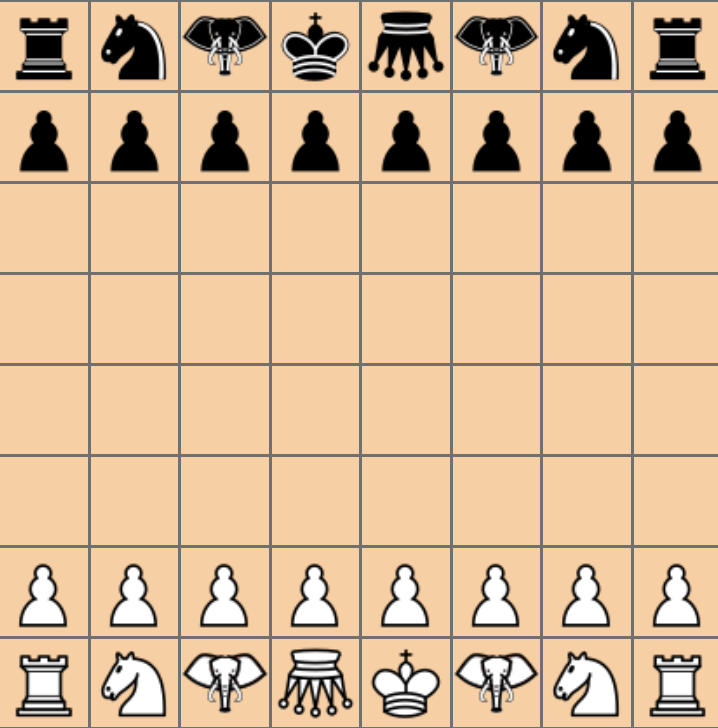
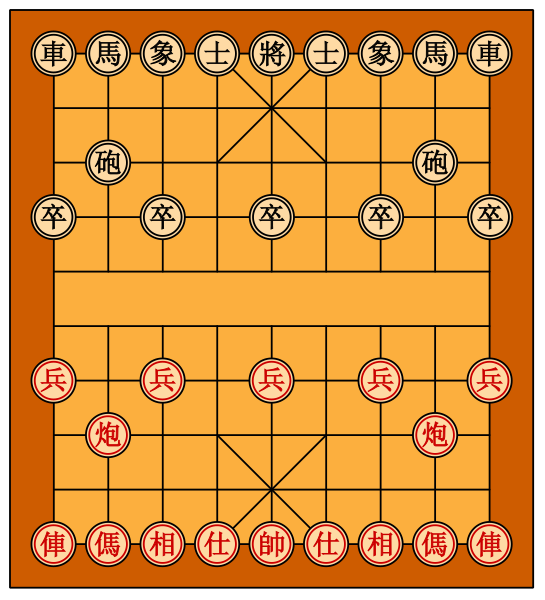
Chess started in India as "chaturanga" around 600 CE and spread to Asia as xiangqi.
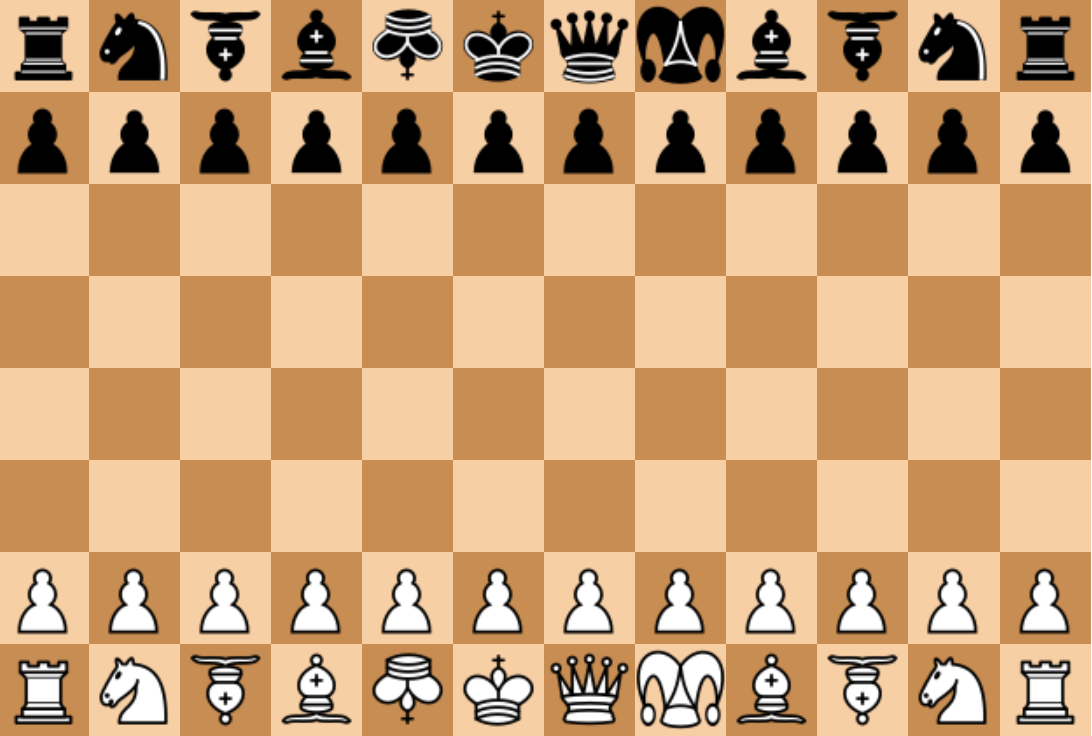
Chess appeared in Europe as courier chess in around 1200, which added the bishop. In around 1500, the queen was added and this finalized the rules of modern chess. The queen variation was called "Mad-queen chess", and the existence of the queen expanded the power of pawn promotion.
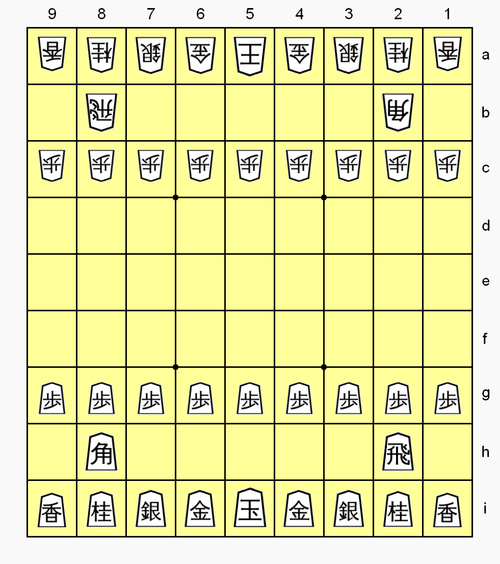
Shogi emerged in Japan in 1200 and added many new pieces. Dai shogi emerged in 1230 and added even more pieces. "Dai" means "large". A shogi board is 9x9 and a dai shogi board is 15x15. Shogi was an early pioneer of chess variations.
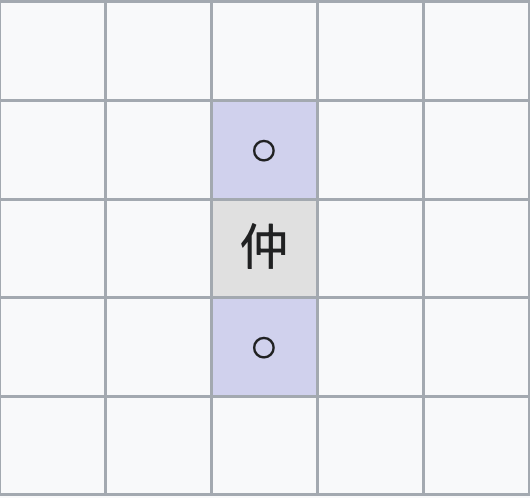
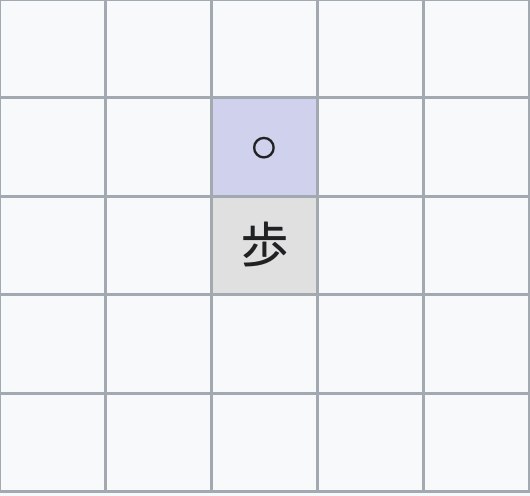
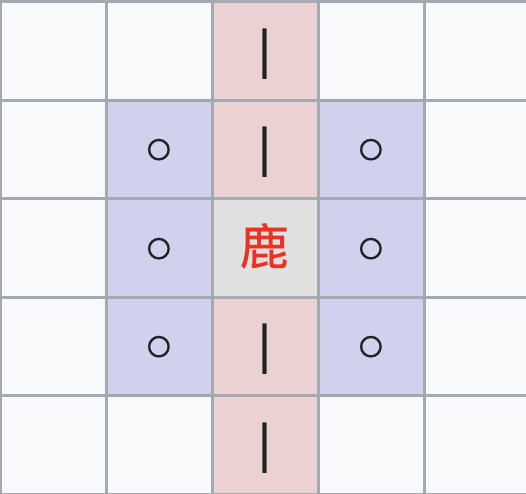
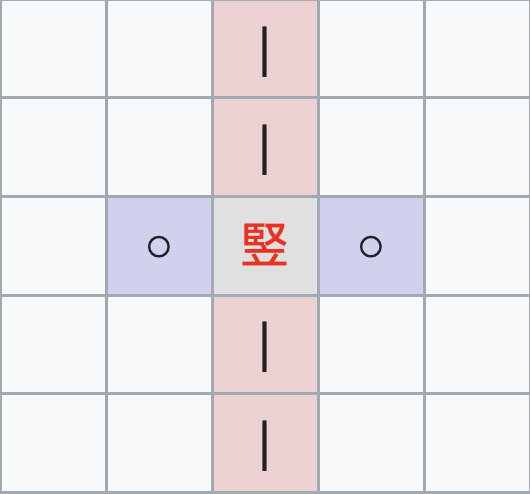
The pieces of shogi and xiangqi have the same rule for motion and capture. The chess pawn is a rare piece with different rules. Fairy chess has many pieces with different rules for motion and capture.
 |
|---|
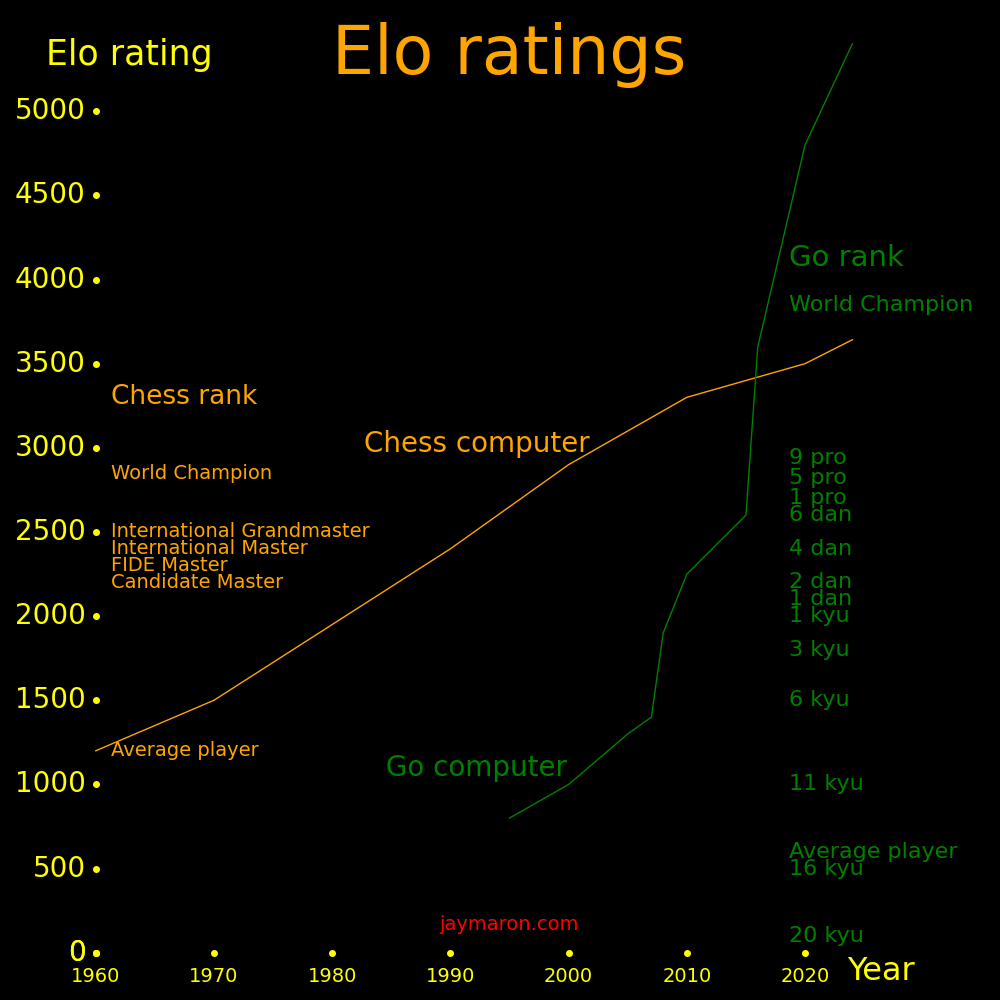
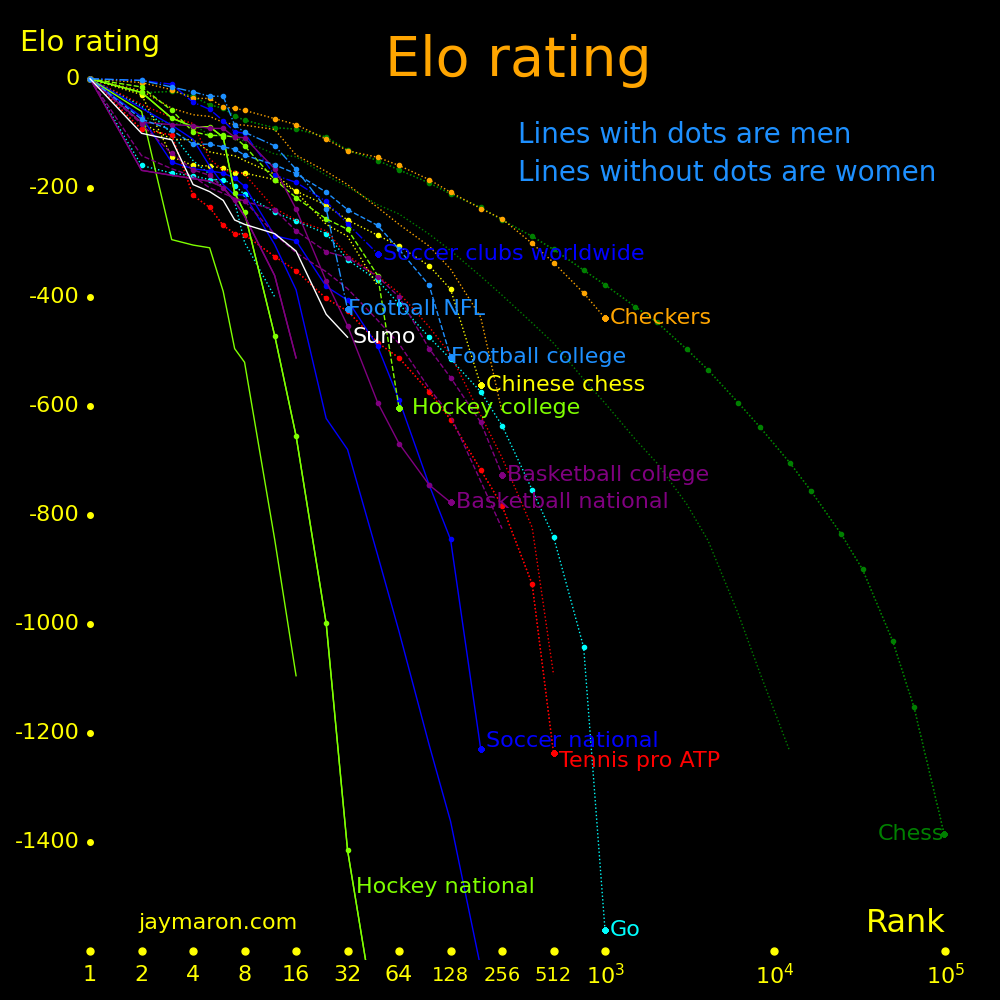
A goal for game design is depth, which can be defined as the difference between the world champion and an average human, measured by Elo ratings. The computer world champion can also be included.
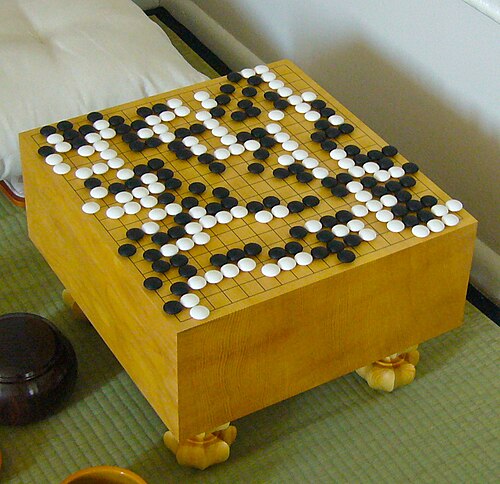
Go and shogi have big depth. Chess has poor depth, although this is partly due to draws.
 |
 |
 |
 |
 |
|---|---|---|---|---|
Elo ratings:
"Human depth" is the difference between the world champion and an average player.
            Human  Computer  Top-tier  Average  #1024   #128    #1   Computer  Infinite  Year that computer  #1 human
            depth   depth     depth     human   human   human  human           computer  beat the #1 human   at the time

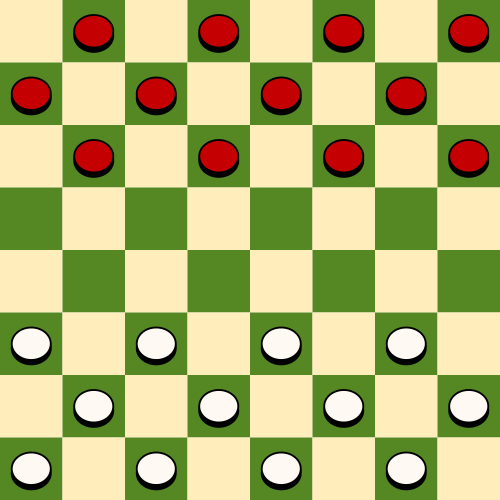
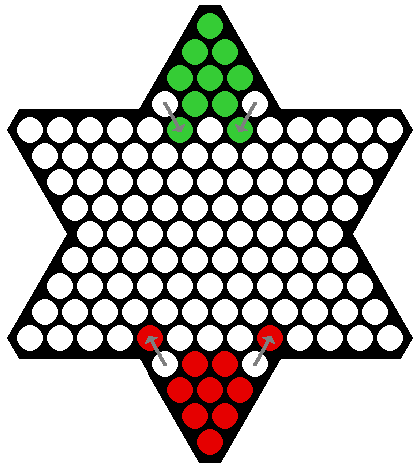
Go             3262   >5400     514       600    2400    3348   3862    5400      >6000      2016            Lee Sedol
Shogi          2200   >5000     700       600            1900   2800    4800      >5600      2013            Shinichi Sato
Xiangqi        1983   >3200     386       800            2397   2783    3950      >4500      2006            Xu Yinchuan
Chess, men     1631   >2800     211      1200    2453    2620   2831    3642      >4000      1997            Gary Kasparov
Chess, women   1550             335      1100    2085    2315   2650              >4000      1993            Judit Polgar
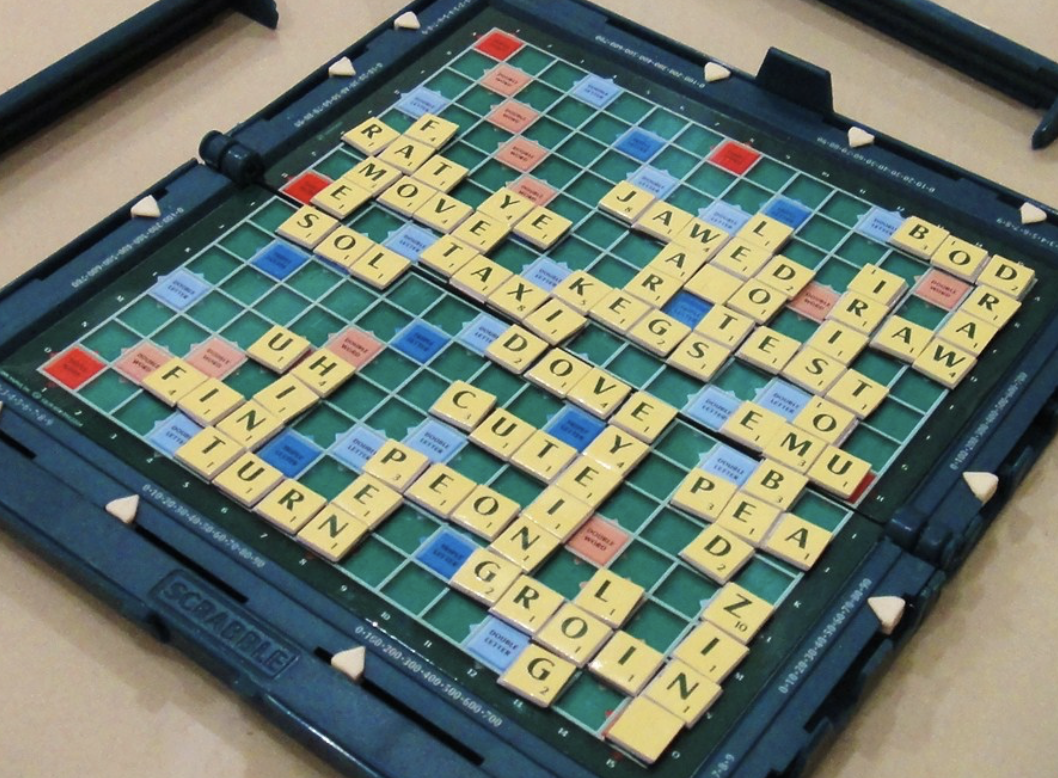
Scrabble       1450   >1700               800                   2250    2500      >2500      2006            David Boys
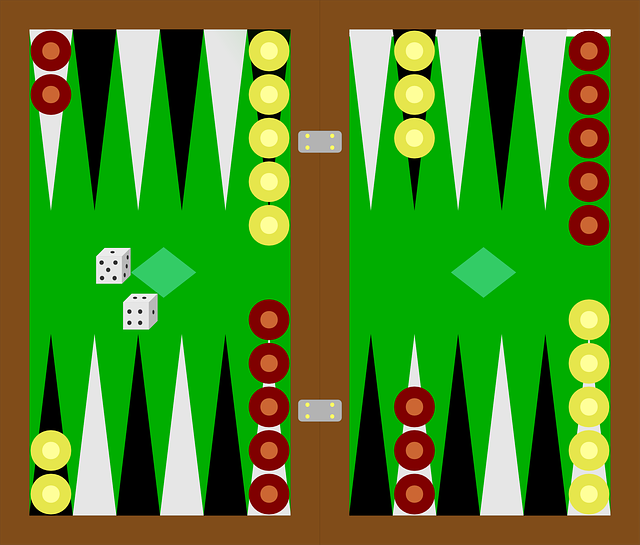
Backgammon     1250   >2000              1500                   2750    3250      >3250      1979            Hans Berliner
Checkers       1240    1600     208      1200    2000    2232   2440    2814       2814      1995            Don Lafferty     Solved in 2007
Tic Tac Toe       0       0       0         0       0       0      0       0          0
Rock paper scissors  0    0       0         0       0       0      0       0          0

Tennis, men                     600                      -600      0
Tennis, women                   500                      -500      0
Billiards                       438                      2375   2813
Golf           2000             120

Soccer         2600             850         0            1750   2600
College football                400                      -400      0
College bball                   514                      1387   1901
"Computer depth" is the difference between an infinite computer and an average player.
"Top-tier depth" is the difference between the human #1 and the human #128.
An Elo ratings difference of 200 corresponds to a 3/4 probability for the stronger player winning.
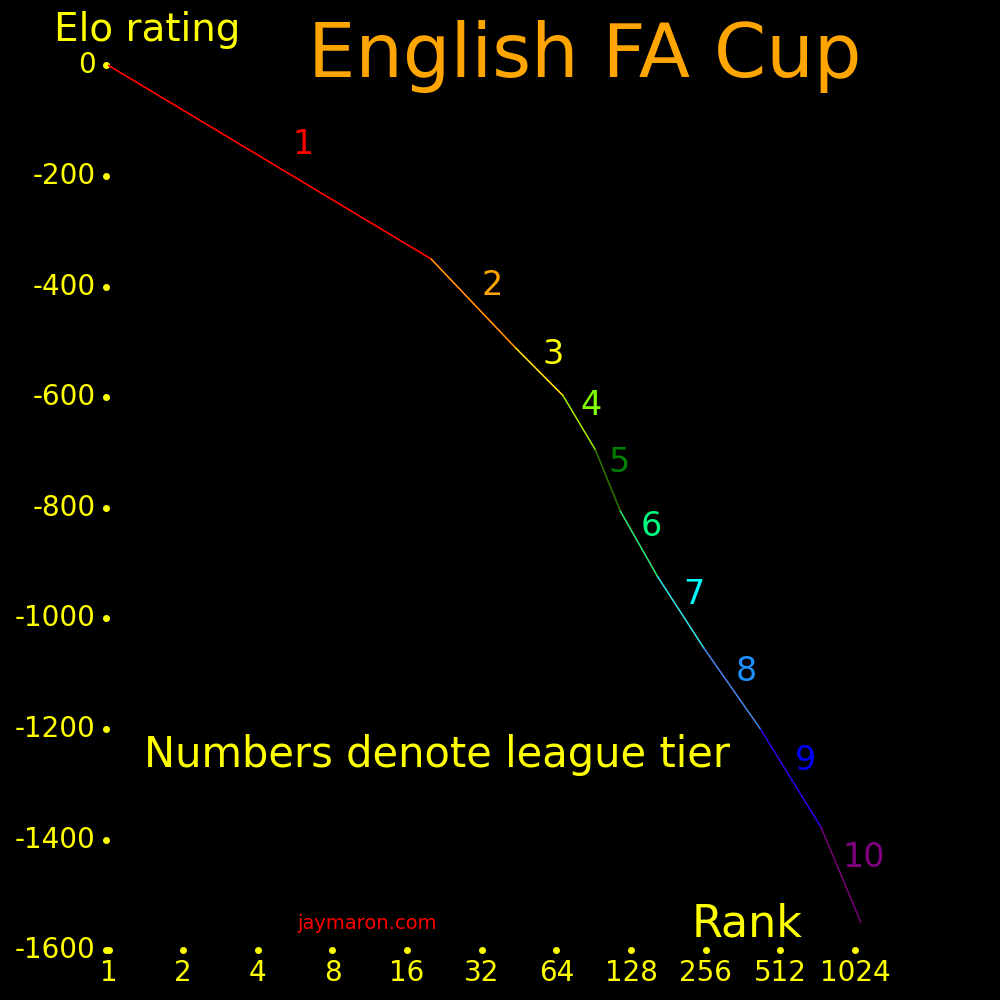
For soccer, we use the English soccer league system.
 |
 |
|---|---|
 |
 |
|---|---|
Rules should be simple. Soccer rules are simple and football rules are complex.
Rules should yield a game with big depth, where depth is the difference between the world champion and an average player.
A game can have flexible rules. There are default rules and players can change them by gentleman's agreement. The default rules can be different for each tournament. Proposed rules:
There is a "market", with a roster of pieces to choose from. Each piece has a value, and there is a value cap.
There is a "huddle". Each player decides his opening formation in secret.
The game ends when capture become impossible. The remaining pieces are totalled by points and the player with the most points wins.
The king is not sudden-death. Non-royal. It's okay for the king to be captured.
The game has blockers, which can't capture and can't be captured.
Balls can be added, which can be carried and passed. Each piece has a rule for passing and receiving. Yardage gains are part of the score function.
 |
 |
|---|---|
A piece has a rule for motion, a rule for capture, and it can have special powers. Many combinations are possible.
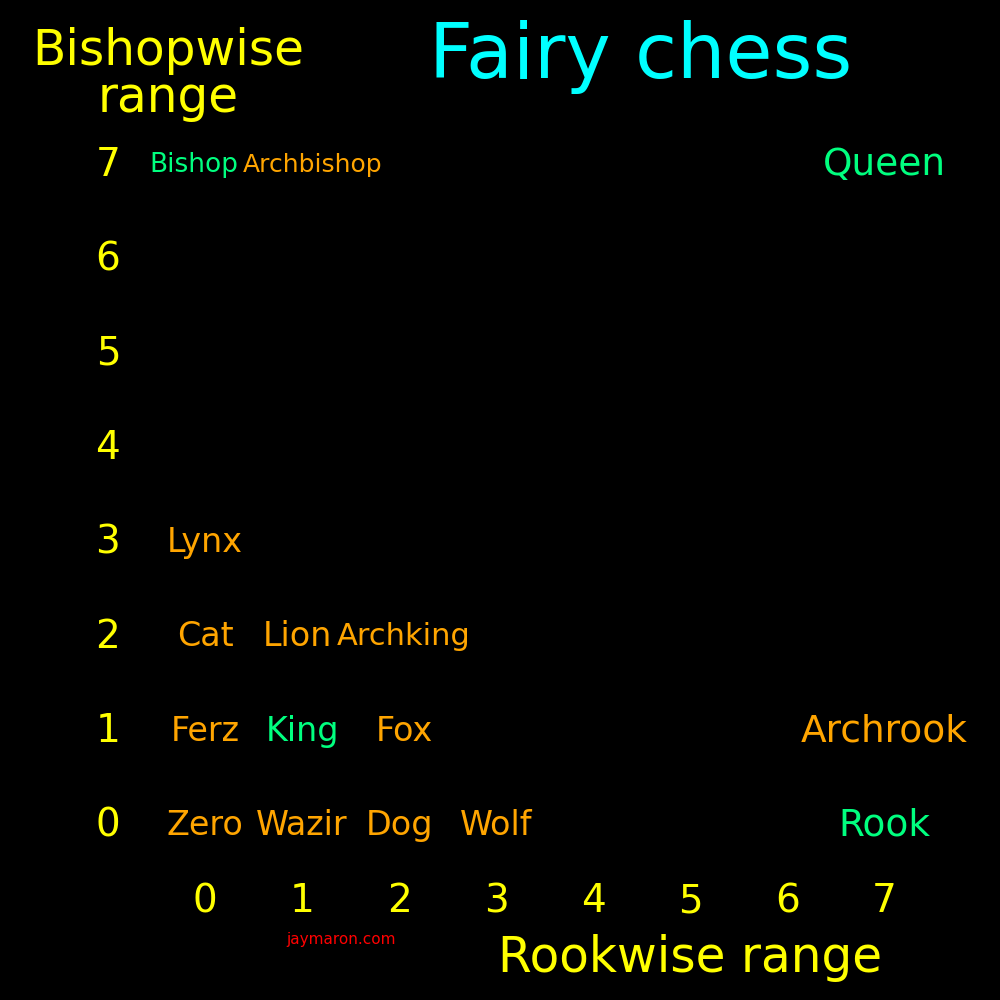
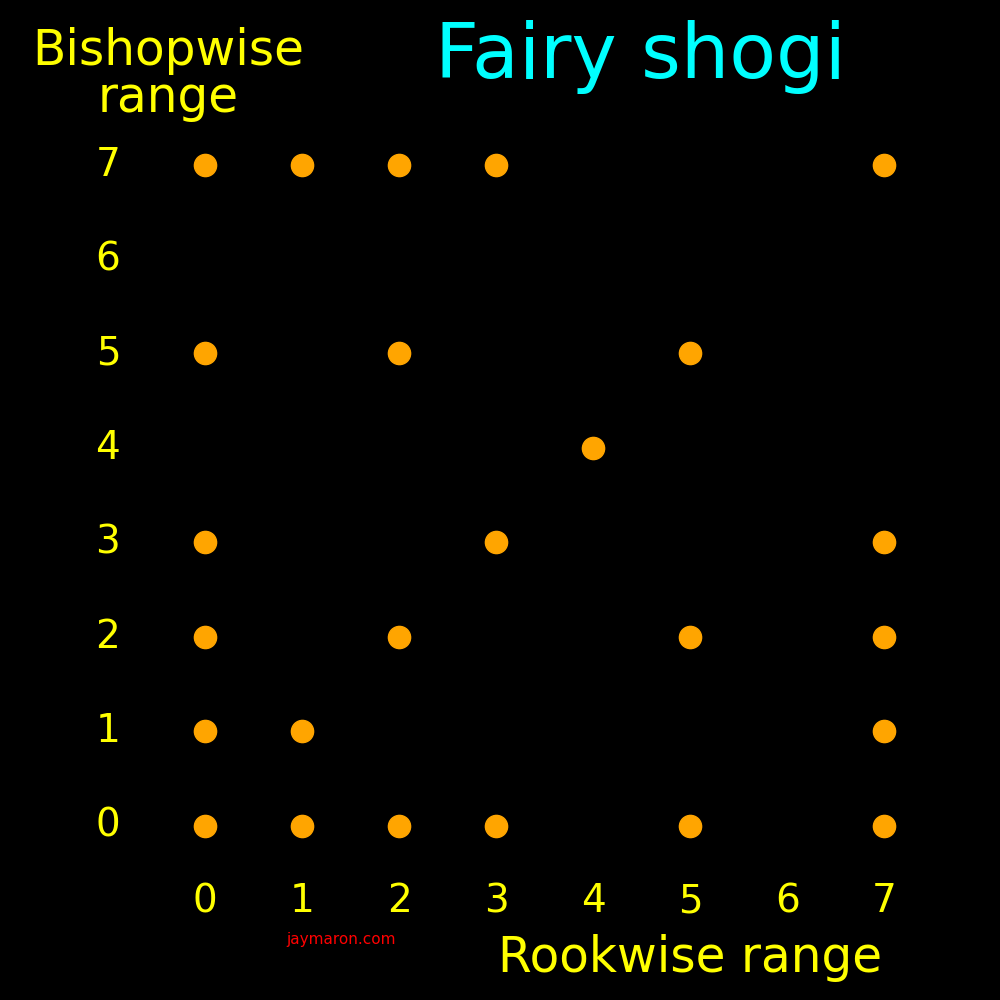
Define "pure" to be a symmetric piece that has the same rule for motion and capture. They can be represented by 1 point on the chart.
Define "divergent" to be a symmetric piece with different rules for motion and capture. It can be represented by 2 points on the chart.
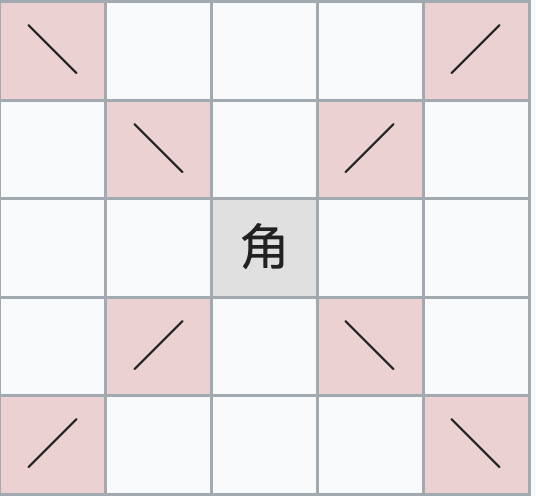
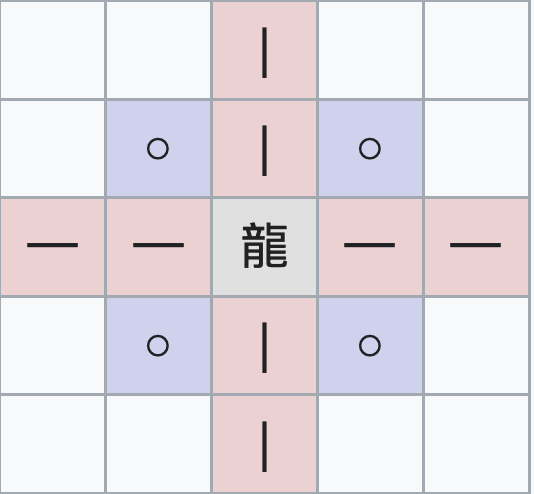
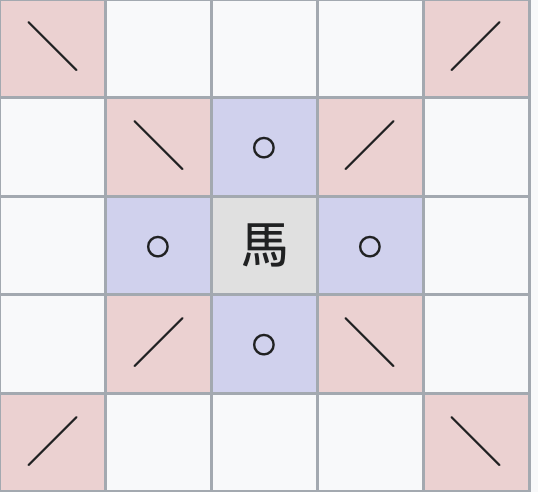
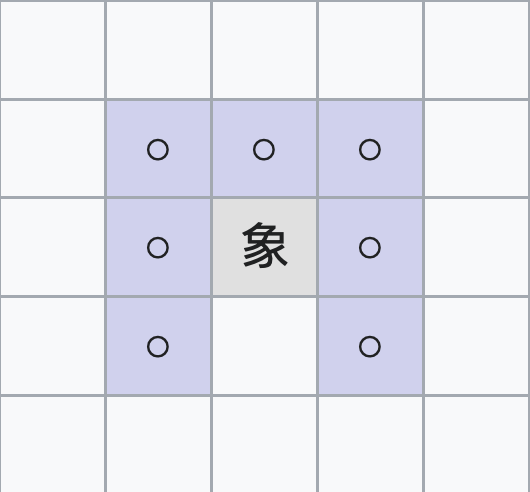
There are many versions of fairy shogi, and they collectively have most of the symmetric pieces. Fairy shogi uses the symmetry between rookwise and bishopwise motion.
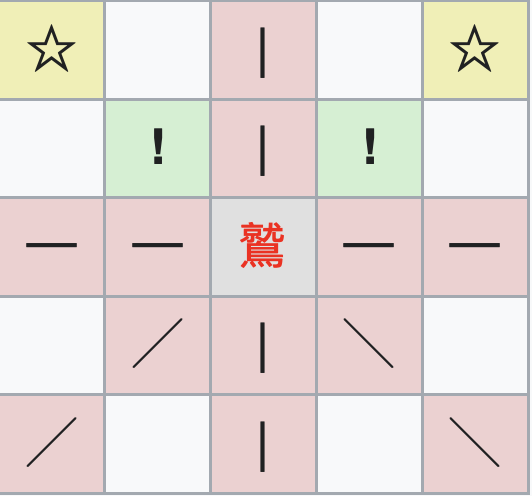
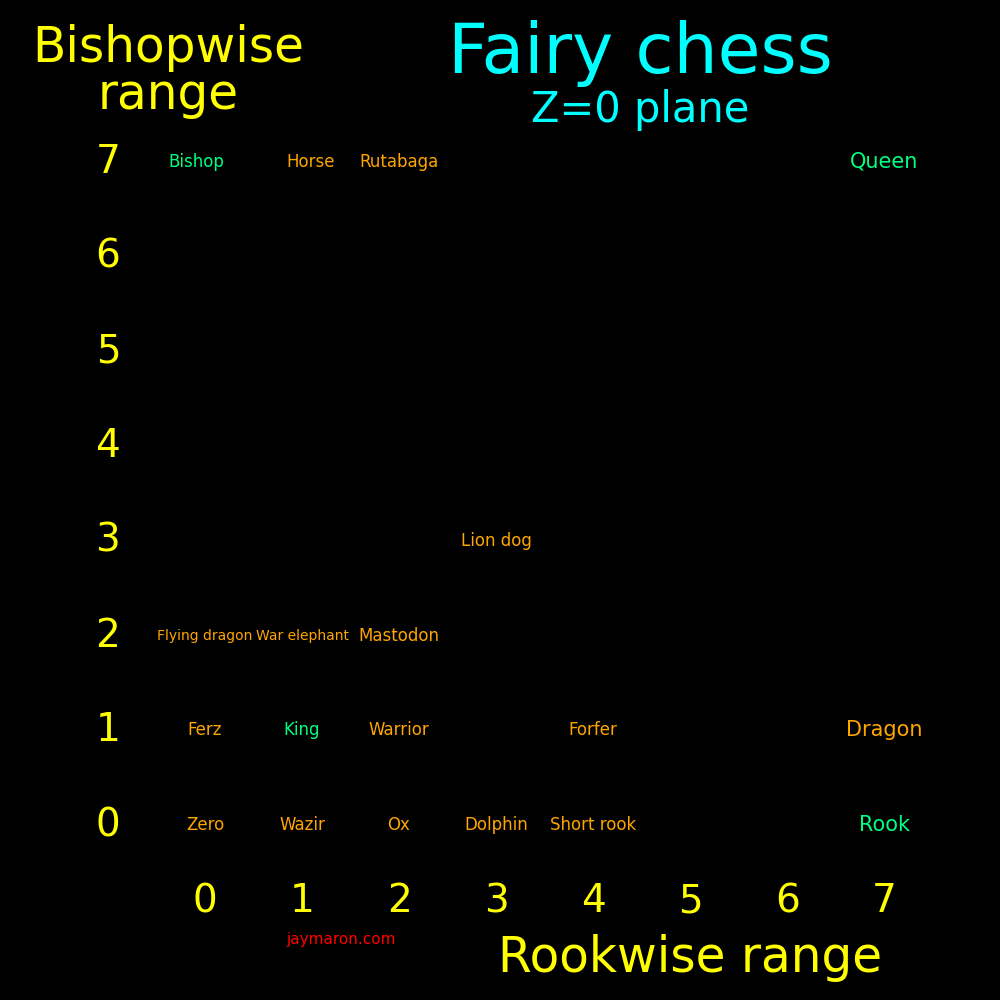
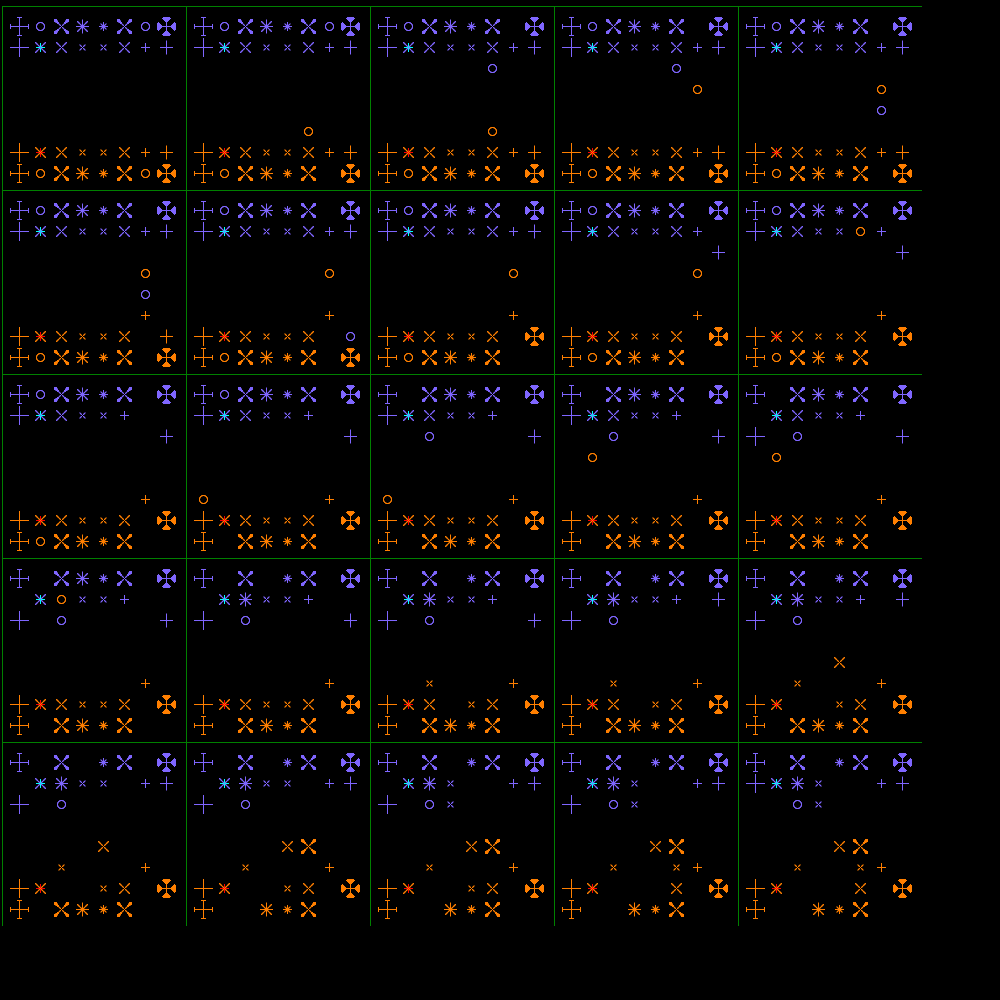
The chart shows fairy chess space, where the X axis is rookwise range, the Y axis is bishopwise range, and the Z axis is knightwise range. The chart shows the Z=0 plane. A knight is {X,Y,Z} = {0,0,1}. An archknight has twice the range of a knight and is at {0,0,2}.
Go uses a zero piece that doesn't move.
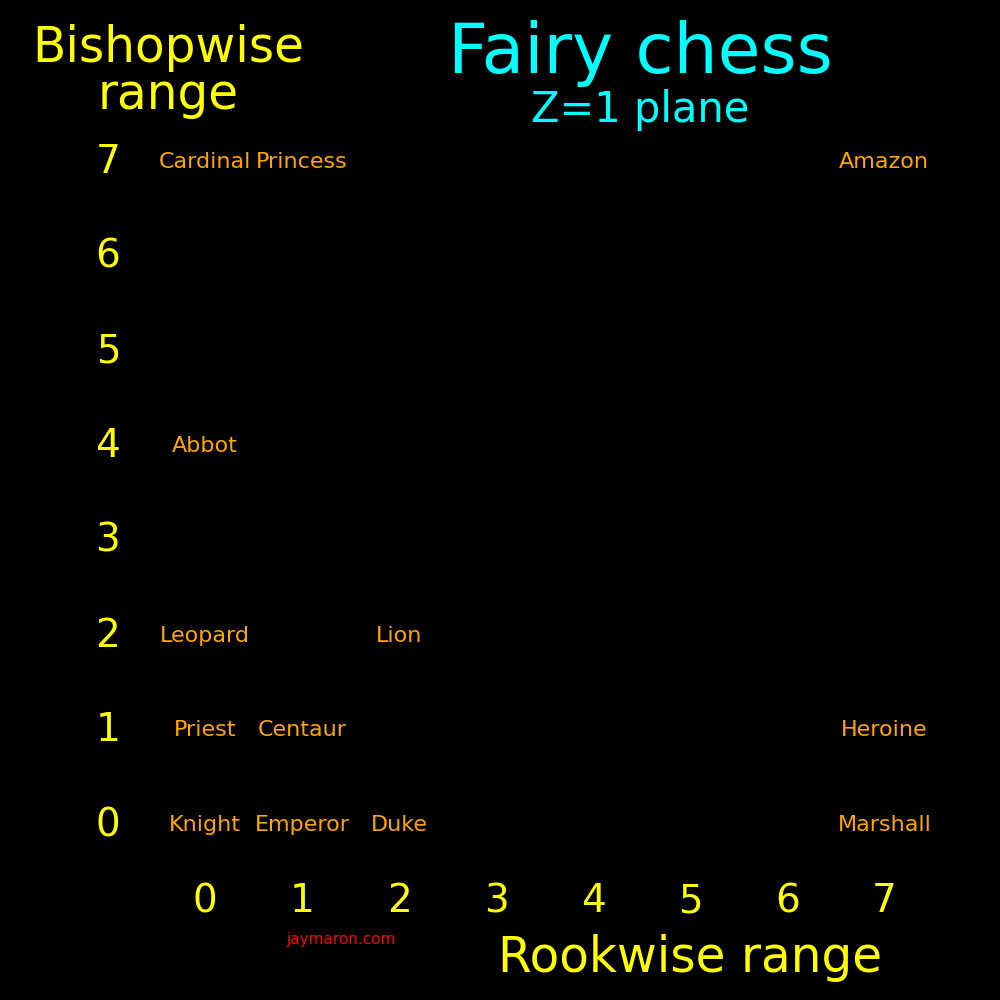
Most of the natural symmetric pieces are in the Z=0 plane. The Z=1 plane has all fusions of Z=0 pieces with a knight.
More dimensions exist, such as the camel leaper (3,1) and zebra leaper (3,2).
A blocker has a capture range of zero. This weakness is balanced by making it uncapturable.
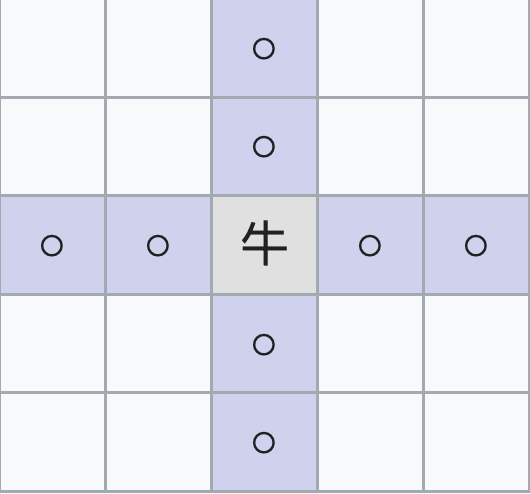
Define tribes by motion type. Rook, bishop, king, knight, bishop+. Each member of a tribe can have any range.
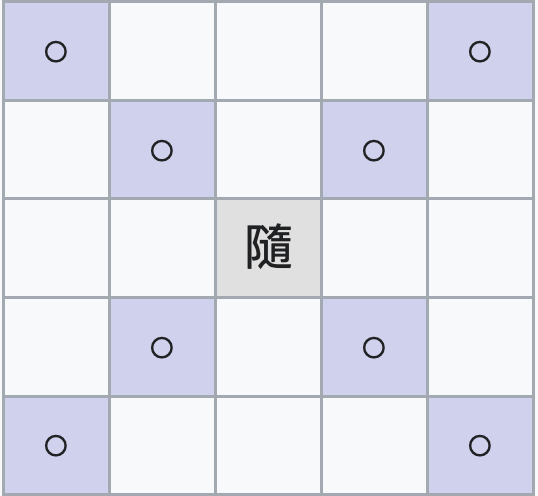
The bishop tribe has 2 subtribes, light and dark. Doom chess uses bishopwise pieces in pairs, one light and one dark.
 |
|---|
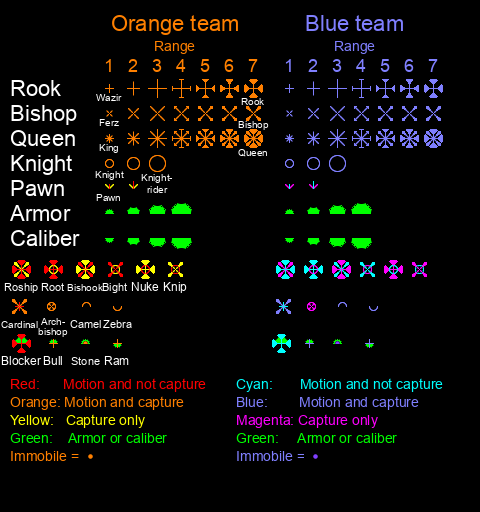
The table has a roster of diverse pieces that fill fairy space. It emphasizes pieces that are full-directional. Such pieces can move forward, backward, and to both sides. Furthermore, most pieces should be symmetric, where motion directions are symmetric and capture directions are symmetric.
A blank entry in the table indicates a value of 0.
                  Move    Capture   Value   Armor  Damage  # for Doom   Features
                                                             chess

King                 *1        *1      4              1         1
Archking             *2        *2      6              1         1
Queen                *7        *7      9              1

Knight (2,1)         ~1        ~1      3              1         2
Archknight (2,1)     ~2        ~2      6              1
Camel (3,1)        (3,1)     (3,1)     2.5            1
Zebra (3,2)        (3,2)     (3,2)     3              1

Rook                 +7        +7      5              1         1
Rook3 (Wolf)         +3        +3      3.5            1         1
Rook2 (Dog)          +2        +2      2.5            1         1
Rook1 (Wazir)        +1        +1      1.5            1         1
Puppy                +2        +1      2              1
Antipuppy            +1        +2      2              1

Bishop               x7        x7      3.5            1         2
Bishop3 (Lynx)       x3        x3      2.5            1
Bishop2 (Cat)        x2        x2      2              1
Bishop1 (Ferz)       x1        x1      1.5            1         2
Farz                 x1        +1      1.5            1
Kitten               x2        x1      1.75           1
Antikitten           x1        x2      1.75           1

Bishop3+ (Lynx+)     x3 or +1  x3      3              1             Cardinal3
Bishop2+ (Cat+)      x2 or +1  x2      2.5            1         1   Cardinal3
Bishop1+ (Ferz+)     x1 or +1  x1      2              1             Cardinal3

Roship               +7        x7      5
Bishook+             x7 or +1  +7      4.5

Blocker, king        *1        Unable  1       2      0
Blocker, queen       *7        Unable  2       2      0
Blocker, rook        +7        Unable  1       2      0         1
Blocker, bishop+     x7 or +1  Unable  1       2      0         1
Blocker, knight      ~1        Unable  1       2      0         1
Archbishop           x1 or ~1  x1 or ~1  5            1
Honey badger         *1        +1      2       1      1
Bull (enforcer)      *1        +1      2              2
Stone                                   .5     1      0

Joker                +1        +1      2              1             Starts as a wazir. Can use its move to transform to any of {wazir, wazer, ferz, farz}
Forcer               +1        Unable  2              0             Exerts a kingwise force on a piece in rook range. The piece can be friend or foe
Bomb                 +1        Unable  2              1             If detonated, destroys itself and all pieces within a radius of 1, kingwise. Friend and foe pieces are destroyed.
Mortar               +1        +2      2              1             Doesn't move when capturing
Diagonal pieces come in pairs, one light and one dark.
Numbers indicate range. Symbols for motion directions:
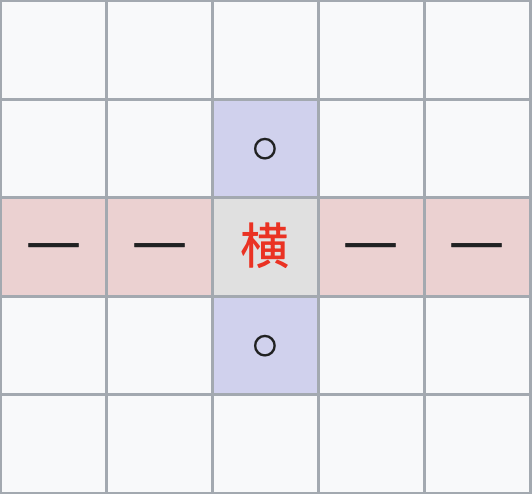
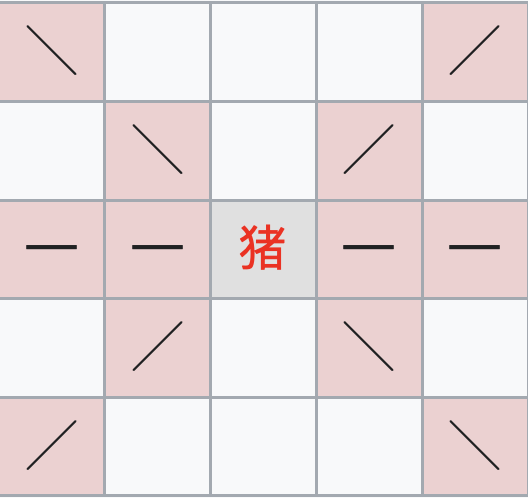
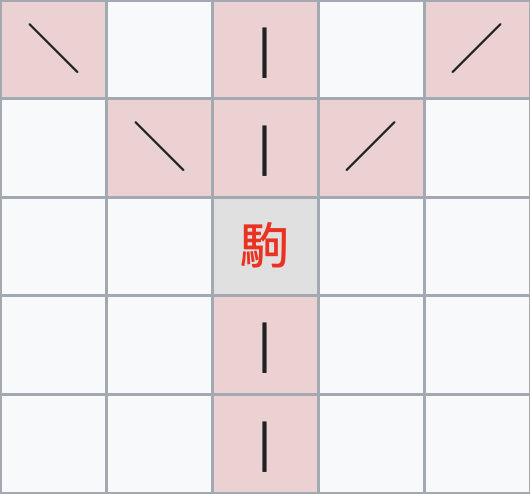
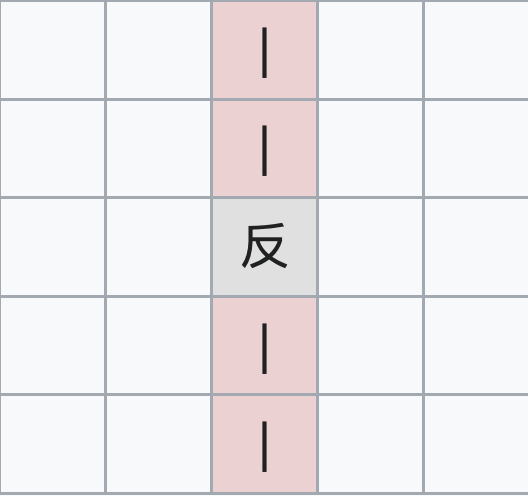
+    Rook
x    Bishop
*    King
~    Knight
|    Forward or backward
-    Right or left
^    Forward
v    Backward
d    Diagonally forward, either to the left or right, like a pawn capturing
e    The range is exact. No more, no less. The piece can leap.
"Armor" is the number of hits a piece can take without being captured.
"Damage" is the number of armor points subtracted by a hit.
After the forcer has forced a piece, the forced piece may not return to its previous square on the next move.
The roster has pieces from the rook-bishop chart. The table lists the most natural combinations, but any combination is possible.
The names of fairy chess pieces are in a state of chaos and we ditch them. Mammals with short names are tapped, such as the dog, cat, wolf, lynx, fox, and lion.
 |
|---|
Weak pieces are "serfs", such as the wazir, wazer, and ferz.
"Cantor pieces" are intermediate in strength between serfs and nobility, such as the dog and cat.
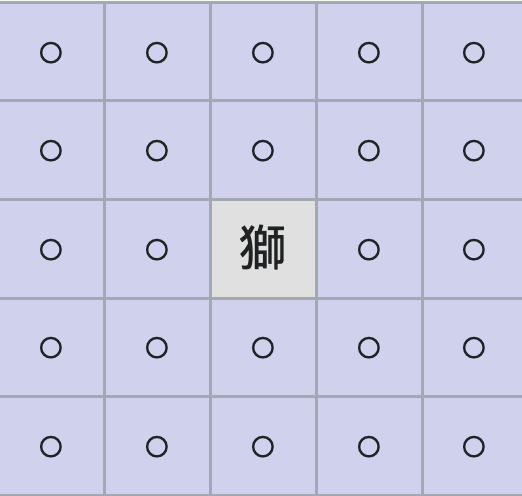
Doom chess avoids excessively strong pieces. Queens are so strong that it's rare for there to be an odd number of queens on the board. Even a queen with range 3 is excessively strong. An archking is a queen with range 2, slightly stronger than a rook.
Excessively strong pieces diminish the importance of lesser pieces. They're fork monsters. Don't have a piece that combines the moves of a knight and another piece. Also avoid the knightrider, a knight with extended range. That being said, have such pieces available in case players choose them by gentleman's agreement.
If a piece has a superstrong ability, give it a weakness for balance.
The cat+ is a compromise. It's a bishop with reduced range in exchange for the ability to move one square rookwise, noncapture.
You want to encourage exchanges between different kinds of pieces, and having pieces with a range of strengths helps.
The strength of a piece tends to be reflected by how often it's moved. Computers can do simulations and calculate this.
Design pieces that synergize with other pieces. A good team is {rook, bishop, knight} for their diverse directions of motion, and it gives them forking power. A queen adds further diversity.
The camel and zebra add forking powor.
Mixed pieces like the roship and bishook add forking power.
A Cartesian board enables big directional diversity, and a hex board has less diversity.
A rook, bishop, and knight have the same angular fill factor. A queen has twice the fill factor.
An "agile" piece has maximum angular fill factor. It can reach any square within range. Some angles might potentially be blocked by other piecs.
A "superagile" piece can change directions as it moves. But it can't leap over pieces.
A "superleaper" has many leaping options.
Diagonal pieces like bishops are colorbound and cover only half the board.
The camel leaper (3,1) is colorbound and the zebra leaper (3,2) isn't.
Colorboundness for diagonal pieces can be mitigated by adding pieces like the bishop+, which moves and captures like a bishop and also moves like a wazir non-capture. It can also be mitigated by having several bishopwise pieces on each color. Diagonal pieces can come in pairs, one light and one dark. Doom chess uses both of these measures.
A good team is {light bishop, dark bishop, bishop+}, because you can lose one of them and still have full board coverage.
Pawns are poor team players. It's hard to make good pawn structure, and if a pawn captures, it often disrupts the structure.
Most leapers have poor board coverage. Board coverage for leapers:
Vertical

   5                          1/16
   4                    1/16   1                                                     Commuter
   3              9/64   1    1/2                                         Tripper    Antelope
   2        1/4    1    1/4    1                                 Alfil    Zebra      Stag
   1  1/2    1    1/2    1    1/2                         Ferz   Knight   Camel      Giraffe
   0   1    1/4   9/64  1/16  1/16  1/16            Zero  Wazir  Dabbaba  Threeleap  Fourleap

       1     2     3     4     5     6   Horizontal   0     1       2         3         4
An amphibian is (1,1)+(3,0) and it has full board coverage.
"Attack asymmetry" is where a piece can attack another piece and the other piece can't attack back. This is part of the magic of chess and it leads to forking opportunities. "Fairy space" is the structure of attack diversity. Diversity can come from many sources:
*) Direction diversity, for example the {rook,bishop,knight} set. The queen adds further diversity by combining directions.
*) Range for capture.
*) Range for motion. Fast pieces outmaneuver slow pieces.
*) Divergent pieces, with different rules for motion and capture. For example, the wazer, which moves like a wazir and captures like a ferz.
*) Rank
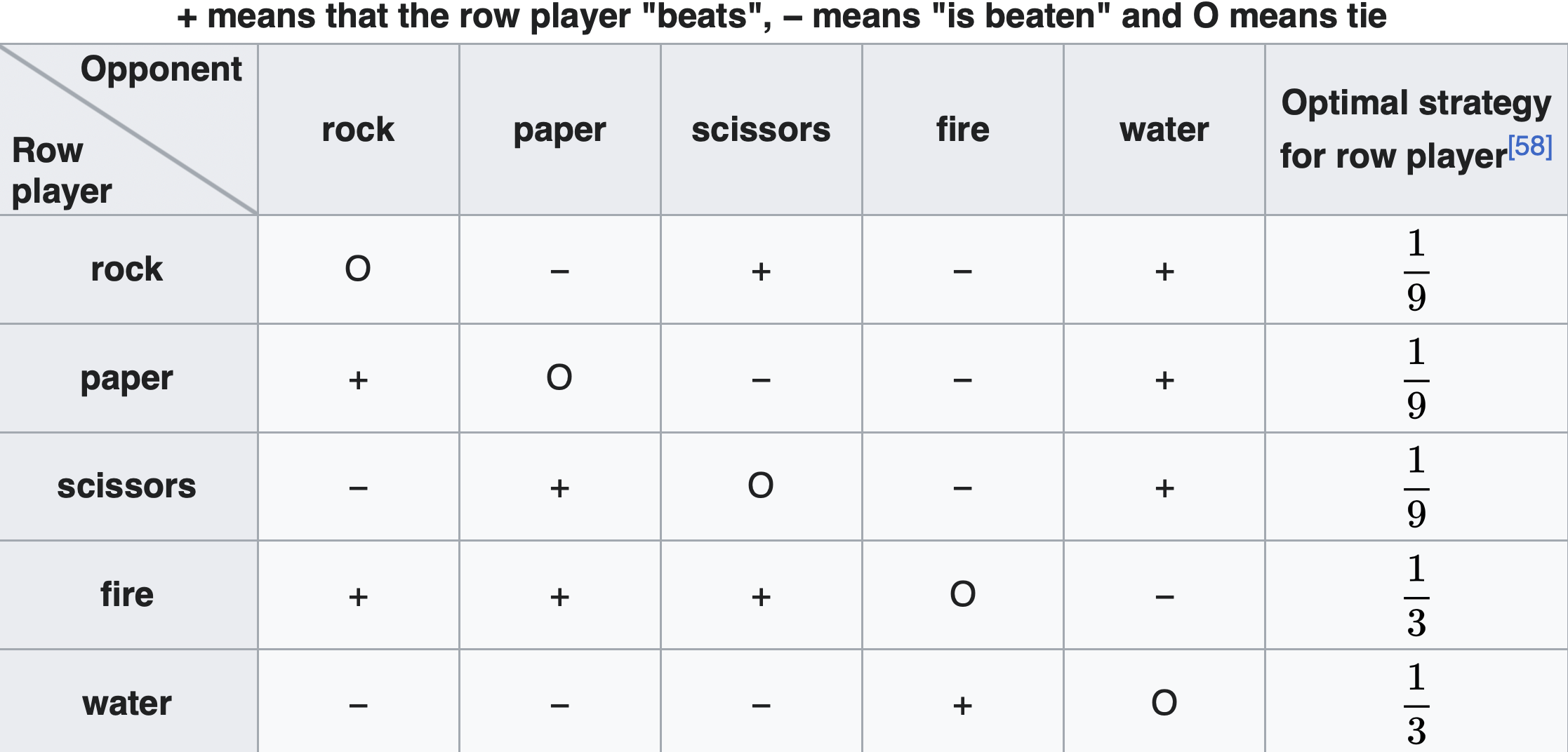
*) Flavor. For example, rock paper scissors.
*) Motion that depends on terrain.
*) Pieces that capture without moving, like a mortar.
*) Creation. The ability to create a new piece and put it on the board.
*) 3D motion.
If two pieces are combined, the strength of the fusion tends to be equal to the sum of the parts, plus a small bit. For example, a queen is stronger than a rook + bishop.
For pieces with large range, rookwise range is stronger than bishopwise range.
For pieces with small range, rookwise range is weaker than bishopwise range. A wazir is weaker than a ferz because it needs 2 moves to make 1 ferz move.
The strength of a piece tends to scale with the number of squares it can reach in a move. This often depends on board location. Board coverage also matters. Bishopwize pieces cover only half the board.
Define a function for the strength of a piece as Sxyz, which can be measured with simulations. x is rookwise range, y is bishopwise range, and z is knightwise range.
Define a difference function Dxyz
Sxyz = Sx0z + S0yz + Dxyz
Define a knight function Kxy
Kxy = Sxy1 - Sxy0
A piece that moves rookwise with range i and captures rookwise with range j has strength Rij.
A piece that moves bishopwise with range i and captures bishopwise with range j has strength Bij.
There are two more functions for pieces with mixed ranges for motion and capture.
The precise strengths of the wazir and ferz are fundamental parameters to measure.
It's rare for a bishop to have a chance to move with range 7. It's from corner to corner, and bishops shouldn't be in corners. A bishop with range 5 is worth almost as much as a bishop with range 7.
The following table gives an estimate for value as a function of range.
Range   Rook   Bishop  King   Knight  Bishop+  Camel  Zebra  Blocker  Blocker  Blocker  Blocker
                                                              Rook    Bishop    King    Knight

 1      1.5    1.5    3.5     3      2        2      2.5        .5      .5       1        1
 2      2.5    2.0    6       5.5    3        3      4          .7      .7       1.25     1.5
 3      3.5    2.5    7.5     8      3.5      -      -          .8      .8       1.5      1.75
 4      4.0    3.0    8       -      3.75     -      -          .9      .9       1.65     -
 5      4.5    3.25   8.5     -      4.0      -      -         1.0      .95      1.8      -
 6      4.75   3.5    9       -      4.25     -      -         1.1      .8       1.9      -
 7      5      3.5    9.5     -      4.25     -      -         1.2     1         2        -
Market chess has a roster of pieces to choose from. Each piece has a price. Each player has a budget for buying pieces, like a salary cap.
Players may add pieces to the roster by gentleman's agreement, and they can change the piece values.
Auction chess uses the same setup as market chess, with a roster and salary cap. A piece from the roster is chosen at random and both players bid. Repeat until all pieces are chosen.
Players take turns choosing pieces.
Each player chooses their initial formation in secret.
Some pieces are decided randomly, with a total value specified.
There can be a mix of market, auction, draft, randomness, and initial formation.
 |
|---|
A triangle piece is full-directional and has full-board coverage.
Triangle pieces aren't symmetric. They can be made symmetric by giving them the ability to transform to a different kind of triangle. A transforming triangle is a "turret".
Avoid discontinuity of goals. For example, a sudden-death king is a discontinuity in that the value of a king is infinite compared to other pieces. It's an obstacle to balance among pieces. It diminishes the king's options and is an obstacle to complexity.
Chess pawns are a discontinuity because they're low strength but can become queens. Also, the fact that they're one-way diminishes complexity.
Castling is an awkward rule. Ditch it. Also ditch en passant.
Offense is hard to generate. Blockers and bombs help. You can also add a scoring function for forward ball yardage.
In classical chess, it's hard to generate offense with pawns because it's hard to pass a defensive line of opposing pawns.
Pawn battles are often boring because all pawns have the same powers.
You want to get your pieces into enemy territory, but there are hazards. The invading pieces should be weak pieces. They should have the ability to capture backwards and support the next wave of attackers.
Design rules that discourage draws.
Classical chess has a rule that the game is a draw if any possible move results in self-checkmate. Ditch this rule.
Draws can be lessened by disallowing repeat positions.
Grandmaster-level games draw around half the time. Among non-draws, white wins around 3/5 of the time. The higher the level of play, the more frequent the draws. Blitz has a lower fraction of draws than classical chess.
The fact that chess is prone to draws decreases game depth.
Find ways to equalize black and white. For example, declare that if the piece count at the end of the game is equal, then black wins. Clock times can also be unequal between players. This is analogous to "komi" in the game of go.
For piece type "i" and "j", there is a rule for the outcome of an interaction between them. The rule can distinguish between attacking and defending pieces. The chess matchup matrix is simple. The attacking piece wins. More complex matrices are possible, and the outcome can be probabilistic.
Momentum is speed times mass. The matchup matrix can involve momentum.
Pieces can have rank, where you can only capture a piece with equal or lower rank.
 |
 |
 |
|---|---|---|
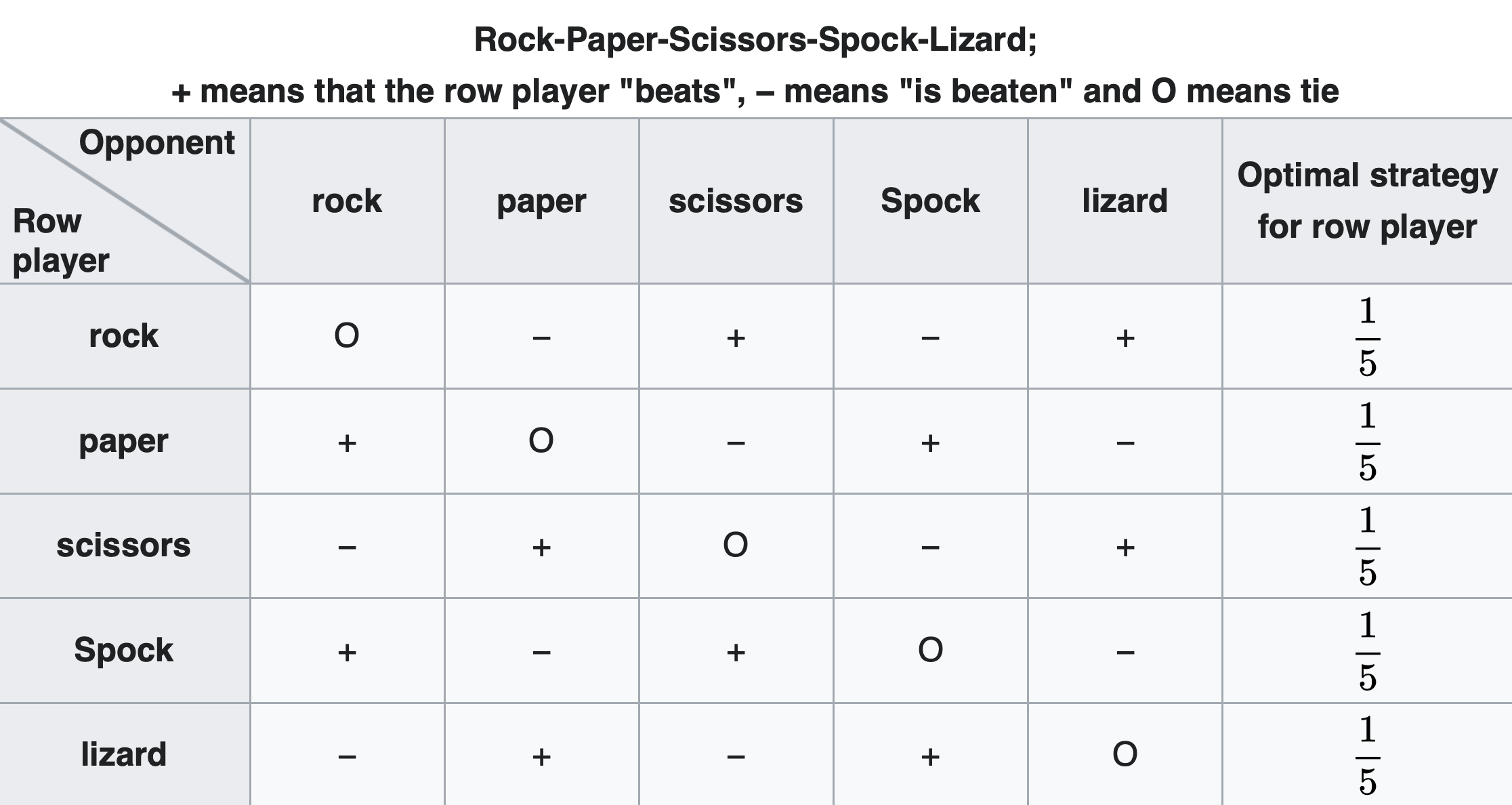
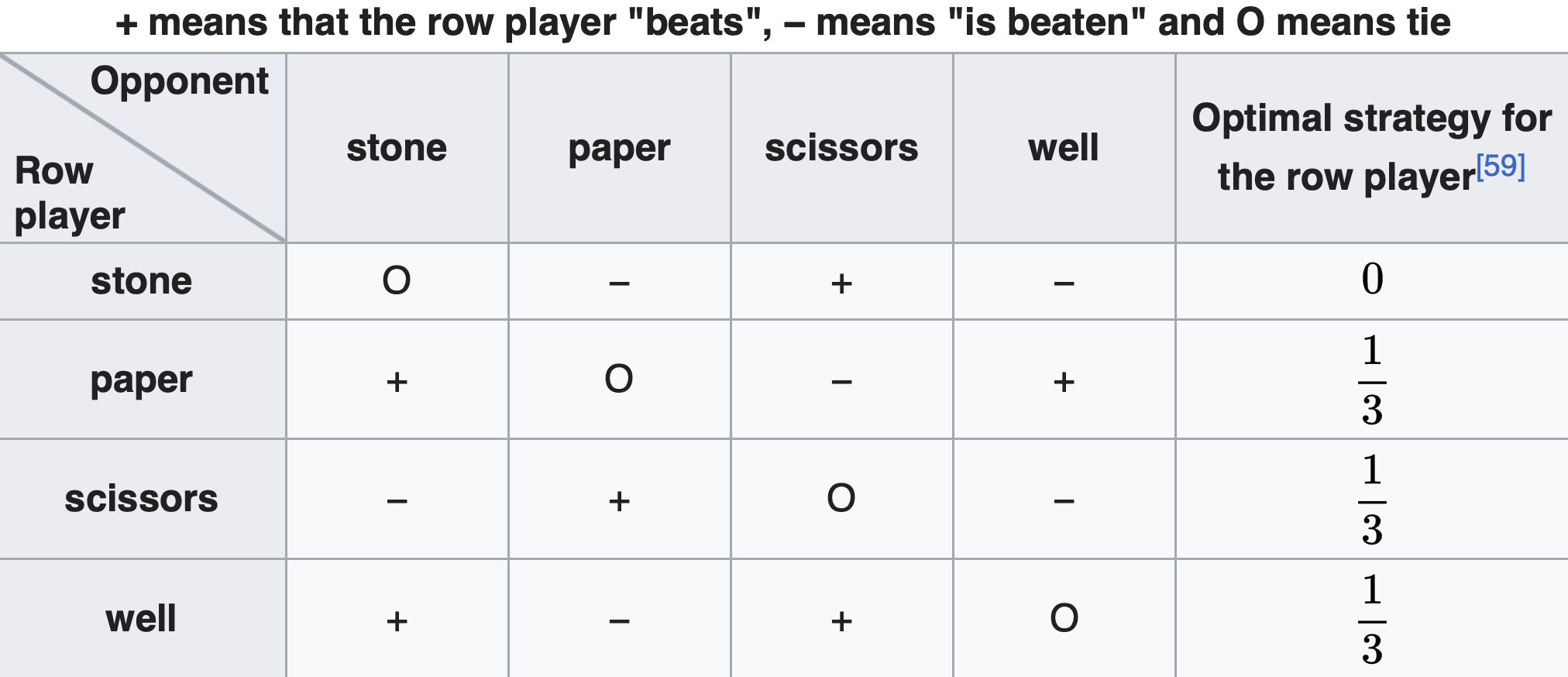
It can be expanded to 5 pieces by adding a spock and a lizard. It can be expanded to any set of pieces with odd number.
 |
|---|
Armor points is the ability to take hits without being captured.
Most pieces have 0 armor points in the sense that they can be captured in one hit.
A piece that's uncapturable has infitinte armor points. A blocker.
Each piece has a "damage" value, which is the amount of armor points subtracted if it makes a hit.
Give squares the ability for multiple occupancy.
Add dimensions beyond 2D.
The properties of a piece can depend on terrain.
Pieces can have the power to change terrain. For example, building roads and bridges.
Each piece has a speed and a cargo capacity at each speed.
Cargo capacity can include mass, volume, or other variables.
Each piece has a mass and a volume. Another piece with enough cargo capacity can carry it.
 |
|---|
Have balls and tally yardage. You can also tally goals.
You can have a move limit such that the game ends after the move limit, and points are tallied.
A ball can be on the ground or it can be carried by a piece. A piece can pick up and put down a ball.
A piece has a passing pattern and a receiving pattern. A piece may pass the ball to another piece that's within its passing pattern, and if the ball passes through the receiver's receiving pattern.
Some pieces have an interception pattern or a goalie pattern.
A piece can have a racket, which enhances throwing.
Each side starts with balls on their back row, and the goal is to move your ball as far forward as possible before the ball-carrier is captured (tackled). One point for each row forward. You must also defend against the enemy ball.
Alternately, the score can be based on the number of rows gained without being captured. If a piece advances and isn't captured on the next move, it gets credit for forward progress.
Give credit for forward progress. The score is the furthest the ball advanced during the game.
Each side can have multiple balls, and the total score is the total rows gained.
The game can start with balls on the ground.
Some pieces may have the power of inducing a fumble, or to strip a ball.
One can specify how many balls a piece may carry. The number could be zero. An ineligible receiver.
One can specify a move limit at which time the game ends and points are tallied. This promotes offense with the ball.
One can include columns in the scoring function. For example, reward being close to the center, like rugby.
One can include a goal zone. There can potentially be space behind the goal zone, like for hockey.
Have the option for arbitrary geometry and terrain. A piece's powers can depend on terrain.
Pieces can have more than one armor point. For example, it may take more than one tackle to capture a ball carrier.
If the score is tied at the end of the game, the winner is the first to achieve the score. Or, you could have overtime. Keep moving until one side has a better score.
Balls are analogous to bullets, grenades, explosive artillery shells, mines, etc.
Racquets are analogous to guns.
Food is analogous to fuel.
Armor is analogous to padding.
Some of the fundamental powers are:
Vehicle
   Speed              Speed can depend on engine, power, cargo, terrain, etc.
   Mass
   Volume
   Mass carry
   Volume carry       Can have cargo bays that are detachable and modular
   Terrain            How well a vehicle does on each terrain
   Angular fill       Queens have full angular fill and rooks have half angular fill
   Board fill         A rook covers the full board and a bishop covers half the board
Engine
   Force
   Power
   Endurance
Energy                Each energy form has an energy/mass
Interaction matrix    Rule for an interaction between piece type "i" and piece type "j".
                      Pieces need not be in the same square
                      Can depend on offense and defense
Armor
   Armor points       The ability to take multiple hits before being destroyed
   Damage points      The number of armor points subtracted in a hit
   Armorer            Add armor points to yourself or other pieces
   Shield             Shield pieces from hits
Impact
   Do damage
   Force              Exert a force on a piece
   Stun               Stun another piece, making it immobile for N moves
   Obstruct motion
   Banish
Projectiles
   Balls              Properties include mass, diameter, etc.        Equivalent to munitions
   Rackets            Properties include power, energy, etc.         Equivalent to guns
Passing               Rackets can help with passing
   Throw
   Catch
   Reach              Pick up a ball on the ground
   Block              Block a moving ball
   Intercept          Intercept a moving ball
   Steal
   Eligibility        For example, a football lineman is ineligible to carry a ball
Items
   Money              Drives manufacturing
   Energy             For example, fuel and food
   Engine
   Merchandise
   Sports balls & munitions
   Racquets & guns
   Mining equipment
Factory
Transform             Transform to a different kind of piece
Other powers
   Computer           For autonomous action
   Sensors            For imperfect-information games
Terrain
   Change terrain       For example, roads
   Change connectivity  For example, bridges
Add pieces
Multi-piece moves
Game goals
   Fight              Destroy enemy pieces
   Ball yardage
   Ball goals
   Money
   Merchandise
   Mining
A forcer exerts a force on other pieces. A piece that was forced must wait at least 1 move to return to its former square. Repeat positions are disallowed, like in the game of go.
Some games have terrain, such as inaccessible squares. Xiangqi is an example. One can give pieces powers or weaknesses that depend on terrain. A power can be to change terrain.
The table gives a roster for yardage chess.
                        Move  Capture  Pass  Receive  Web  Armor  Damage  Value

King1     King            *1     *1     *1      U                  1       3.5
King2     Archking        *2     *2     *1      U                  1       6
King3                     *3     *3     *1      U                  1       7.5
King7     Queen           *7     *7     *1      U                  1       9.5

Rook1     Wazir           +1     +1     *1      U                  1       1.5
Rook1H    Wazir, heavy    +1     +1     *1      U            1     2       2.0
Rook2     Dog             +2     +2     *1      U                  1       2.5
Rook3     Wolf            +3     +3     *1      U                  1       3.5
Rook7     Rook            +7     +7     *1      U                  1       5

Bishop1   Ferz            x1     x1     *1      U                  1       1.5
Bishop2   Cat             x2     x2     *1      U                  1       2.0
Bishop3   Lynx            x3     x3     *1      U                  1       2.5
Bishop7   Bishop          x7     x7     *1      U                  1       3.5

Knight1   Knight          ~1     ~1     *1      U                  1       3
Knight2   Archknight      ~2     ~2     *1      U                  1       6
Knight3   Knightrider     ~3     ~3     *1      U                  1       8

Bishop1+  Ferz+           x1,+1  x1     *1      U                  1       2
Bishop2+  Cat+            x2,+1  x2     *1      U                  1       3
Bishop3+  Lynx+           x3,+1  x3     *1      U                  1       4

Blocker, rook             +3                                 1             1.5  Ineligible to carry a ball
Blocker, rook, heavy      +2                                 2             1.5  Ineligible to carry a ball
Blocker, bishop           x3                                 1             1.5  Ineligible to carry a ball
Blocker, bishop, heavy    x2                                 2             1.5  Ineligible to carry a ball
Blocker, knight           ~1                                 1             1.5  Ineligible to carry a ball
Blocker, knight, heavy    ~1                                 2             2.0  Ineligible to carry a ball
Running back              *3     +1     *1      U                  1       3
Fullback                  *2     +1     *1      U            1     1       3
Quarterback, slow         +1     +1     *3      U                  1       3
Quarterback, fast         *2     +1     *2      U                  1       3
Midfielder                +1     +1     *2      U     +1           1       3
Goalie                    *1     +1     *1      U     *1           1       3
Receiver                  *2     +1     *1      U     +1           1       3
Enforcer                  +2     *1     *1      U            1     1       3
Enforcer, high caliber    +2                                 1     2       1.5  Ineligible to carry a ball
A blank entry means that the piece doesn't have the feature.
"U" means universal receiver. Can catch the ball from any direction.
"Armor" is the number of hits that a piece can survive without being captured.
"Web" means that the piece can catch or block balls that are within web range.
"Damage" is the amount of damage inflicted in a hit. The amount of armor subtracted. Most pieces have a damage of "1".
If a piece with a ball is tackled, the ball goes to the tackling team.
Board games rules can be written in terms of physics variables.
Mass          =  M
Volume        =  W
Distance      =  X
Time          =  T
Speed         =  V    =  X/T
Money         =  Ψ
Height        =  H
Gravity const =  g

Energy        =  E    =  ½ M V2  =  M H g
Power         =  P    =  E/T
Energy/mass   =  Em   =  E/M
Power/mass    =  Pm   =  P/M
Energy/mass   =  EΨ   =  E/Ψ
Power/mass    =  PΨ   =  P/Ψ
Ball range can depends on things like energy, mass, volume, and racket.
An example parameterization is:
Ball mass                 =  M
Ball radius               =  R
Ball energy               =  E
Ball speed                =  V
Gravity constant          =  g
Air drag param            =  C
Racket parameter          =  Q
Throw distance, low drag  =  X  =  2 E Q / M
Throw distance, high drag =  x  =  E½ Q M C-1 R-2
A computer can vary the choice of pieces and formation and find choices with big depth.
The game of go hinges heavily on experience. A general property of a game is the degree to which experience matters, and it varies between games. It's a matter of taste. Some like games that emphasize experience and some like games that don't. The rules of Doom chess can be steered to either emphasize or de-emphasize experience.
A goal is to diminish the importance of computers. Imagine a tournament where players are sequestered so that they can't communicate with computers.
A game can be designed for a team of humans and computers. For example, a game can have goals for which there is no engine.
Wise tournament structure can promote drama and generate ticket revenue. Blitz games are exciting.
A computer can simulate a game and calculate piece strengths.
A computer can evaluate each piece's fraction of the total moves, and this tends to be proportional to the strength of a piece.
Let T be the time given to a computer per move, and S(T) be the ratings strength.
S will have an approximate form S ~ D(T) ln(T), where D(T) is game depth. D will be a weak function of T.
Rosters of pieces can be varied to study the effect on D, and strategic rosters can be identified to maximize D.
Let V be the value of a piece and let Vteam be the sum of piece values. Doom chess is a roster that maximizes D/Vteam.
Give each player a clock so that they can put it where they please. Connect them wirelessly. Such clocks help team chess.
An electronic board can sense piece movement, making clocks unnecessary. This increases the watchability of blitz chess.
Blitz chess could add timeouts. For example, give each player 3 timeouts of 30 seconds each. It gives the crowd a chance to catch up with the game.
In general, there can be a function that converts the physical time taken for a move to a time charged on the clock, and the function can be non-linear.
 |
 |
 |
 |
 |
|---|---|---|---|---|
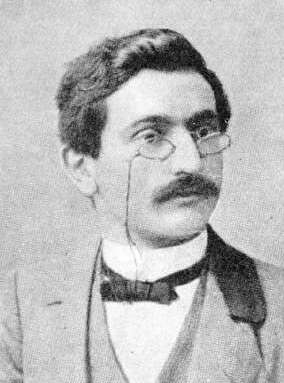
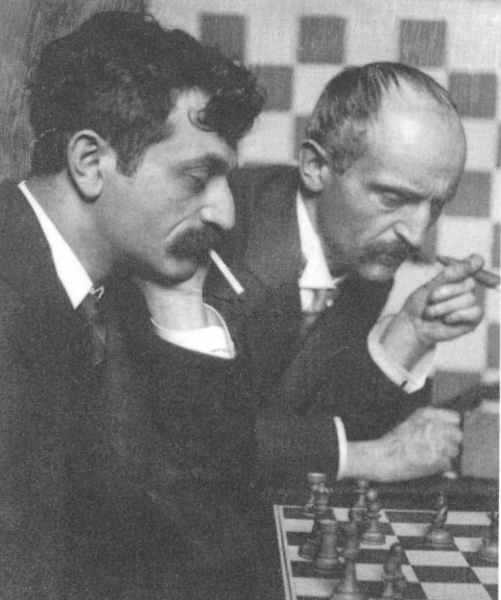
Emanuel Lasker, Berthold Lasker, and Edward Lasker are all chess grandmasters and mathematicians, and they're all related and friends. They worked together to promote go and fairy chess.
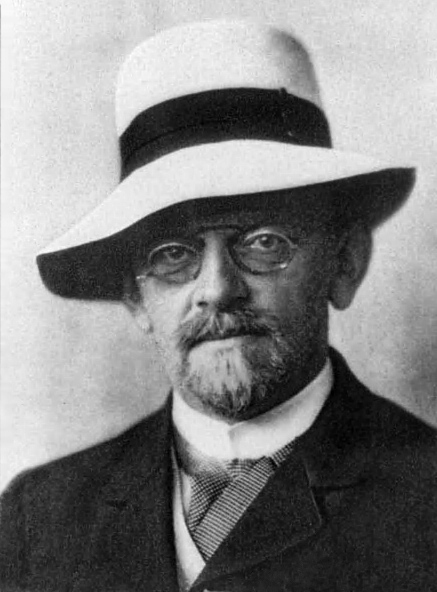
Emanuel Lasker was the chess world champion and his mathematics PhD advisor was David Hilbert.
Edward Lasker: "While the Baroque rules of Chess could only have been created by humans, the rules of Go are so elegant, organic, and rigorously logical that if intelligent life forms exist elsewhere in the universe, they almost certainly play Go."
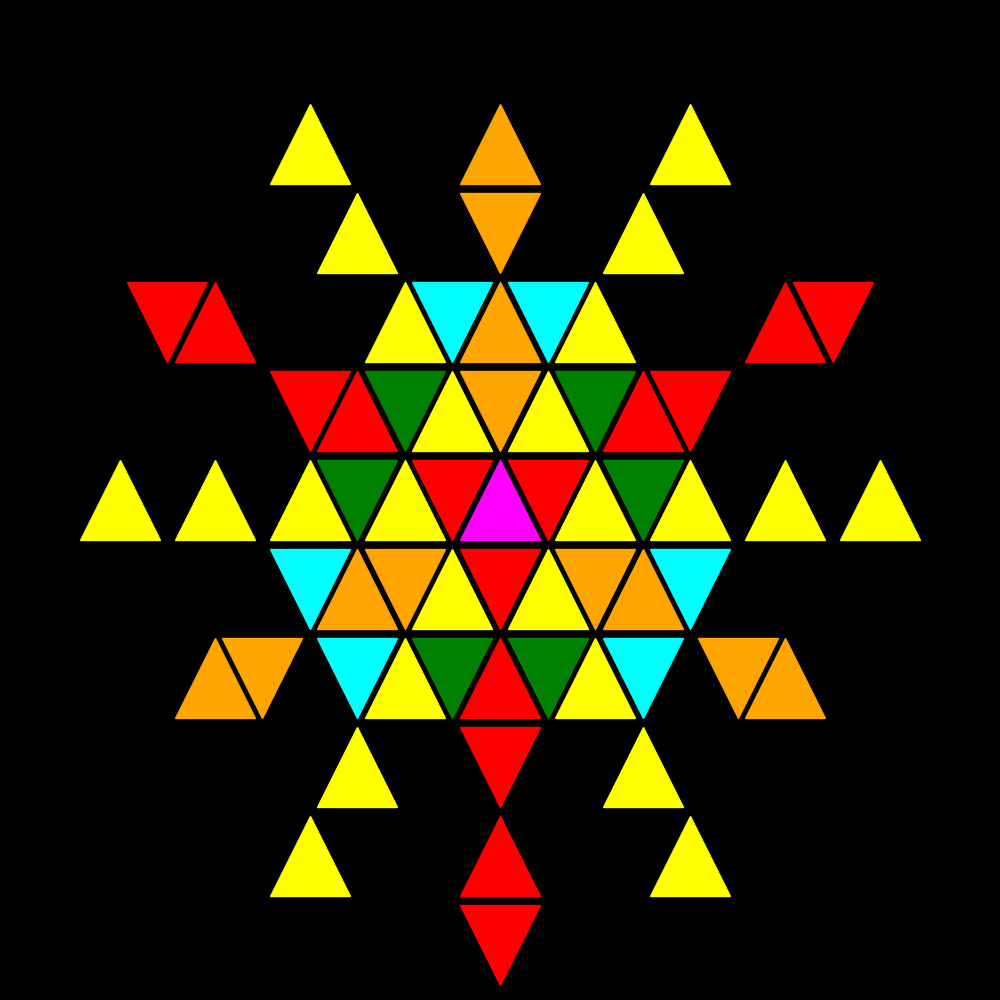
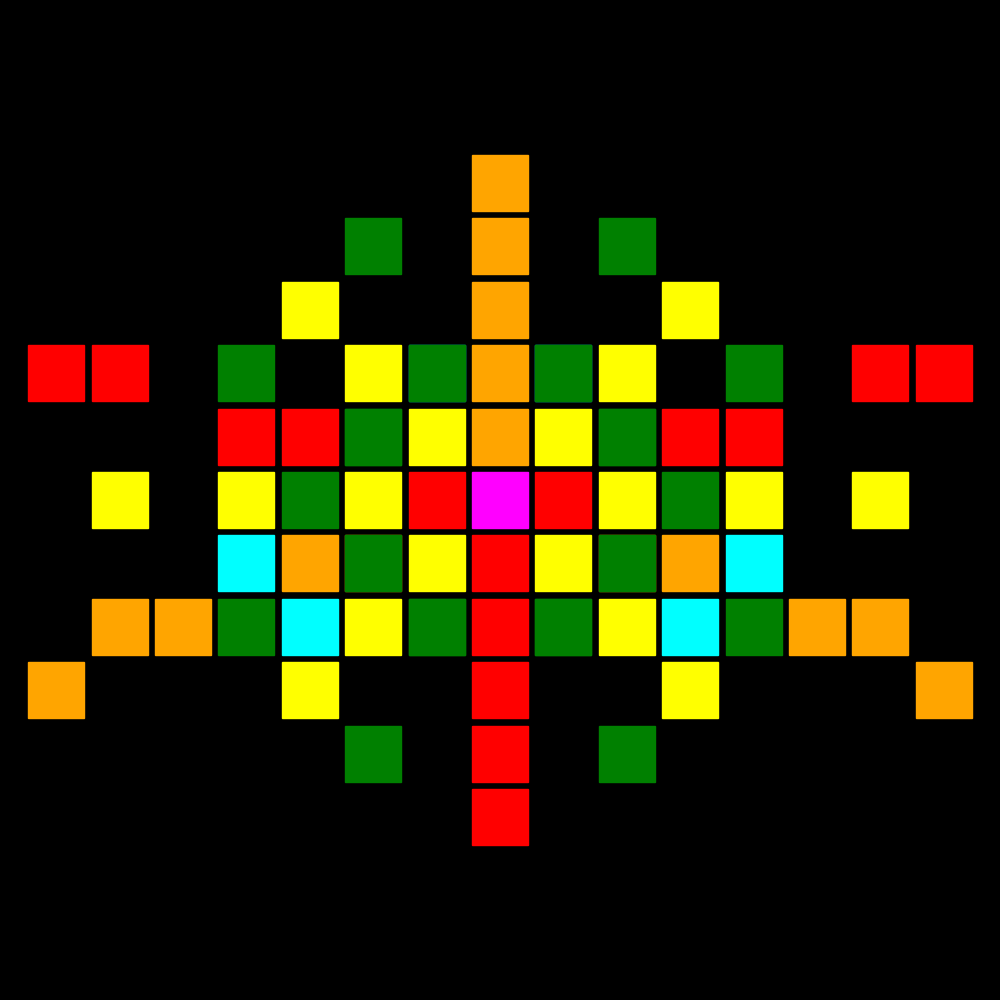
Triangle chess is a generalization of square chess. It has the pieces of square chess, plus triangle pieces.
Triangle chess adds new angles to square chess. Square chess has the angles of rook, bishop, and knight. Triangle chess adds angles for the badger and gopher.
 |
 |
|---|---|
A beaver is a trishop with half steps.
The elements of square chess are the rook, bishop, and knight. Molecules are sums of elements, such as
Queen = Rook + Bishop
The chart shows the elements of triangle chess. The molecules are:
Tring = Badger + Gopher
Packer = Badger + Trishop
Viking = Gopher + Trishop
The first two beaver ranges are equivalent to other pieces.
Beaver1 = Badger1
Beaver2 = Packer1
Some triangle pieces are useful and some aren't.
A Badger1 is a subset of a Rook1. Ditch it.
A Badger2 is fundamentally different from square pieces and has full board coverage. Keep it.
Badgers with range larger than 2 are interesting. Use them. A Badger3 has 9 moves and isn't excessively powerful.
A Gopher1 covers only 1/4 of the board and has a poor turning radius. Ditch it.
A Gopher2 is fundamentally different from square pieces and has full board coverage. Keep it.
Gophers with range larger than 2 are interesting. Use them. A Gopher3 has 9 moves and isn't excessively powerful.
A trishop are similar to a bishop. Ditch it.
A Hawkeye1 is similar to a knight and more knightness is needed. It also has a 3-leap horizonal motion. It has 6 moves and is slightly weaker than a knight. Use it.
A Hawkeye2 is absurd. Ditch it.
A Wolverine1 is absurd. Ditch it.
A Tring1 is part rook and part knight. It has 6 moves. It's interesting because it's vulnerable to diagonal pieces. Keep it.
A Packer1 and Viking1 have 9 moves and are similar to a king. Ditch them.
 |
 |
 |
 |
 |
 |
 |
|---|---|---|---|---|---|---|
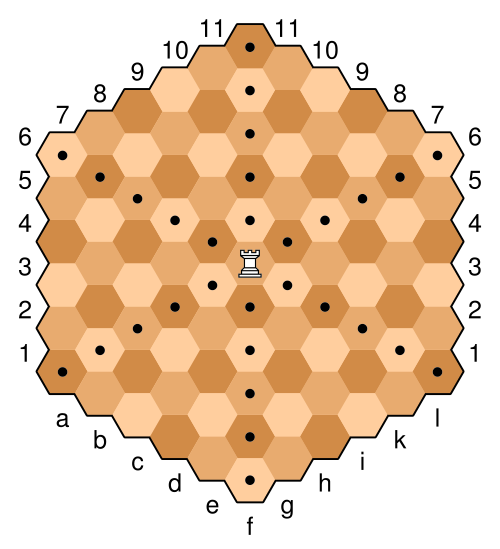
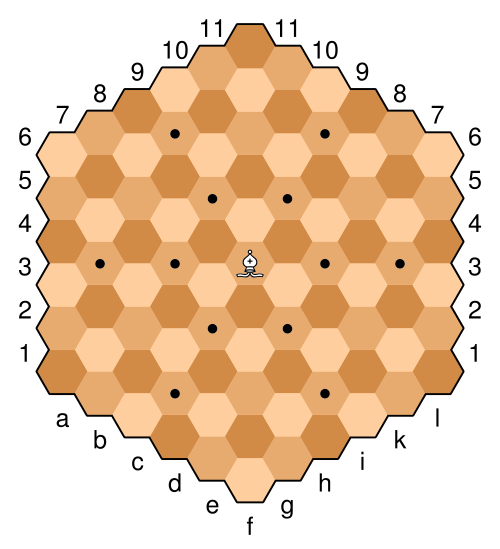
A piece that moves like a bishop covers 1/3 of the board.
 |
|---|
The chart shows pieces that are full-directional. More combinations are possible.
 |
 |
|---|---|
One can define a set of standard rulesets, which players can change by gentlemen's agreement. Playtesting will lead to a good list of standard rulesets.
A tournament can define a ruleset that's released when the tournament begins.
Rules can be designed that flummox AI. Make the rules hard to program.
 |
 |
 |
 |
 |
 |
|---|---|---|---|---|---|
 |
 |
 |
 |
 |
|---|---|---|---|---|
 |
 |
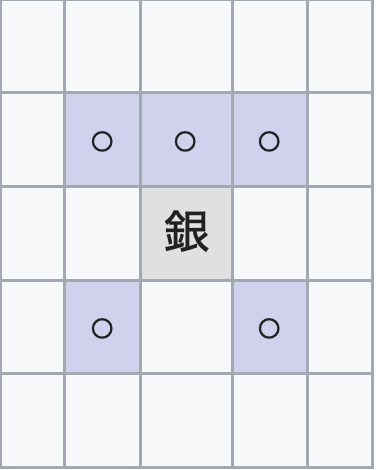 |
 |
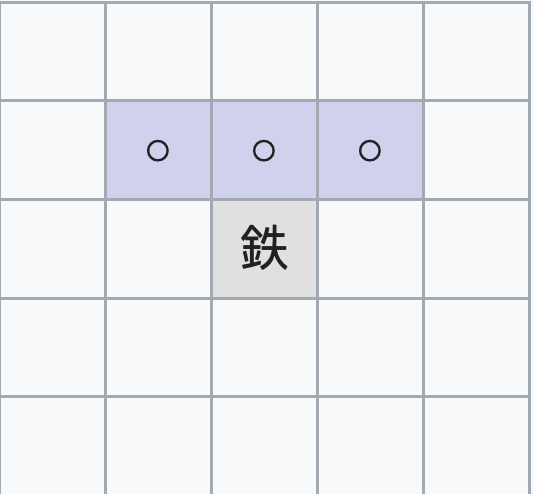 |
 |
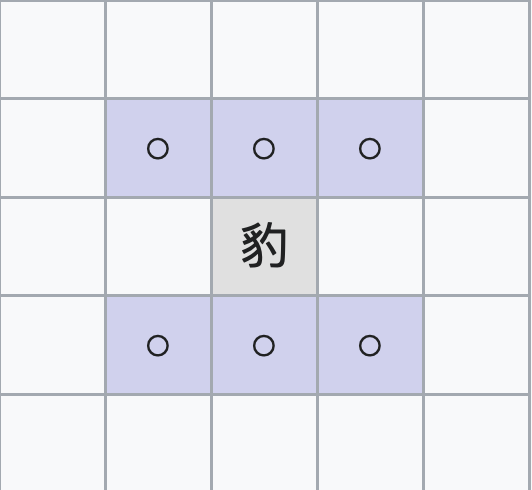 |
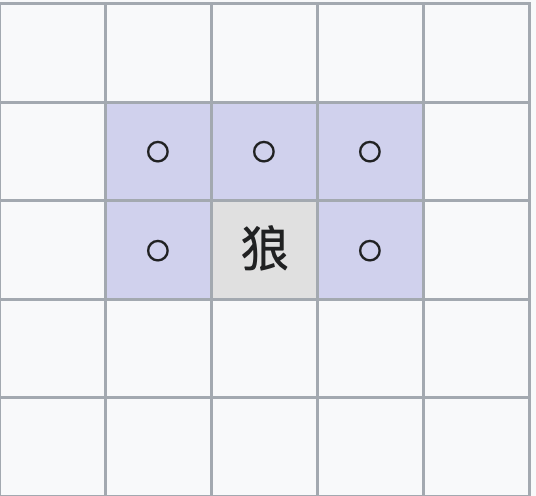 |
 |
 |
|---|---|---|---|---|---|---|---|---|---|
 |
 |
 |
 |
 |
 |
 |
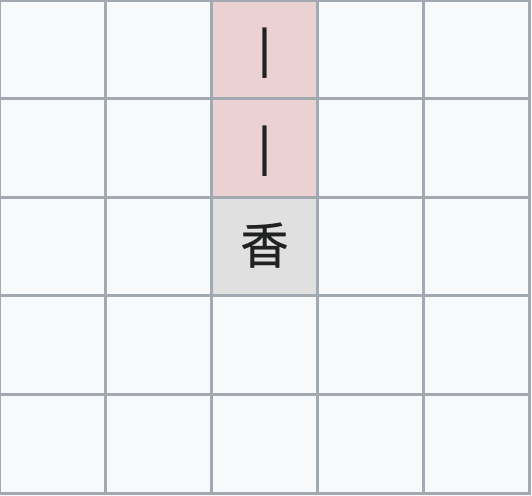 |
|---|---|---|---|---|---|---|---|
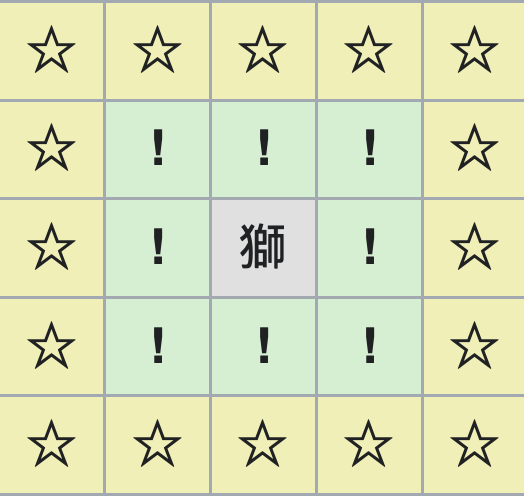 |
 |
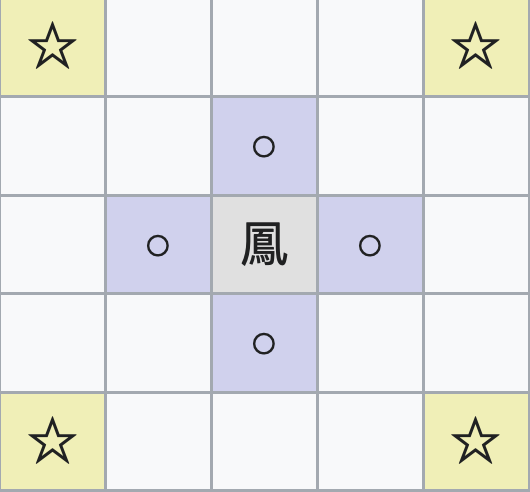 |
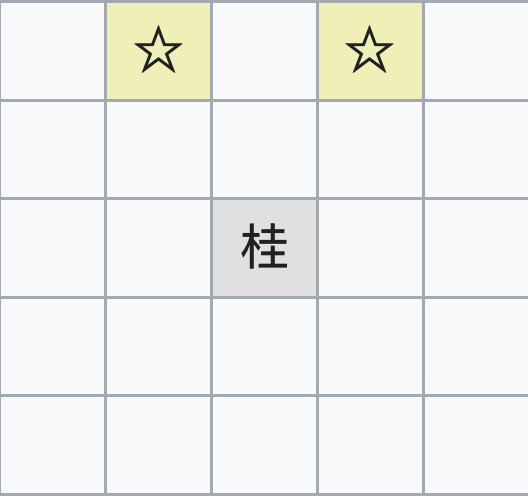 |
 |
 |
|---|---|---|---|---|---|
Numbers indicte the approximate year that the game emerged.
Rookwise  Bishopwise  Modern  Chaturanga  Courier   Xianqi   Seven      Shogi        Dai shogi     Tai shogi     Ko shogi
 range      range     chess               chess              Kingdoms
                      1500    600         1200      600      1200       1200         1230          1400          1700

   1           1      King    Raja        King                          King         King          King          General
   7           7      Queen                                  General                 Queen         Queen         Millenary
   7           0      Rook    Ratha       Rook      Chariot  Chancellor Rook         Rook          Rook          Chariot
   0           7      Bishop              Bishop             Diplomat   Bishop       Bishop        Bishop        Elephant
   -           -      Knight  Ashva       Knight    Horse                                                        Cavalryman
   -           -                                                        Shogi knight Shogi knight  Shogi knight
   -           -      Pawn    Padati      Pawn
   -           -                                    Shogi pawn          Shogi pawn   Shogi pawn    Shogi pawn
   1           0                          Wazir     General  Sword                   Angry boar    Angry boar    Pawn
   0           1              Mantri      Ferz      Advisor  Dagger                  Cat sword     Cat sword     Longbow
   0           2e             Gaja        Alfil     Elephant
   2           0                                                                     Violent ox    Violent ox
   0           2                                                                     Flying dragon Flying dragon
   7           1                                                        Dragon king  Dragon king   Dragon king   Quartermaster
   1           7                                                        Dragon horse Dragon horse  Dragon horse  Centuria
   7           2                                                                                                 Tiger wing
   2           7                                                                                                 War hawk
   2           2                                                                                   Mastodon
   3           3                                                                                   Lion dog
   4           4                                             Archer
   5           5                                             Crossbowman
   5           0                                                                                                 Flag waver
   0           5
   5           2                                                                                   She-devil
   2           5                                                                                   Dove
   -           -                                                        Gold gen     Gold gen      Gold gen      Gold gen
   -           -                                                        Silver gen   Silver gen    Silver gen    Silver gen
   -           -                                                                     Copper gen    Copper gen    Copper gen
               Board   Piece types   Pieces   Year

Chaturanga        8x8       6         16      1200
Modern chess      8x8       6         16      1500
Carrera chess    10x8       8         20      1627
Courier chess    12x8      10         24      1200
Shogi             9x9       8         16      1200
Xianqi            9x10      7         16      1200
Dai shogi        15x15     29         65      1230
Dai dai shogi    17x17     64         96      1400
Ko shogi         19x19     34         90      1700
Tai shogi        25x25     93        177      1400
Taiyoku shogi    36x36    207        402      1550
Go               19x19      1        170      -500
Probabilities in percent:
                            White wins   Black wins   Draw   Fraction of white wins
                                                                among non-draws

Tournaments, 1851-1878             45.5    40.4      14.1           53.0
Tournaments, 1881-1914             36.9    31.4      31.8           54.0
Tournaments, 1919-1932             37.0    26.0      37.0           58.7
World championships, 2000-24       20.0     9.3      71.0           68.3
Chess engines, 2009                34.7    24.0      41.3           59.1
World Blitz Championships, 2009    39.0    34.6      26.4           53.0
For classical chess, the fraction of moves for an individual piece is:
    Fraction of moves   Total moves  Value  Fraction/value

Queen      .237         3.53           9       .026
Rook       .155         2.31           5       .031
King       .217         3.23           4       .054
Knight     .174         2.58           3       .058
Bishop     .151         2.25           3       .050
Pawn       .065          .97           1       .065

Total                  28.8
Rooks are more likely to move long-range than queens or bishops. Queens and bishops are have similar probabilities for long-range moves. The fraction of moves of a given range is:
Range   Rook   Bishop  Queen    Queen       Queen
                       total  rook-wise  bishop-wise

  1     .25    .32     .30      .19       .11
  2     .20    .24     .20      .11       .09
  3     .18    .18     .15      .08       .07
  4     .15    .12     .11      .06       .05
  5     .10    .07     .08      .04       .04
  6     .07    .04     .06      .03       .03
  7     .05    .03     .04      .02       .02
A game has an optimal capture frequency. Too large or too small is bad for depth.
The modern capture frequency is 1/5, and in 1850 it was 1/4.
Master games tend to have a lower capture frequency than amateur games.
A game averages 16 captures upon conclusion.
          Move range   Capture frequency

Opening       1-16        1/3
Middle game  17-22        1/5
End game     23-32        1/7
        Initial time   Time added per move   Time per move
          minutes            seconds            seconds

Classical   90                30                165
Rapid       15                10                 32.5
Blitz        5                 3                 10.5
Bullet       1                 0                  1.5
"Time per move" assumes 40 moves for each player.
          Columns  Rows  Year     Pieces

Capablanca    10    8   ~1925     Rook+Knight    Bishop+Knight        Classical pieces
Shako         10    8             Elephant       Cannon               Classical pieces
Grand         10   10             Rook+Knight    Bishop+Knight        Classical pieces
Fairy chess names are in a state of chaos. These are the names.
 |
 |
|---|---|
More options for flavor:
 |
 |
|---|---|
Number of people in the top 20:
           Men   Women   Men U21   Women U21

India        4     4       6       4
USA          6             2       3
China        2     5               2
FIDE               2       2       1
France       2             1       1
Kazakhstan         1               3
Ukraine            3
Uzbekistan   1             1       1
Russia       1     1       1
Norway       1             1
Netherlands  1                     1
Switzerland        1               1
Azerbaijan   1             1
Turkey                     2
Hungary                            1
Bulgaria                           1
Slovenia     1
Poland             1
Belgium                    1
Serbia             1
Mongolia                           1
Georgia            1
Belarus                    1
Iran                       1
 |
|---|
Define "depth" as the difference in rank between the #4 and the #64 ranked players, divided by 4.
Elo rating by rank:
Depth Matches #1 #2 #4 #8 #16 #32 #64 #128 #256 #512 #1024 #2048 #3072 Comp- Strat- Luck Commun- # of rated
million plexity egy ication players
Logic ~130 .58 2319 2173 2103 1872 1752 1660 1537 1 5 1 0 72 Cards. Speed
Shogi World 129 2800 1900
Spot It! ~100 .89 2149 2064 1962 1893 1734 1648 1520 1 1 0 4 71 Pattern recognition speed
Hive BS ~100 2098 1928 1736 1548 1504 1436 49 Hex tiles
Hand and Foot 87 .53 1650 1643 1626 1602 1588 1570 1539 1493 3 3 3 1 178
Hive ~80 1.04 1797 1774 1700 1627 1538 3 5 0 0 24 No board. Hex tiles
Ticket to Ride: Map 76 .23 2115 2094 1933 1823 1775 1706 1627 1582 1485 Not rated 344
Tennis, Men World 74 2297 2272 2068 1980 1927 1850 1772 1667 1513 515
Railroad Inc 73 2.6 2016 1984 1972 1928 1858 1768 1679 1573 2 3 3 0 185 Deep Blue Edition
Distilled 70 .17 1949 1860 1808 1716 1646 1570 1505 3 4 2 1 82 Cards and coins
Sushi Go 69 3.8 2046 2018 1936 1860 1813 1758 1661 1603 2 3 2 2 251
Welcome Perfect Home 67 2.8 2083 2036 2024 1940 1904 1848 1755 1683 1555 2 4 1 1 325
Splendor 65 9.9 2223 2220 2135 2109 2004 1955 1876 1798 1716 1634 1512 3 3 2 2 1288 Cards and coins
Castles of Burgundy 63 3.9 2041 2024 2018 1928 1878 1823 1765 1711 1640 1526 3 4 2 1 1222 Hex board size 4. Tokens and dice. No battle
Patchwork 62 3.0 2047 2025 2002 1932 1904 1838 1752 1685 1447 3 3 3 3 256 Square board 9x9, tokens
Seasons 62 10.2 1928 1907 1870 1825 1778 1667 1621 1530 3 4 2 1 239
Feast of Odin 62 .45 1965 1965 1857 1831 1776 1647 1528 5 4 1 1 84 Economic
Go World 59 3852 3733 3692 3664 3622 3553 3457 3359 3230 3006 893
Ticket Ride: Europe 58 2.7 2050 2043 1998 1980 1930 1852 1765 1696 1630 1543 2 3 3 2 812
Jaipur 58 2.9 1903 1899 1849 1813 1759 1675 1591 2 2 2 0 77
Ticket to Ride 54 15.9 2157 2103 2082 2060 2011 1948 1867 1810 1735 1669 1595 1475 2 3 3 2 2678 Topology
Bubblee Pop 52 2.3 1869 1866 1817 1754 1720 1665 1610 1520 1 2 3 0 187
Through the Ages 50 1.14 2014 1916 1887 1822 1744 1667 1503 4.42 4 2 3 72 Cards
Kingdom Builder 50 2.8 1917 1902 1854 1801 1746 1709 1654 1604 1541 2 3 2 3 421
Stone Age 50 5.7 1998 1918 1891 1870 1820 1760 1691 1624 1524 3 3 3 3 349
Gaia Project 50 .43 1870 1753 1736 1651 1590 1557 4.37 4 1 2 55 Hex board tokens, money, battle
The Vale of Eternity 48 .27 1910 1891 1764 1740 1680 1632 1571 1507 3 4 2 2 188
Kingdomino 47 6.8 1991 1988 1928 1902 1846 1797 1740 1674 1596 1 3 4 1 385
Puerto Rico 47 2.8 1998 1765 1743 1731 1699 1628 1556 4 4 1 1 101
Chess, Blitz World 45 2869 2838 2796 2765 2722 2676 2616 2554 2479 2391 2289 2174 2105 46000
7 Wonders Duel 45 13.1 1974 1948 1923 1887 1838 1790 1743 1708 1659 1609 1522 3 4 2 3 1492
Potion Explosion 44 3.0 1881 1859 1828 1792 1760 1704 1654 1599 1530 1 2 3 1 354
Terraforming Mars 43 4.2 2113 2053 2040 1994 1958 1916 1867 1821 1761 1675 1544 4 4 3 1 1347
Chakra 41 4.0 1922 1842 1827 1808 1732 1702 1663 1616 1546 2 4 2 2 514
Space Base 39 3.6 1917 1916 1862 1835 1773 1737 1706 1656 1614 1559 1458 2 2 3 1 1269
Captain Flip 39 2.2 1857 1843 1817 1760 1722 1696 1660 1631 1593 1546 1428 2 2 4 0 1095
Agricola 39 1.68 1828 1812 1800 1761 1732 1690 1643 1587 3 5 1 2 233 Simple board. Cards
Race for the Galaxy 38 13.8 1889 1853 1829 1815 1775 1720 1679 1613 1531 4 3 2 1 444 Cards
CuBirds 38 7.4 1829 1828 1795 1751 1712 1673 1645 1611 1572 1503 1 3 3 1 706
Ark Nova 37 11.0 2157 2150 2077 2056 2004 1969 1930 1885 1828 1769 1688 1585 1436 3.74 5 1 2 3298 Board, tokens, and cards
7 Wonders 37 11.8 1872 1869 1861 1830 1799 1753 1712 1679 1638 1593 1514 3 3 2 2 1305 Cards
Xiangqi World 37 2783 2754 2624 2610 2577 2524 2476 2397 206 Square board
Carcassonne 36 9.5 2045 2022 1999 1969 1936 1896 1853 1792 1734 1647 1509 1 3 3 3 1365
Yahtzee 36 10.9 1943 1918 1864 1842 1792 1758 1720 1679 1631 1530 0 1 5 0 678 Dice
Lost Cities 34 5.0 1830 1780 1759 1731 1699 1659 1622 1589 1552 1742 1 4 2 2 617
Backgammon 34 5.9 1836 1830 1775 1737 1717 1674 1639 1591 1504 1 2 4 0 341 Tokens and dice
Chess, Class. World 34 2840 2810 2780 2754 2731 2695 2642 2591 2524 2446 2369 2279 2219 3.64 5 0 0 95000
Chess, Rapid World 31 2832 2755 2741 2727 2694 2663 2616 2574 2500 2425 2340 2237 2174 65000
Chess engines World 31 3651 3649 3628 3626 3617 3584 3503 3320 2917 2228 674
Wingspan 31 8.7 1903 1893 1866 1822 1793 1772 1743 1707 1671 1624 1563 1342 3 3 3 3 2037
Lucky Numbers 26 11.7 1797 1785 1768 1739 1728 1694 1664 1641 1611 1578 1522 1 2 4 1 1554
Hearts 25 2.54 1765 1762 1733 1718 1688 1671 1633 1609 1570 1530 1413 2 2 3 1 1078
Take 5 23 8.3 1762 1754 1737 1706 1691 1669 1644 1620 1594 1561 1492 1 1 4 3 1131 Cards
Azul 22 12.5 2224 2201 2120 2096 2061 1994 1931 1874 1813 1748 1676 1582 1499 1 3 3 3 4140 Tokens and patterns
Can't Stop 21 15.2 1775 1775 1746 1725 1698 1675 1663 1642 1615 1588 1547 1455 0 1 5 0 2307 Tokens and dice
7 Wonders: Architect 21 4.1 1753 1713 1703 1682 1664 1640 1619 1596 1563 1515 1 3 1 1 818
Catan 20 7.4 1812 1773 1761 1747 1720 1698 1680 1657 1630 1603 1569 1518 1449 2 3 3 4 3379 Hex board and tokens
Texas Hold'em 20 .32 1723 1698 1694 1673 1657 1636 1616 1593 1568 1528 3 4 2 0 870 Cards and bluffing
King of Tokyo 20 2.8 1765 1685 1679 1658 1631 1600 1568 1529 2 2 3 3 492
Solo 18 4.9 1670 1669 1643 1631 1608 1593 1572 1549 1510 1 2 4 2 462 Cards
Terra Mystica 12 1.14 1793 1751 1733 1722 1636 1599 3.97 5 1 1 52 Hex board
Taknoko 8 2.7 1851 1849 1786 1750 1693 1628 1752 2 3 2 1 92
Hearts WCG - 1691 1603 1575 1553 1528 1494 1446 100
Canasta - .74 1857 1833 1811 1712 1611 1541 2 2 4 3 57
Connect 4 - 4.4 2024 2010 1945 1830 1802 1726 1 5 0 0 59 Square board and tokens
Great Western Trail - .38 1869 1860 1828 1865 1604 1560 3 3 3 3 60
Barrage - .28 1832 1730 1660 1628 1598 1560 3 5 2 1 41 Board and tokens
Age of Innovation - .19 1880 1809 1727 1682 1649 1572 4 5 1 1 42 Hex board and tokens
Darwin's Journey - .87 1793 1751 1745 1702 1638 1598 4 5 1 1 52 Hex board and tokens
Barrage - .28 1836 1730 1660 1628 1598 1562 3 5 2 1 41
Obsession - .29 2082 2056 1808 1761 1669 1550 3 5 1 1 33 Tokens and cards
Dice Forge - 2.6 1939 1832 1785 1750 1673 1604 2 2 4 0 56
Warchest - .50 1761 1752 1737 1687 1604 2 3 2 0 24 Hex board, tokens, cards
Beyond the Sun - .23 1751 1708 1659 1619 1597 3 4 1 2 23
Xianqi World - 2783 2754 2624 2610 2577
Checkers World - 2433 2430 2403 2377 2351
Reflection - .27 2000 1960 1865 1787 1573 3 3 0 0 24 Square board and pieces
Chinese Checkers - .15 1683 1635 1609 1562 1 5 0 2 11 Hex board and tokens
Scrabble World - 2174 2162 2108 2077
Dungeon Twister - .047 1629 1621 1606 1471 3 4 1 3 9 Board, tokens, and cards
Galactic Cruise - .067 1836 1789 1740 1652 4 4 1 2 8 Ship design
Barca BS - <.0001 1704 1547 1317 Square board. Fairy chess. 110 rated games
Checkers - .44 1738 1598 1 4 1 0 2 Square board
Scythe - .79 1712 1696 3 4 2 3 2
Tumbleweed - 1615 1601 3 5 0 0 Hex board
Hanabi - 10.5 2 3 3 4 0 Cards
Bandito - 2.9 1 3 3 4 0
Turing Machine - .78 2 5 1 0 0
Trench - .002 0 Square board and pieces
King's Color - 0 0 Hex chess. Pieces change
Day and Night - 0 0 Square board. Row and diagonal building
Push Fight - 0 0 Square board. Pieces exert forces
Tablut - 0 0 Square board and pieces. Ancient.
Mahjong - .004 4 3 4 3
Depth Matches #1 #2 #4 #8 #16 #32 #64 #128 #256 #512 #1024 #2048 #3072 Comp- Strat- Luck Commun- # of rated
million plexity egy ication players
Ratings are from boardgamearena.org unless denoted otherwise. "World" means world ratings, "BS" means boardspace.com, and WCG means worldofcardgames.com.
Chess ratings are from FIDE.
 |
|---|