
|
|
|
|
|
|
|---|---|---|---|---|---|
 |
 |
 |
|---|---|---|
 |
 |
 |
|---|---|---|
 |
 |
 |
|---|---|---|
 |
 |
|---|---|
 |
|---|
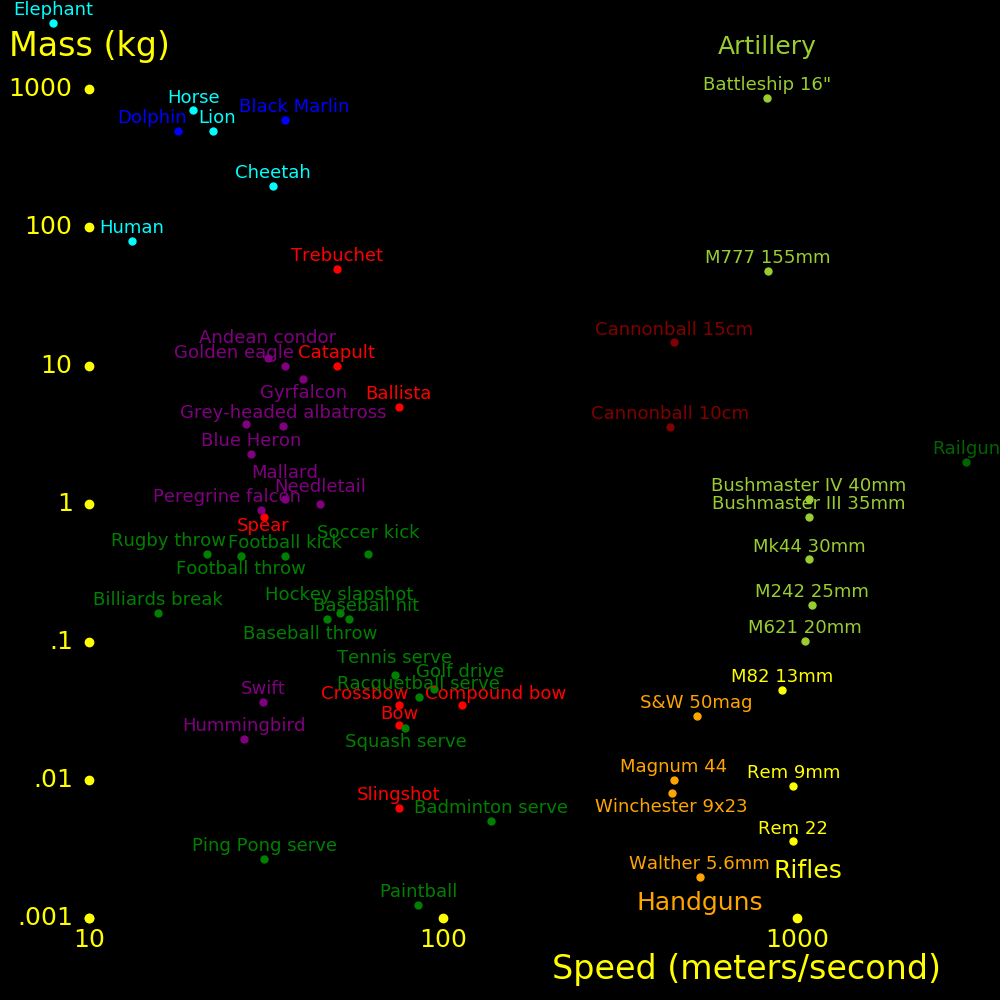
                Bullet  Bullet   Speed   Energy   Barrel    Gun     Fire   Vehicle   Cartridge
                 diam    mass                                       rate    mass
                  mm      kg      m/s    kJoule   meters     kg     Hertz   tons

Swiss Mini Gun      2.3    .00013  122       .00097 .0018      .020
Chiappa 17          4.4    .0010   640       .20    .121                            .17 HM2
SPP-1               4.5    .0128   245       .38               .95                  4.5x40mmR
Heckler Koch MP7    4.6    .0020   735       .54    .180      1.9                   HK 4.6x30mm
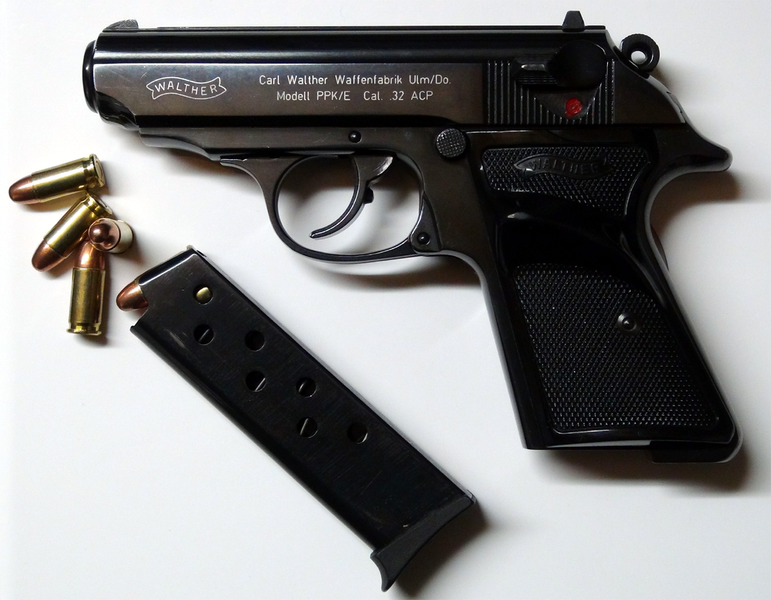
Walther PPK         5.6    .0020   530       .281   .083       .560
Walther PPK         5.6    .0030   370       .141   .083       .560
Walther PPK/S       7.65   .0050   318       .240   .083       .630
Walther PPK/E       9.0    .0065   323       .338   .083       .665
Luger 9mm           9.0    .0081   354              .102
Winchester 9x23     9.0    .0081   442
Colt 45            11.4    .0100   262              .127
Magnum 44          11.2    .0156   448              .165
Smith Wesson 460   11.5    .019    630      3.77    .213                            .460 SW Magnum
Magnum DesertEagle 12.7    .019    470              .254      1.996                 .50 Action Express
Smith Wesson 50mag 12.7    .026    550              .267      2.26
Smith Wesson 50mag 12.7    .029    520      3.92    .267      2.26
Smith Wesson 50mag 12.7    .032    434      3.01    .267      2.26                  .500 SW Magnum
MagnumResearch BFR 12.7    .026    550      3.93    .254      2.40                  .50 Beowulf

Ruger 96            4.4    .0013   720       .34    .47       2.38                  .17 HMR
Ruger M77           5.2    .0026  1200      1.83    .61       3.74                  .204 Ruger
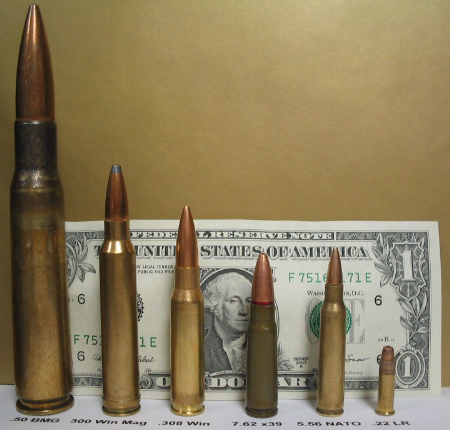
CMMG MK47 Mutant    5.6    .0036   975                                              Remmington 22
Remmington 9mm      9.0    .0091   975
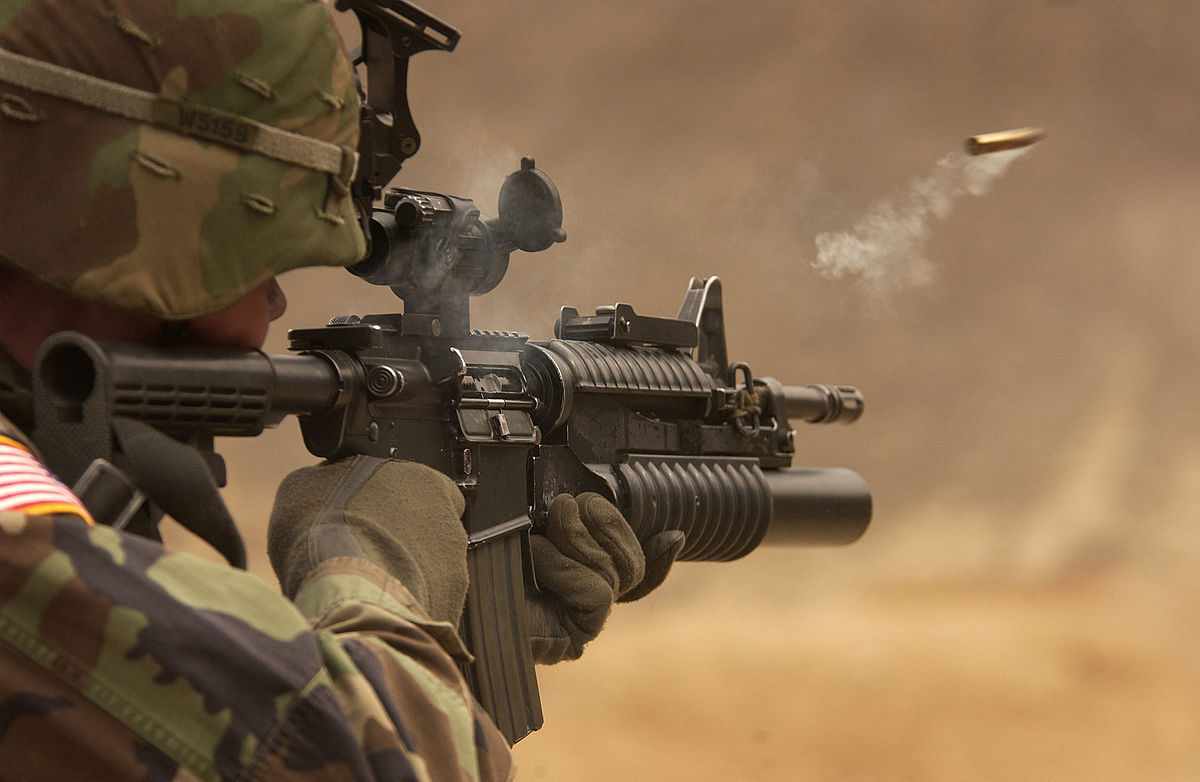
M4 Carbine          5.56   .0041   936      1.80    .370      2.88    15.8
FN SCAR-H Rifle     7.62   .011    790      3.51    .400      3.58    10.4          20 round magazine
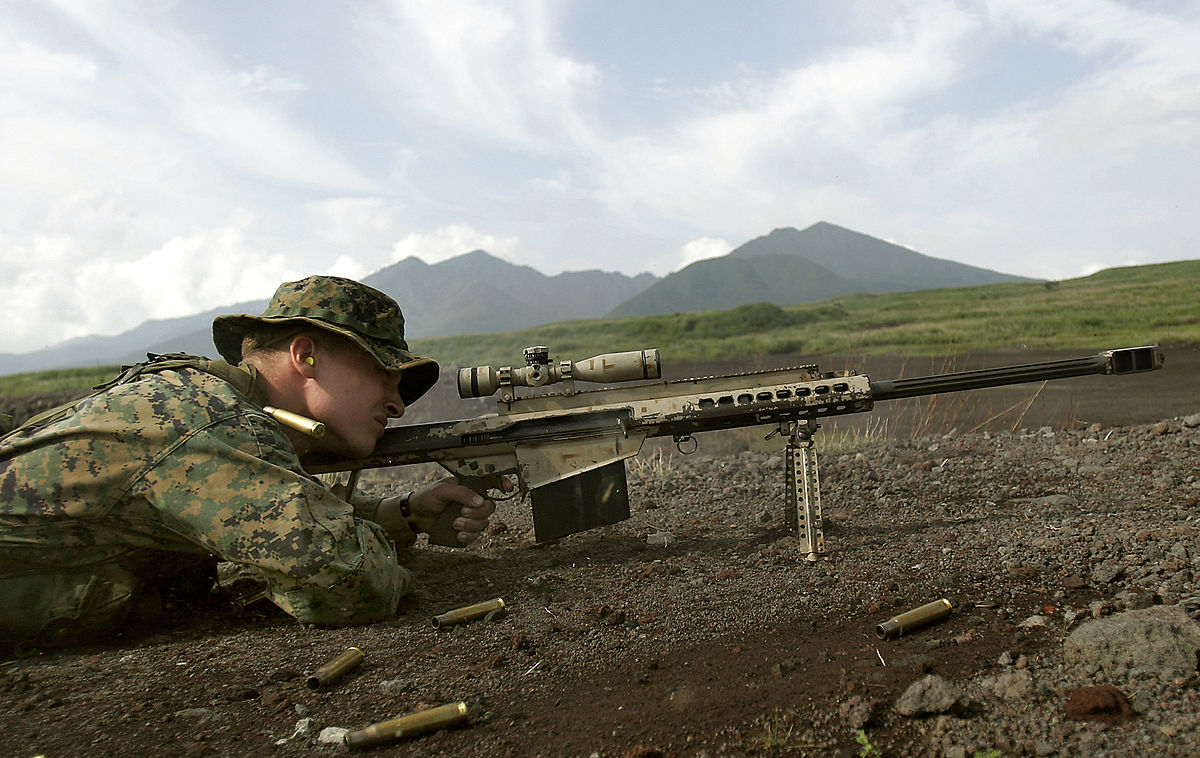
Barrett M82        13.0    .045    908     18.9     .74      14.0                   10 round magazine
Hannibal           14.9    .049    750     13.8
CZ-550             15.2    .065    914     27.2                                     .600 Overkill
Vidhwansak         20      .13     720     33.7    1.0       26                     20x81 mm. 3 round magazine
RT-20              20      .13     850     47       .92      19.2
M621 cannon        20      .102   1005     51.5              45.5     13.3          20x102 mm
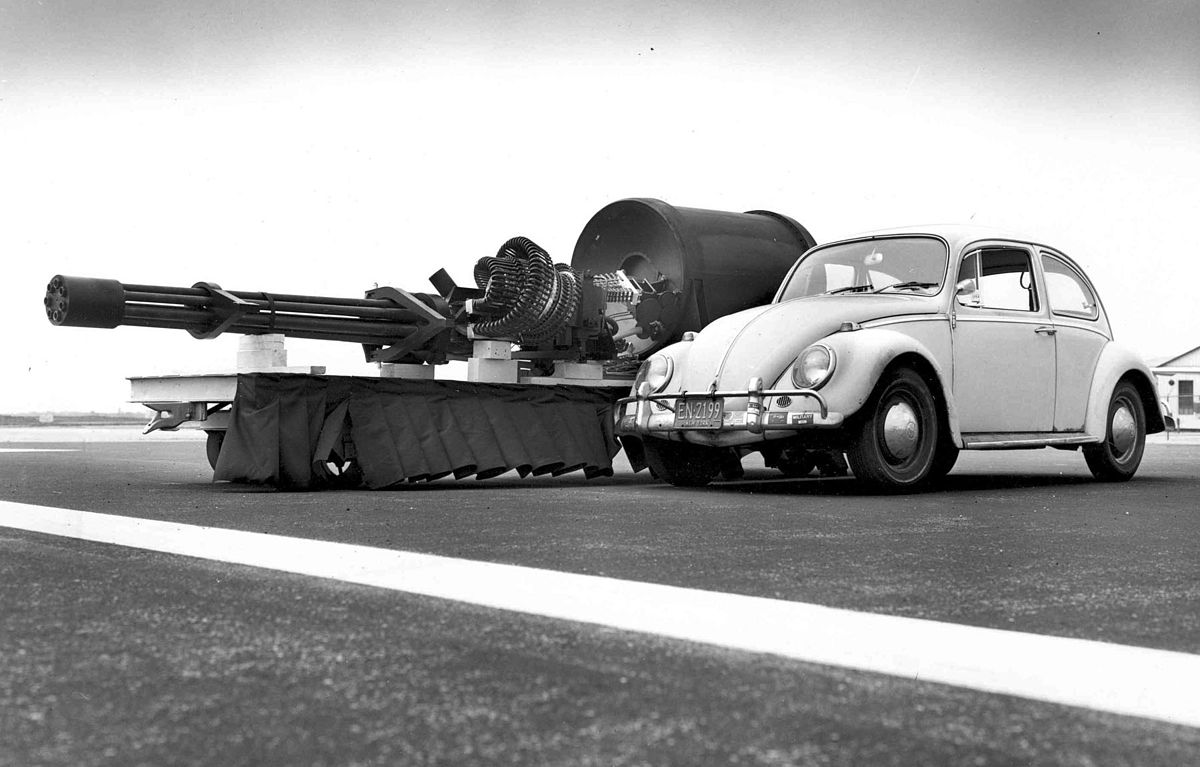
M61 Vulcan         20      .102   1050     56.2              92      110            20x102. 6 barrels
Oerlikon KBA       25      .184   1335    164      2.888    112       10
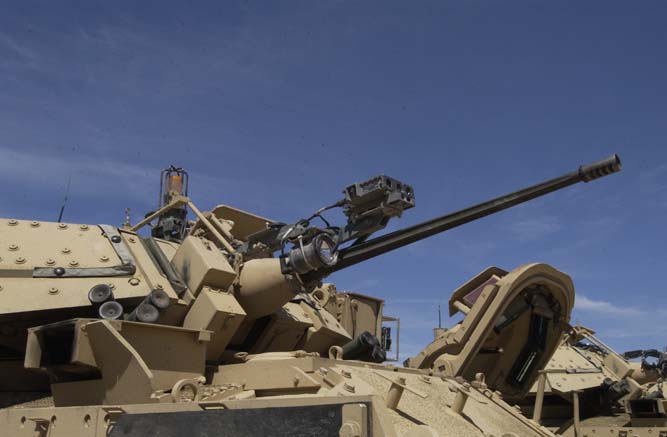
M242 Bushmaster    25      .184   1100    111      2.175    119        8.3    27.6  M2 Bradley
GAU-12 Equalizer   25      .184   1040     99.5             122       70       6.3  Harrier 2.  5 barrels
M230 chain gun     30      .395    805    128                55.9     10.4     5.2  Apache. 30x113 mm
Mk44 Bushmaster 2  30      .395   1080    230      2.41     160        3.3    27.6  M2 Bradley. 30x173 mm
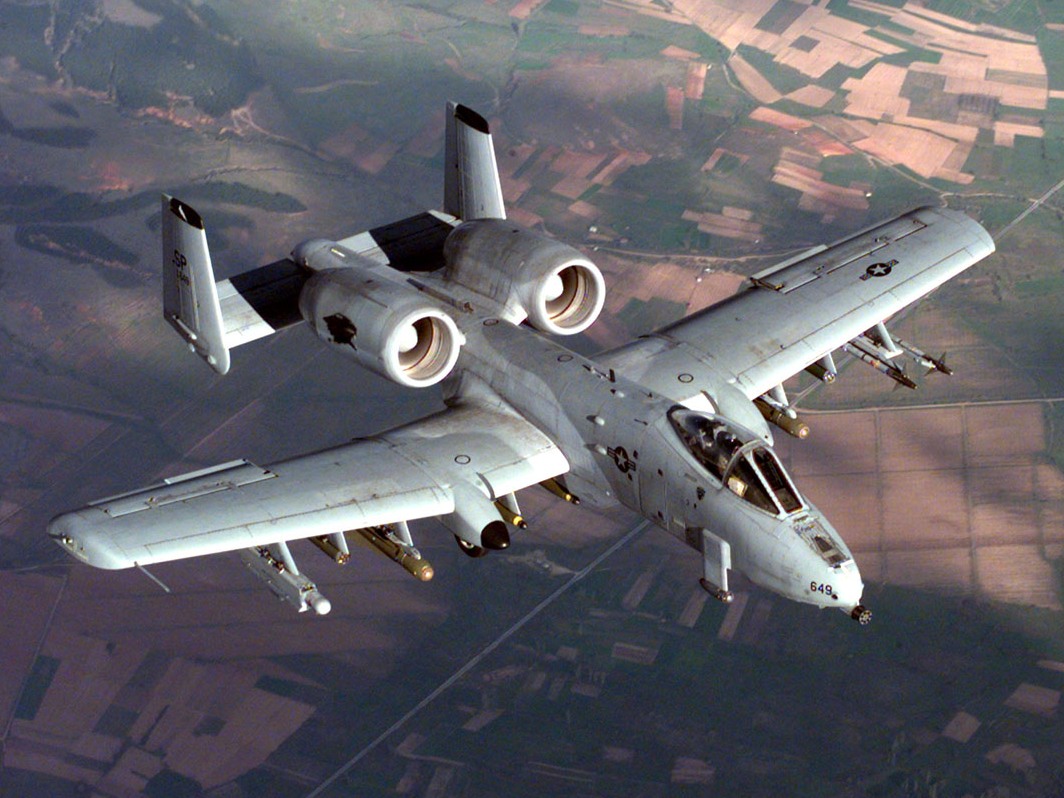
GAU-8 Avenger      30      .395   1070    226      2.30     281       70      11.3  A-10 Warthog. 30x173 mm. 7 barrels
Bushmaster III     35             1180                      218        3.3          35x228 mm
Bushmaster IV      40     1.08                              198        3.3          40x365 mm
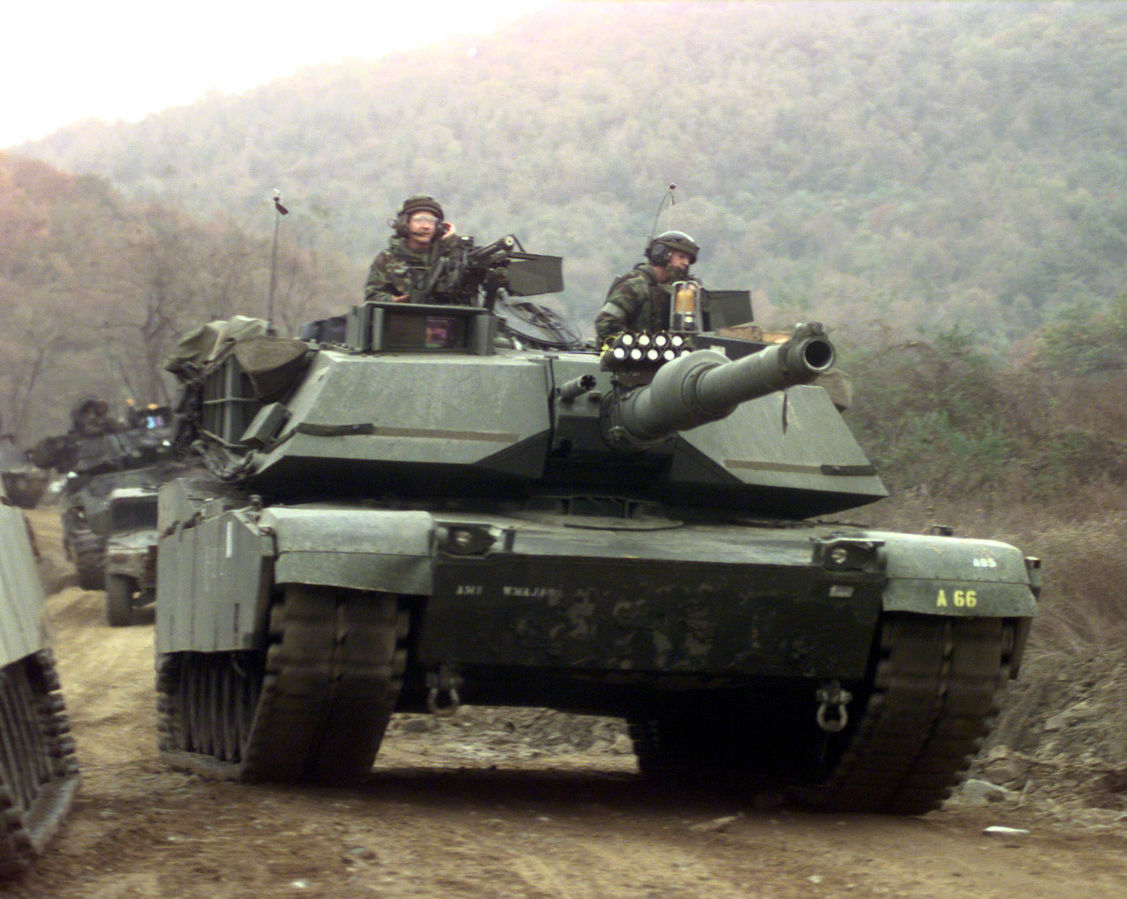
Rheinmetall 120   120     8.350   1750  12800      6.6     4500         .1    62    M1 Abrams tank
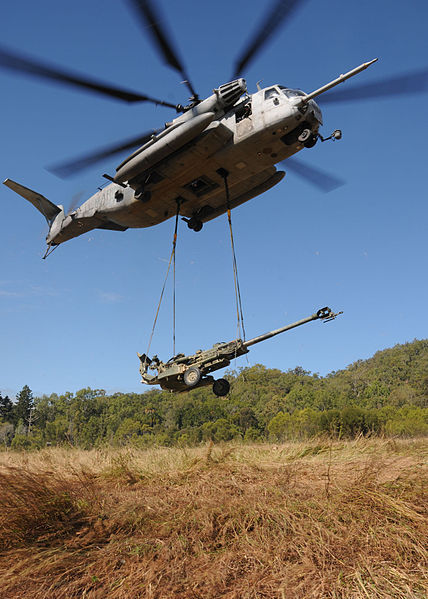
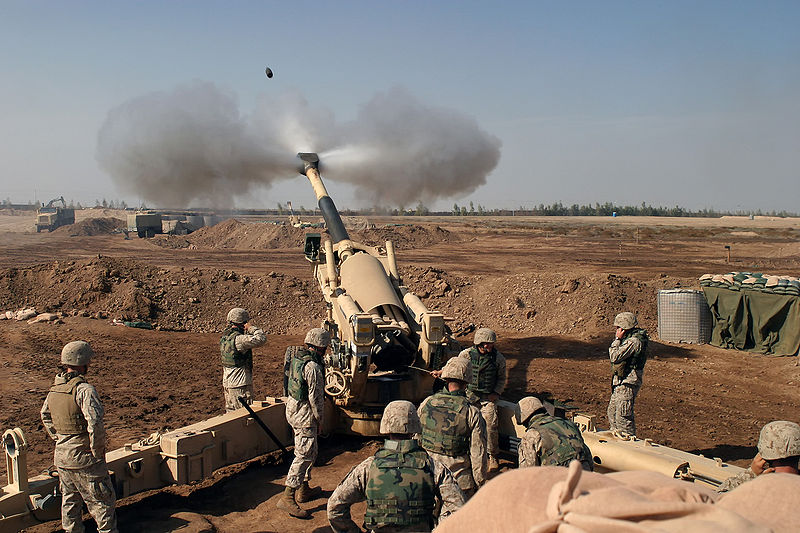
M777 Howitzer     155    48        827  16400      5.08    4200         .083
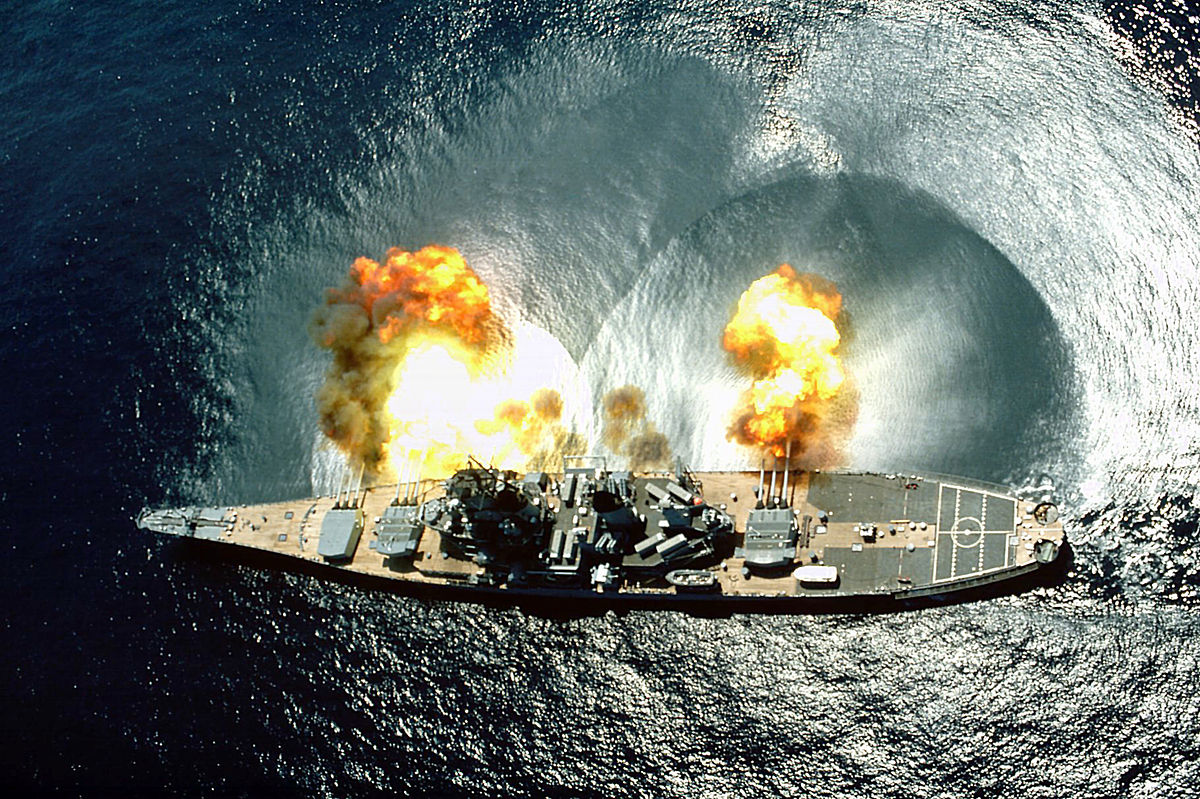
Iowa Battleship   406   862        820 290000     20.3   121500         .033  45000

2 bore rifle       33.7    .225    460     23.7     .711      4.5                   Historical big-game rifle
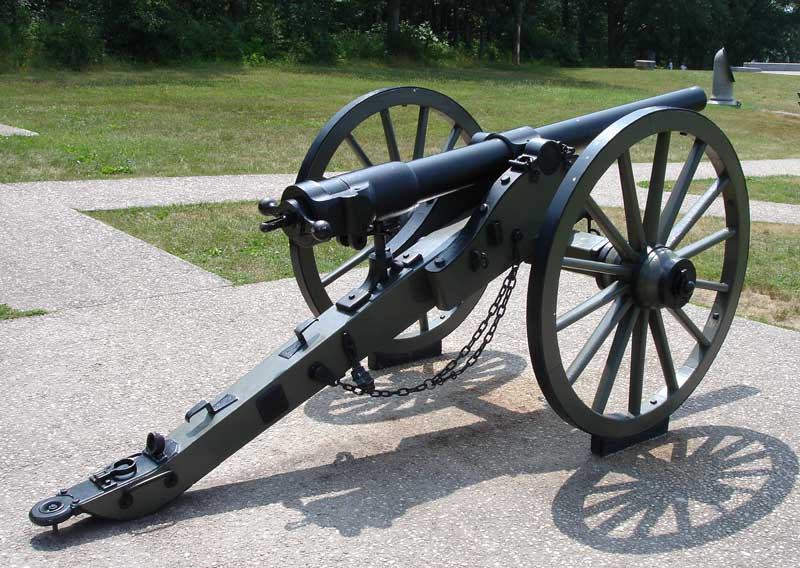
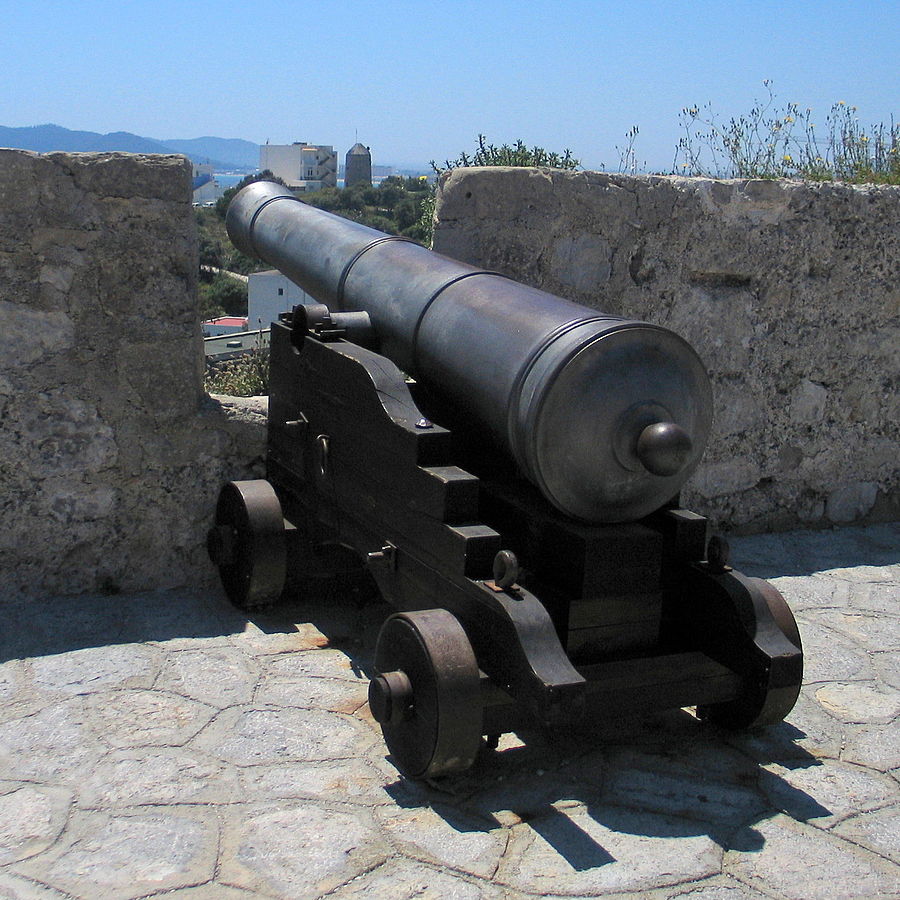
Cannonball 6 lb    87     2.72     438    261      2.4
Cannonball 9 lb    96     4.08     440    395      2.7
Cannonball 12 lb  110     5.44     453    558      2.4
Cannonball 18 lb  125     8.16     524   1120      2.6     2060
Cannonball 24 lb  138    10.89     524   1495      3.0     2500
Cannonball 32 lb  152    14.5      518   1945      3.4     2540
Cannonball 36 lb  158    16.33     450   1653      2.9     3250
Cannonball diameters are calculated from the mass assuming a density of 7.9
g/cm3.
 |
 |
|---|---|
 |
|---|
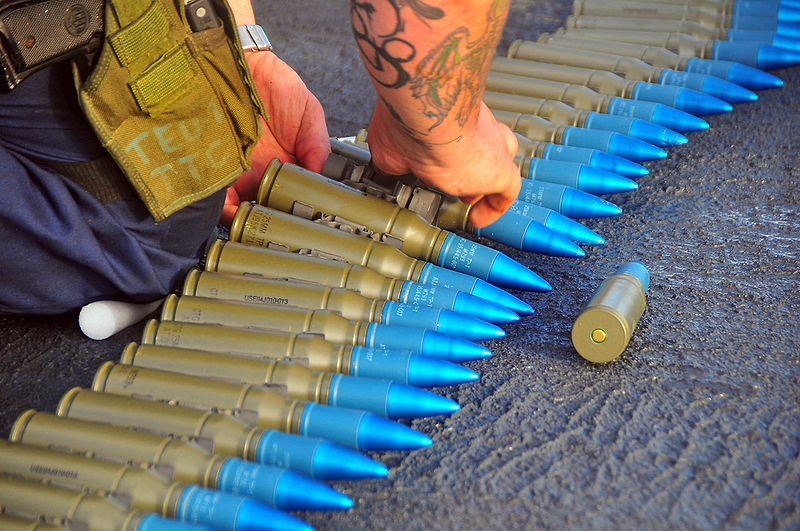 |
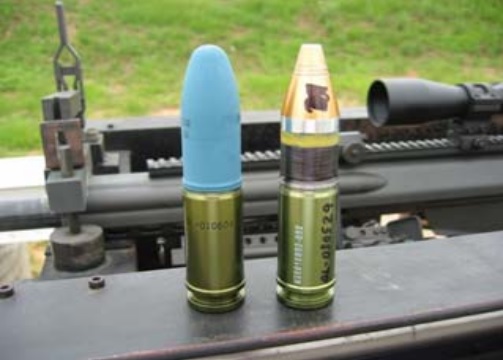 |
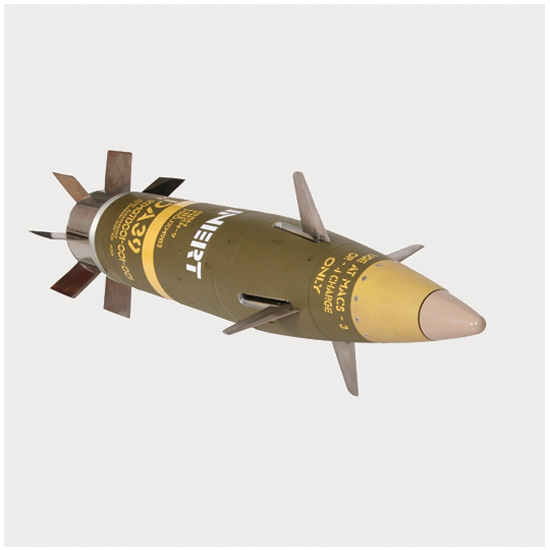 |
|---|---|---|
The energy distribution for a 7.62 mm Hawk bullet is
Bullet energy    .32
Hot gas          .34
Barrel heat      .30
Barrel friction  .02
Unburnt powder   .01
To estimate the velocity of a bullet,
Energy efficiency  =  e  =  .32    (Efficiency for converting powder energy to bullet enery)
Bullet mass        =  M
Powder mass        =  m
Powder energy/mass =  Q  =  5.2 MJoules/kg
Bullet velocity    =  V
Bullet energy      =  E  =  ½ M V2  =  e Q m    (Kinetic energy = Efficiency * Powder energy)

V  =  (2 e Q m / M)2  =  1820 (m/M)½  meters/second
 |
 |
|---|---|
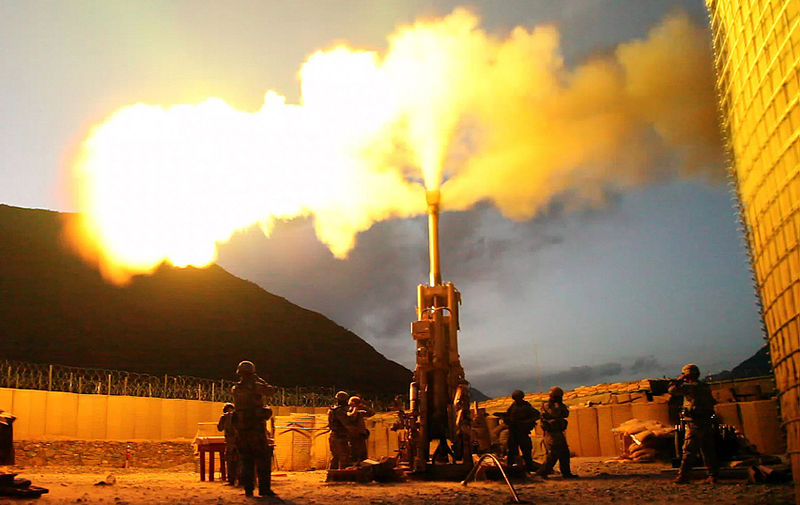
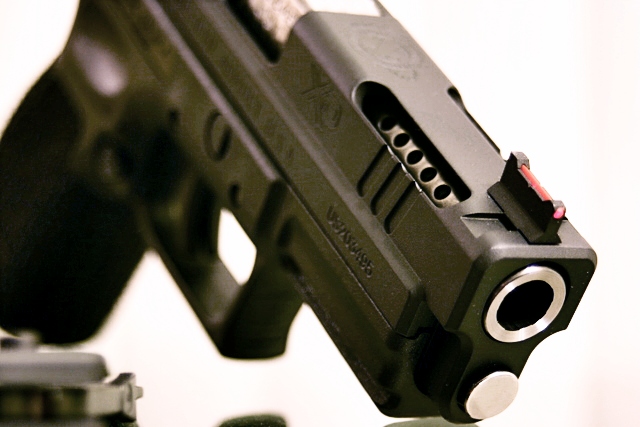
The muzzle break at the end of the barrel deflects gas sideways to reduce recoil.
 |
 |
 |
 |
|---|---|---|---|
               MJoules  Rocket  Shock  Density  Boil
                 /kg     km/s   km/s   g/cm3  Kelvin

Beryllium+ O2    23.2   5.3
Aluminum + O2    15.5
Magnesium+ O2    14.8
Hydrogen + O2    13.2   4.56             .07    20
Kerosene + O3    12.9
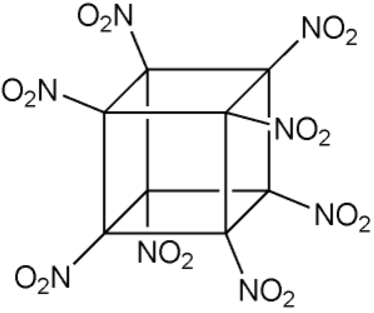
Octanitrocubane  11.2          10.6     1.95
Methane  + O2    11.1   3.80             .42   112  CH4
Octane   + O2    10.4                    .70   399  C8H18
Kerosene + O2    10.3   3.52             .80   410  C12H26
Dinitrodiazeno.   9.2          10.0     1.98
C6H6N12O12        9.1                   1.96        China Lake compound
Kerosene + H2O2   8.1   3.2
Kerosene + N2O4   8.0   2.62
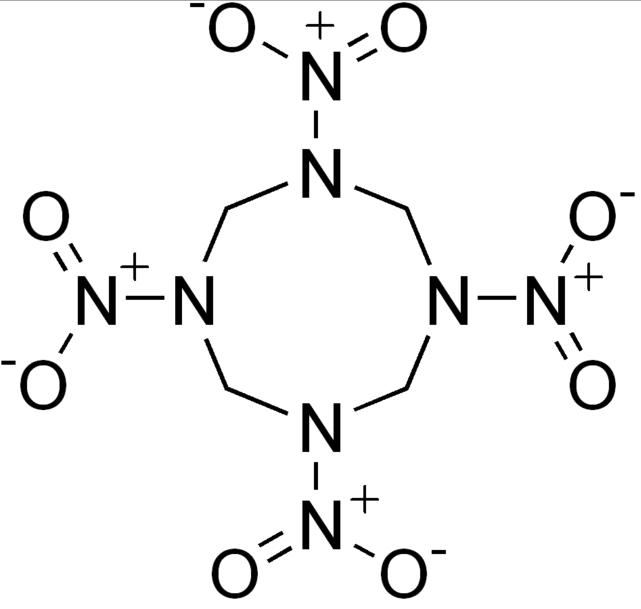
HMX (Octogen)     8.0   3.05    9.1     1.86
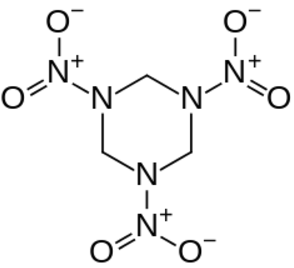
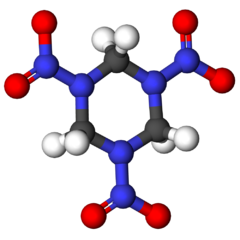
RDX (Hexagen)     7.5   2.5     8.7     1.78
Al + NH4NO3       6.9
Nitroglycerine    7.2           8.1     1.59        Unstable
PLX               6.5                   1.14        95% CH3NO2 + 5% C2H4(NH2)2
Composition 4     6.3           8.04    1.59        91% RDX. "Plastic explosive"
Kerosene + N2O    6.18
Dynamite          5.9           7.2     1.48        75% Nitroglycerine + stabilizer
PETN              5.8           8.35    1.77
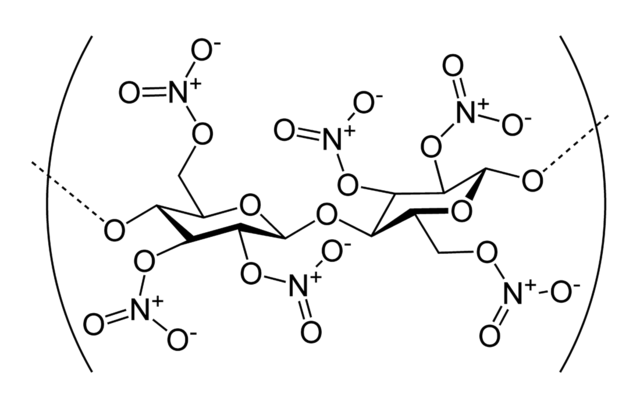
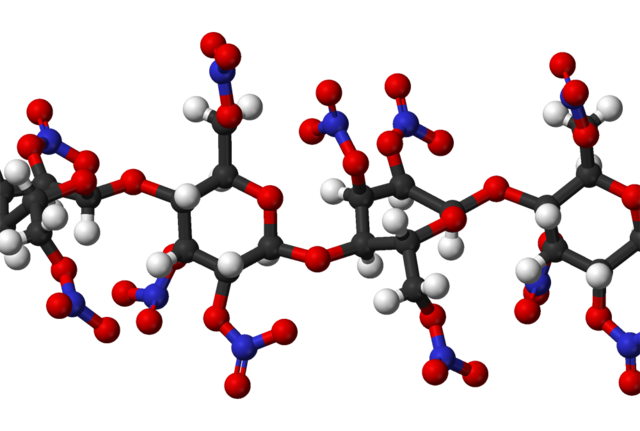
Smokeless powder  5.2           6.4     1.4         Used after 1884. Nitrocellulose
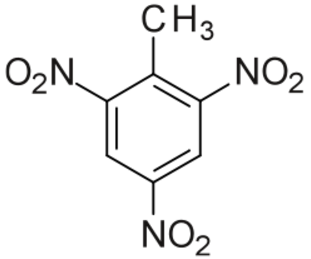
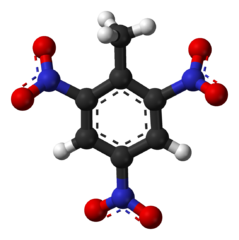
TNT               4.7           6.9     1.65        Trinitrotoluene
Al + Fe2O3        4.0                               Thermite
H2O2              2.7   1.59            1.45   423  Hydrogen peroxide
Black powder      2.6            .6     1.65        Used before 1884
Al + NH4ClO4            2.6
NH4ClO4                 2.5
N2O               1.86  1.76
N2H4              1.6   2.2             1.02   387  Hydrazine
Bombardier beetle  .4                               Hydroquinone + H2O2 + protein catalyst
N2O4               .10                  1.45   294

Rocket: Rocket exhaust speed
Shock:  Shock speed
 |
 |
 |
 |
 |
 |
|---|---|---|---|---|---|
 |
 |
 |
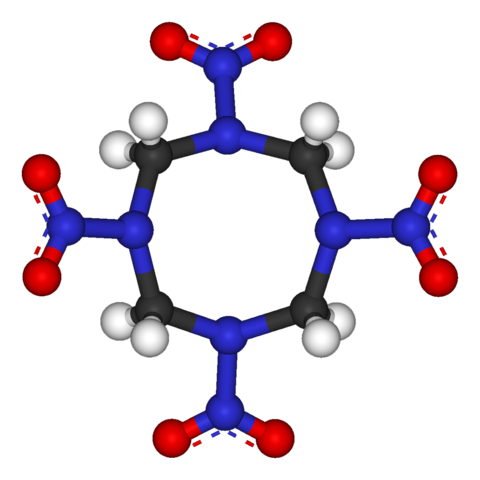 |
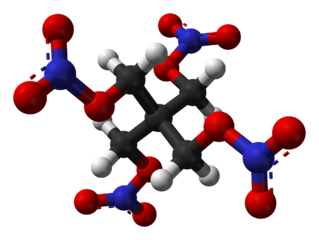 |
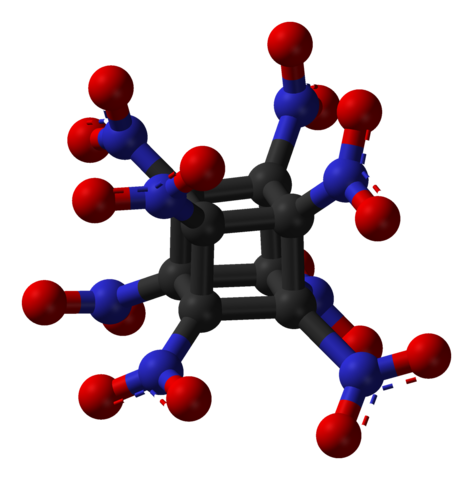 |
|---|---|---|---|---|---|
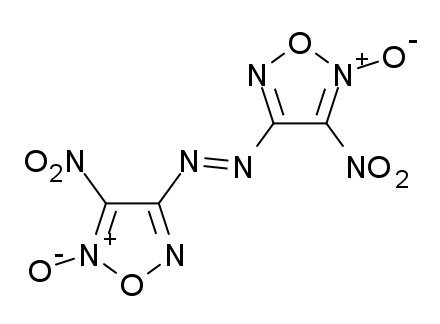 |
 |
|---|---|
High explosives have a large shock velocity.
                MJoules   Shock  Density
                  /kg     km/s    g/cm3

Octanitrocubane    11.2   10.6     1.95
Dinitrodiazeno.     9.2   10.0     1.98
C6H6N12O12          9.1            1.96    China Lake compound
HMX (Octogen)       8.0    9.1     1.86
RDX (Hexagen)       7.5    8.7     1.78
PLX                 6.5            1.14    95% CH3NO2 + 5% C2H4(NH2)2
Composition 4       6.3    8.04    1.59    91% RDX. "Plastic explosive"
Dynamite            5.9    7.2     1.48    75% Nitroglycerine + stabilizer
PETN                5.8    8.35    1.77
~808  Qing Xuzi publishes a formula resembling gunpower, consisting of
      6 parts sulfur, 6 parts saltpeter, and 1 part birthwort herb (for carbon).
~850  Incendiary property of gunpower discovered
1132  "Fire lances" used in the siege of De'an, China
1220  al-Rammah of Syria publishes "Military Horsemanship and Ingenious War
        Devices", describes the purification of potassium nitrate by
        adding potassium carbonate with boiling water, to precipitate out
        magnesium carbonate and calcium carbonate.
1241  Mongols use firearms at the Battle of Mohi, Hungary
1338  Battle of Arnemuiden.  First naval battle involving cannons.
1346  Cannons used in the Siege of Calais and the Battle of Crecy
1540  Biringuccio publishes "De la pirotechnia", giving recipes for gunpowder
1610  First flintlock rifle
1661  Boyle publishes "The Sceptical Chymist", a treatise on the
      distinction between chemistry and alchemy.  It contains some of the
      earliest modern ideas of atoms, molecules, and chemical reaction,
      and marks the beginning of the history of modern chemistry.
1669  Phosphorus discovered
1774  Lavoisier appointed to develop the French gunpowder program.  By 1788
         French gunpowder was the best in the world.
1832  Braconnot synthesizes the first nitrocellulose (guncotton)
1846  Nitrocellulose published
1847  Sobrero discovers nitroglycerine
1862  LeConte publishes simple recipes for producing potassium nitrate.
1865  Abel develops a safe synthesis of nitrocellulose
1867  Nobel develops dynamite, the first explosive more powerful than black powder
      It uses diatomaceous earth to stabilize nitroglycerine
1884  Vieille invents smokeless gunpowder (nitrocellulose), which is 3 times
         more powerful than black powder and less of a nuisance on the battlefield.
1902  TNT first used in the military.  TNT is much safer than dynamite
1930  RDX appears in military applications
1942  Napalm developed
1949  Discovery that HMX can be synthesized from RDX
1956  C-4 explosive developed (based on RDX)
1999  Eaton and Zhang synthesize octanitrocubane and heptanitrocubane

Black powder           =  .75 KNO3  +  .19 Carbon  +  .06 Sulfur
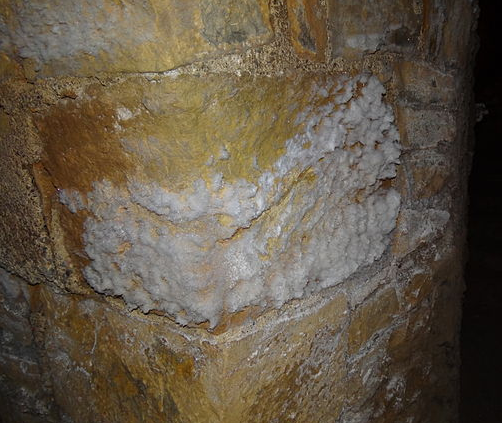
Above 550 Celsius, potassium nitrate decomposes. 2 KNO3 ↔ 2 KNO2 + O2.
 |
 |
 |
 |
|---|---|---|---|
 |
 |
 |
 |
|---|---|---|---|
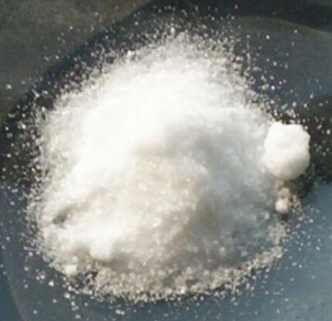
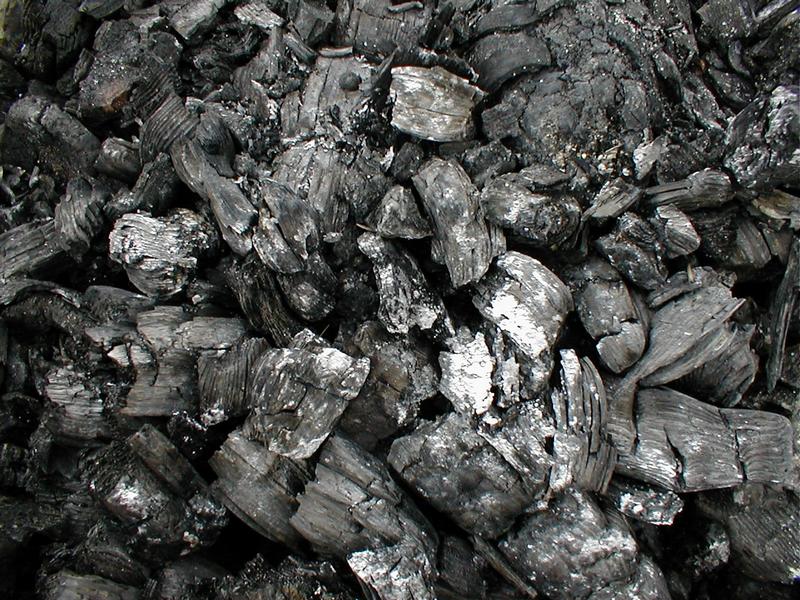
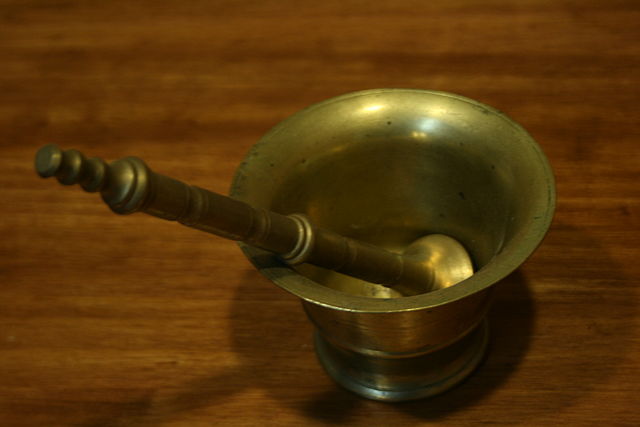
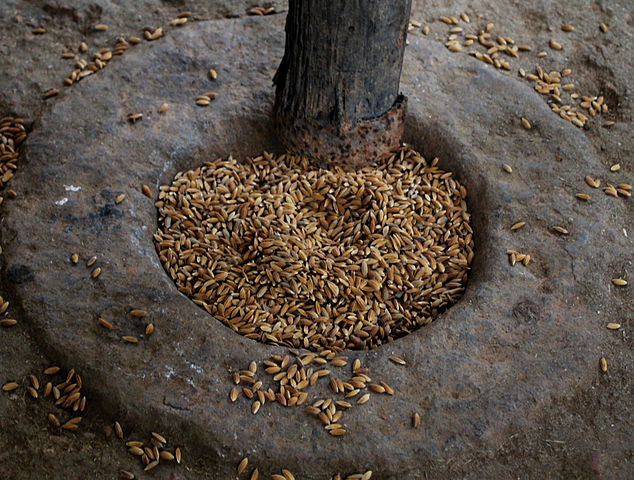
Potassium nitrate  KNO3     75%       (Saltpeter)
Charcoal           C7H4O    15%
Sulfur             S        10%

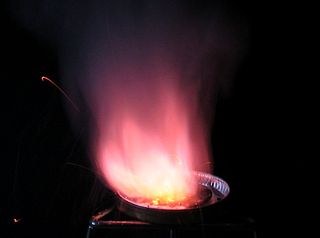
Oversimplified equation:  2 KNO3 + 3 C + S  →  K2S + N2 + 3 CO2

Realistic equation:       6 KNO3 + C7H4O + 2 S  →  KCO3 + K2SO4 + K2S + 4 CO2 + 2 CO + 2 H2O + 3 N2
Nitrite (NO3) is the oxidizer and sulfur lowers the ignition temperature.
                   MJoules
                     /kg

Hydrogen + Oxygen     13.16
Gasoline + Oxygen     10.4


        Mass   Energy    Energy/Mass
         kg      MJ         MJ/kg

MOAB    9800   46000        4.7               8500 kg of fuel
 |
 |
 |
|---|---|---|
 |
 |
 |
|---|---|---|
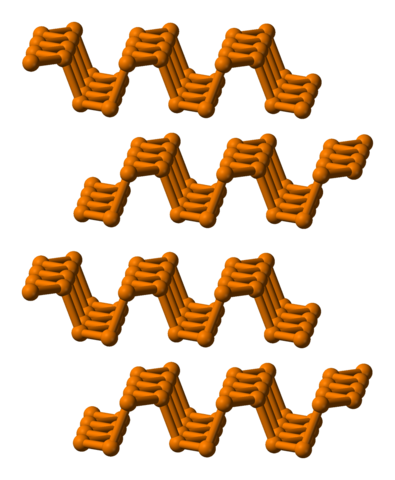
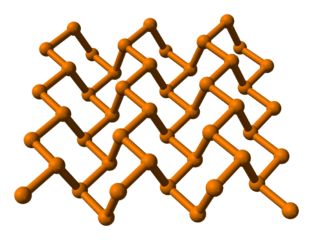
Form      Ignition    Density
          (Celsius)

White        30        1.83
Red         240        1.88
Violet      300        2.36
Black                  2.69
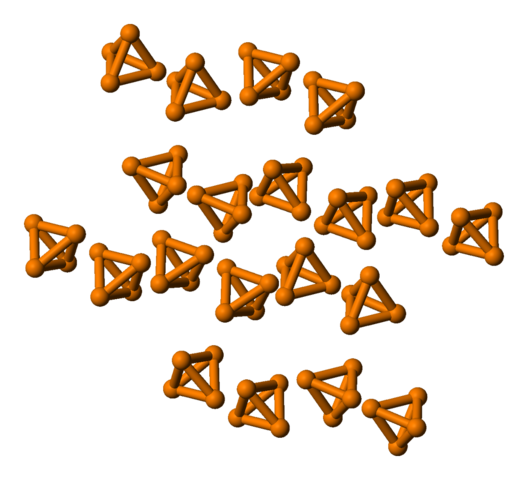
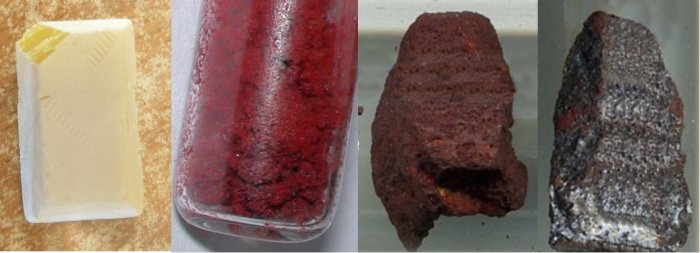
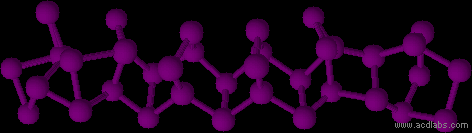
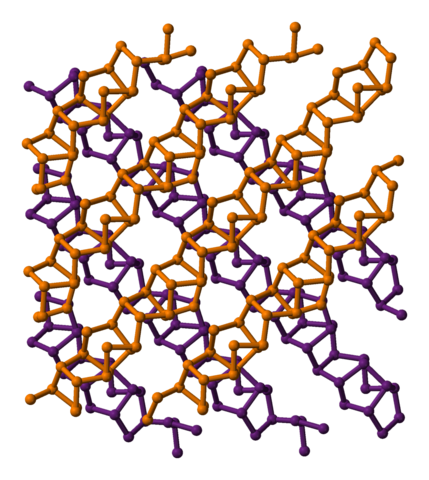
Red phosphorus is formed by heating white phosphorus to 250 Celsius or by
exposing it to sunlight. Violet phosphorus is formed by heating red phosphorus
to 550 Celsius. Black phosphorus is formed by heating white phosphorus at a
pressure of 12000 atmospheres. Black phosphorus is least reactive form and it
is stable below 550 Celsius.
 |
 |
 |
 |
 |
 |
|---|---|---|---|---|---|
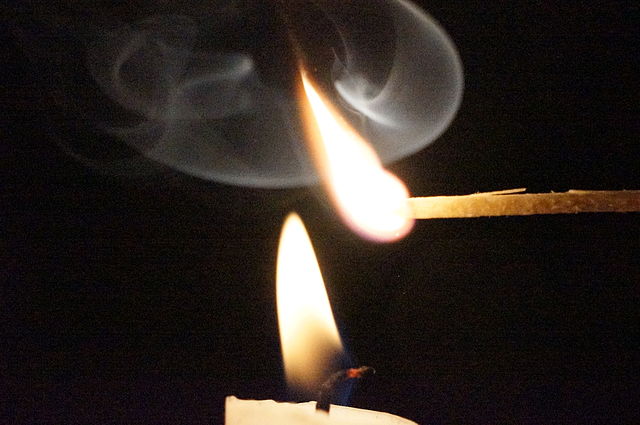
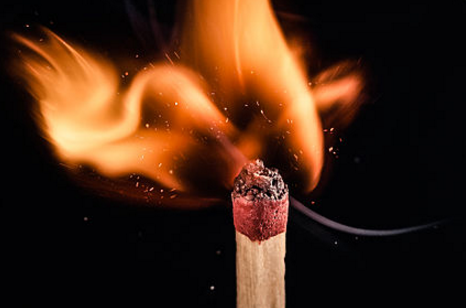
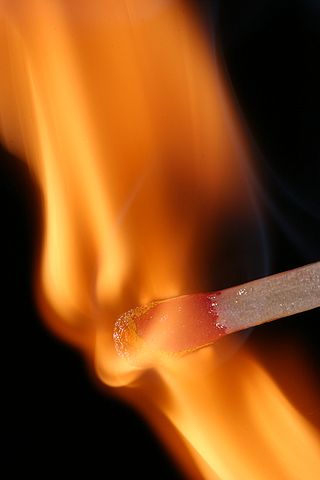
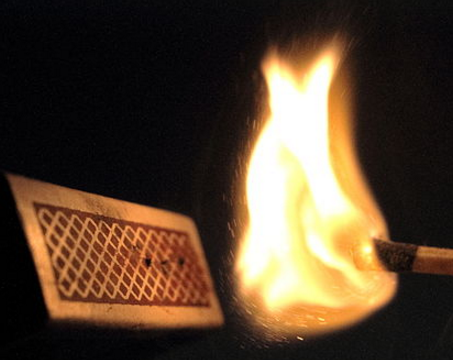
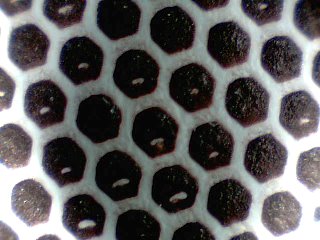
The safety match was invented in 1844 by Pasch. The match head cannot ignite by itself. Ignitition is achieved by striking it on a rough surface that contains red phosphorus. When the match is struck, potassium chlorate in the match head mixes with red phosphorus in the abrasive to produce a mixture that is easily ignited by friction. Antimony trisulfide is added to increase the burn rate.
Match head                 Fraction             Striking surface   Fraction

Potassium chlorate    KClO3  .50                Red phosphorus      .5
Silicon filler        Si     .4                 Abrasive            .25
Sulfur                S      small              Binder              .16
Antimony3 trisulfide  Sb2S3  small              Neutralizer         .05
Neutralizer                  small              Carbon              .04
Glue                         small
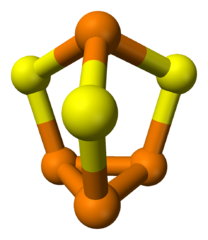
A "strike anywhere" match has phosphorus in the match head in the form of phosphorus sesquisulfide (P4S3) and doesn't need red phosphorus in the striking surface. P4S3 has an ignition temperature of 100 Celsius.
 |
 |
.jpg) |
|---|---|---|
Before the invention of iron, fires were started by striking flint (quartz) with pyrite to generate sparks. Flintlock rifles work by striking flint with iron. With the discovery of cerium, ferrocerium replaced iron and modern butane lighters use ferrocerium, which is still referred to as "flint".
Cerium        .38      Ignition temperature of 165 Celsius
Lanthanum     .22
Iron          .19
Neodymium2    .04
Praseodymium  .04
Magnesium     .04
 |
|---|
Nitrous oxide is stored as a cryogenic liquid and injected along with gaoline into the combustion chamber. Upon heating to 300 Celsius the nitrous oxide decomposes into nitrogen and oxygen gas and releases energy. The oxygen fraction in this gas is higher than that in air (1/3 vs. .21) and the higher faction allows for more fuel to be consumed per cylinder firing.
Air density                  =  .00122 g/cm3
Nitrous oxide gas density    =  .00198 g/cm3
Diesel density               =  .832   g/cm3
Gasoline density             =  .745   g/cm3
Diesel energy/mass           =  43.1   MJoules/kg
Gasoline energy/mass         =  43.2   MJoules/kg
Nitrous oxide boiling point  = -88.5   Celsius
Air oxygen fraction          =  .21
Nitrous oxide oxygen fraction=  .33
Nitrous oxide decompose temp =  300    Celsius
Nitrous oxide liquid pressure=   52.4  Bars     Pressure required to liquefy N2O at room temperature
 |
 |
 |
|---|---|---|
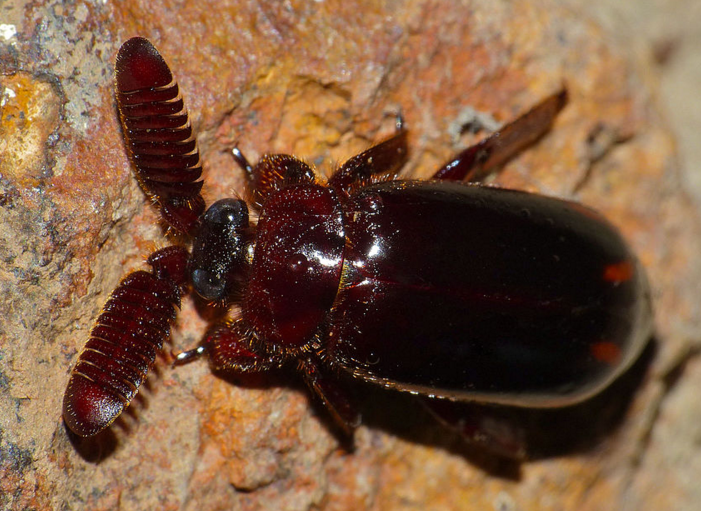
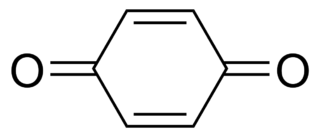
Hydroquinone and peroxide are stored in 2 separate compartments are pumped into the reaction chamber where they explode with the help of protein catalysts. The explosion vaporizes 1/5 of the liquid and expels the rest as a boiling drop of water, and the p-quinone in the liquid damages the foe's eyes. The energy of expulsion pumps new material into the reaction chamber and the process repeats at a rate of 500 pulses per second and a total of 70 pulses. The beetle has enough ammunition for 20 barrages.
2 H2O2  →  2 H2O +  O2           (with protein catalyst)
C6H4(OH)2  →  C6H4O2 + H2        (with protein catalyst)
O2 + 2 H2  →  2 H2O

Firing rate                     = 500 pulses/second
Number of pulses in one barrage =  70
Firing time                     = .14 seconds
Number of barrages              =  20
 |
 |
 |
 |
 |
|---|---|---|---|---|
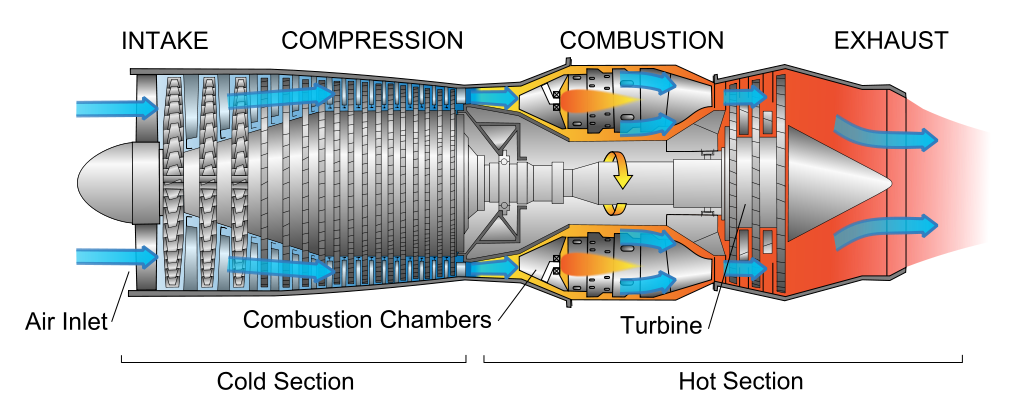
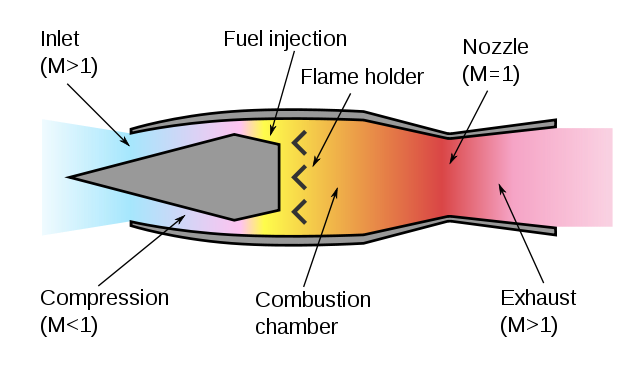
A turbojet engine compresses air before burning it to increase the flame speed and make it burn explosively. A ramjet engine moving supersonically doesn't need a turbine to achieve compression.
 |
 |
|---|---|
Airbus A350 compression ratio  =  52
Air density at sea level       = 1    bar
Air density at 15 km altitude  =  .25 bar
Air density in A350 engine     =  13  bar
From the thermal flame theory of Mallard and Le Chatelier,
Temperature of burnt material    =  Tb
Temperature of unburnt material  =  Tu
Temperature of ignition          =  Ti
Fuel density                     =  Dfuel
Oxygen density                   =  Doxygen
Reaction coefficient             =  C
Reaction rate                    =  R  =  C Dfuel Doxygen
Thermal diffusivity              =  Q  = 1.9⋅10-5 m2/s
Flame speed                      =  V

V2  =  Q C Dfuel Doxygen (Tb - Ti) / (Ti - Tu)
 |
 |
 |
 |
 |
|---|---|---|---|---|
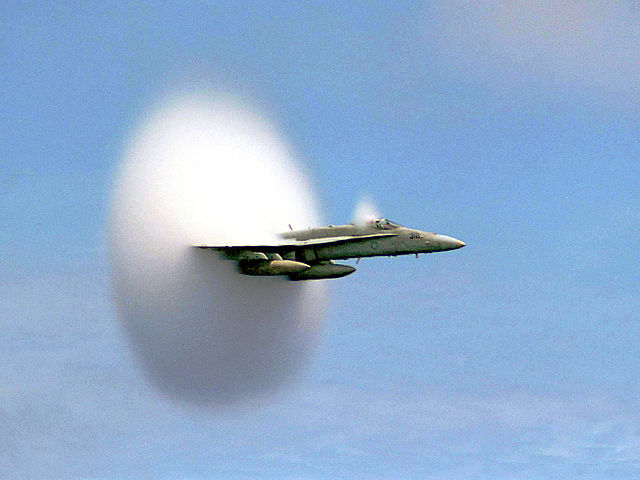
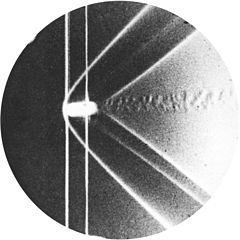
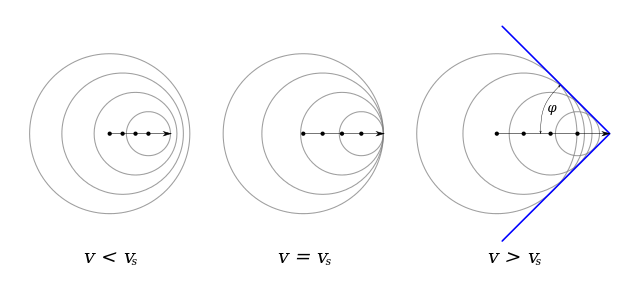
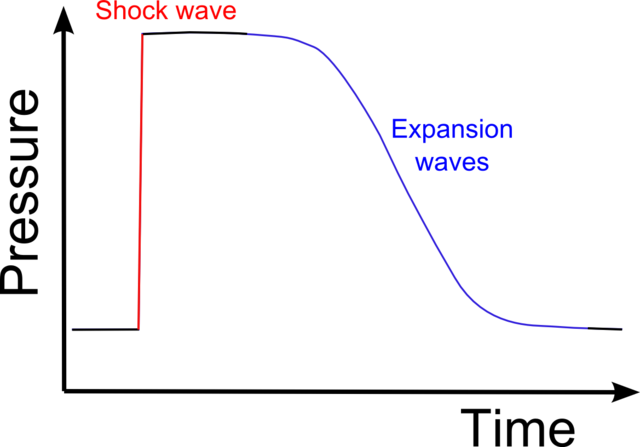
If the pressure front moves supersonically then the front forms a discontinuous shock, where the pressure makes a sudden jump as the shock passes.
Metal powder is often included with explosives.
        Energy/mass    Energy/mass
        not including  including
        oxygen         oxygen
        (MJoule/kg)    (MJoule/kg)

Hydrogen    113.4      12.7
Gasoline     46.0      10.2
Beryllium    64.3      23.2
Aluminum     29.3      15.5
Magnesium    24.5      14.8
Carbon       12.0       3.3
Lithium       6.9       3.2
Iron          6.6       4.6
Copper        2.0       1.6
 |
 |
 |
 |
 |
|---|---|---|---|---|
 |
 |
 |
 |
 |
 |
 |
|---|---|---|---|---|---|---|
 |
 |
 |
 |
 |
 |
 |
|---|---|---|---|---|---|---|
 |
 |
 |
 |
 |
|---|---|---|---|---|
 |
|---|
An oxygen candle is a mixture of sodium chlorate and iron powder, which when ignited smolders at 600 Celsius and produces oxygen at a rate of 6.5 man-hours of oxygen per kilogram of mixture. Thermal decomposition releases the oxygen and the burning iron provides the heat. The products of the reaction are NaCl and iron oxide.
The best oxidizer is liquid oxygen, and the exhaust speed for various fuels when burned with oxygen is:
                Exhaust  Energy   Density of fuel + oxidizer
                 speed   /mass
                 km/s    MJ/kg      g/cm3

Hydrogen   H2      4.46   13.2    .32
Methane    CH4     3.80   11.1    .83
Ethane     C2H6    3.58   10.5    .9
Kerosene   C12H26  3.52   10.3   1.03
Hydrazine  N2H4    3.46          1.07
Liquid hydrogen is usually not used for the ground stage of rockets because of
its low density.
We use kerosene as a standard fuel and show the rocket speed for various oxidizers. Some of the oxidizers can be used by themselves as monopropellants.
    Energy/Mass       Energy/Mass        Rocket           Rocket         Boil    Density
   with kerosene   as monopropellant  with kerosene  as monopropellant  Kelvin   g/cm3
       MJoule/kg         MJoule/kg          km/s             km/s

O3        12.9           2.97                                              161
O2        10.3           0                  3.52             0             110     1.14
H2O2       8.1           2.7                3.2              1.6           423     1.45
N2O4       8.00           .10               2.62                           294     1.44
N2O        6.18          1.86                                1.76          185
N2H4       -             1.58                                2.2           387     1.02
               MJoules  Rocket   Density
                 /kg     km/s    g/cm3

C6H6N12O12        9.1             1.96        China Lake compound
HMX (Octogen)     8.0   3.05      1.86
RDX (Hexagen)     7.5   2.5       1.78
Al + NH4ClO4            2.6
NH4ClO4                 2.5
NH3OHNO3                2.5       1.84        Hydrxyammonium nitrate
Al + NH4NO3       6.9
NH4NO3            1.4   2.0       1.12        Ammonium nitrate
|
|---|
                   Speed   Mass     Energy
                    m/s     kg      Joules

Bow                  74      .021        57
Compound bow        113      .035       223
Crossbow             75      .040       112
Slingshot            75      .0063       18
Ballista             75     5         14000
Trebuchet            40   100         80000
Cannonball 6 lb     438     2.7      261000
Cannonball 36 lb    450    16.3     1653000
Typical parameters for a bow and arrow are:
Arrow speed           = 74    meters/second
Arrow mass            = 20.6  g
Arrow kinetic energy  = 57    Joules
Bow energy            = 74    Joules
Energy efficiency     =   .77
Maximum bow force     =200    Newtons
Bow mass              =  6.5  kg
Bow mass / Arrow mass =316
Arrow length          =   .70 meters
Arrow radius          =  3.63 mm
Arrow wall thickness  =   .50 mm
Arrow tip mass        =  6.2  g
Arrow shaft mass      = 11.7  g
Arrow fin mass        =  1.4  g
Arrow nock mass       =  1.2  g
Carbon fiber stiffness= 85    GPascals
Data from the paper "Applications of Physics to Archery", Dr. H. O. Meyer.
Arrow mass            = M
Air density           = D               =  1.19 kg/meters2
Arrow cross section   = A
Air drag coefficient  = C               =  1.94
Arrow speed           = V
Air drag force        = F = ½ C D A V2
Arrow acceleration    = W = F/M = c V2
Air drag parameter    = c = ½ C D A M-1 =.00231 meters-1
Arrow initial speed                     = 74    meters/second
Arrow speed at .1 km                    = 66    meters/second
The Warwick Castle trebuchet is the largest trebuchet in the world.
Trebuchet mass     =  22  tons
Projectile mass    =  15  kg
Projectile range   = 168  meters
Counterweight mass =2000  kg
Trebuchet height   =  19  meters
For a projectile fired at 45 degrees,
Horizontal speed  =  v
Vertical speed    =  v
Total speed       =  V  =  2½ v
Gravity           =  g  =  9.8 meters/second2
Flight time       =  T  =  2 v/g
Range             =  R  =  vT  =  V2/g
Ship          Type       Displace   Year
                           Mkg

Trireme       Battleship      .040  Ancient Greece
Santa Maria   Explorer        .15   1942               Columbus' flagship
HMS Victory   Battleship     3.50   1765               UK
Virginia      Battleship     4.1    1862               Confederacy   Ironclad
Monitor       Battleship     1.00   1862               Union         Ironclad
Texas         Battleship     6.42   1892               USA

Bismarck      Battleship    41.7    1940   Germany
Yamato        Battleship    74.2    1941   Japan
Musashi       Battleship    68.2    1942   Japan
Iowa          Battleship    48.5    1942   USA
New Jersey    Battleship    58.1    1943   USA

Langley       Carrier       12.9    1912   USA
Lexington     Carrier       33.0    1927   USA
Lexington     Carrier       48.5    1928   USA
Kaga          Carrier       38.2    1929   Japan
Yorktown      Carrier       36.4    1943   USA
Shimano       Carrier       64.8    1944   Japan
T Roosevelt   Carrier      106.3    1986   USA

Titanic       Cruise        52.3    1912   UK
Wonder Sea    Cruise       267      2022
Symphony Sea  Cruise       228.1    2018   Bahamas

Petrobras 36  Oil rig       56.6    1995   Brazil
Champs Elysee Cargo        236.6    2020   France
Batillus      Supertanker  275.3    1976   France
Pioneering    Crane        403.3    2016   Malta
|
|---|
Bullets in armor incur fluid drag and deformation drag. Deformation drag is the warping of solid material and scales as the tensile modulus. Tensile drag dominates for all but the fastest bullets.
Bullet density         =  D
Armor density          =  d
Bullet length          =  L
Bullet speed           =  V
Armor Young's modulus  =  T
Armor stopping length  =  X
Dimensionless constant =  K  ~  .02
Bullet energy per area =  e
Armor mass per area    =  m
Bullet cross section   =  S
Bullet acceleration    =  A
Newton's law:
d L S A  =  -.5 C S d V2 - S K T

d L A  =  -.5 C d V2 - KT
The first term on the right is fluid drag and the second term is deformation drag. At low speed, deformation drag dominates, and at high speed, fluid drag dominates. Tensile drag dominates for all but the fastest bullets. If tensile drag dominates, the stopping length is:
X = ½ V2 D L / (T K)
Set
v = V / 1000 meters/second
Y = Bullet diameter ⅔ Bullet length
For Kevlar,
X = 1.56 Y v2
For steel,
X = 1.31 Y v2
To be safe, the armor should be substantially thicker than this.
Fluid drag and tensile drag are equal when
V02 = 2KT / (Cd)
For steel, V0 = 1400 meters/second. For kevlar, V0 = 2900 meters/second.
In the tensile regime, the goal is to maximize e/m = K T / d.
For armor, what matters is T/d. The elastic energy/mass of the armor material.
Define the "structural metals" as metals with good strength/density. These include Be, Mg, Al, Ti, Cr, Fe, Ni, Mo, W.
For structural metals and for wood of any density, T/d ~ 23 MJoule/kg. Handy rule of thumb for Fermi calculations. Beryllium is anomalous at 180 MJoule/kg. Kevlar is 108 MJoule/kg.
 |
|---|
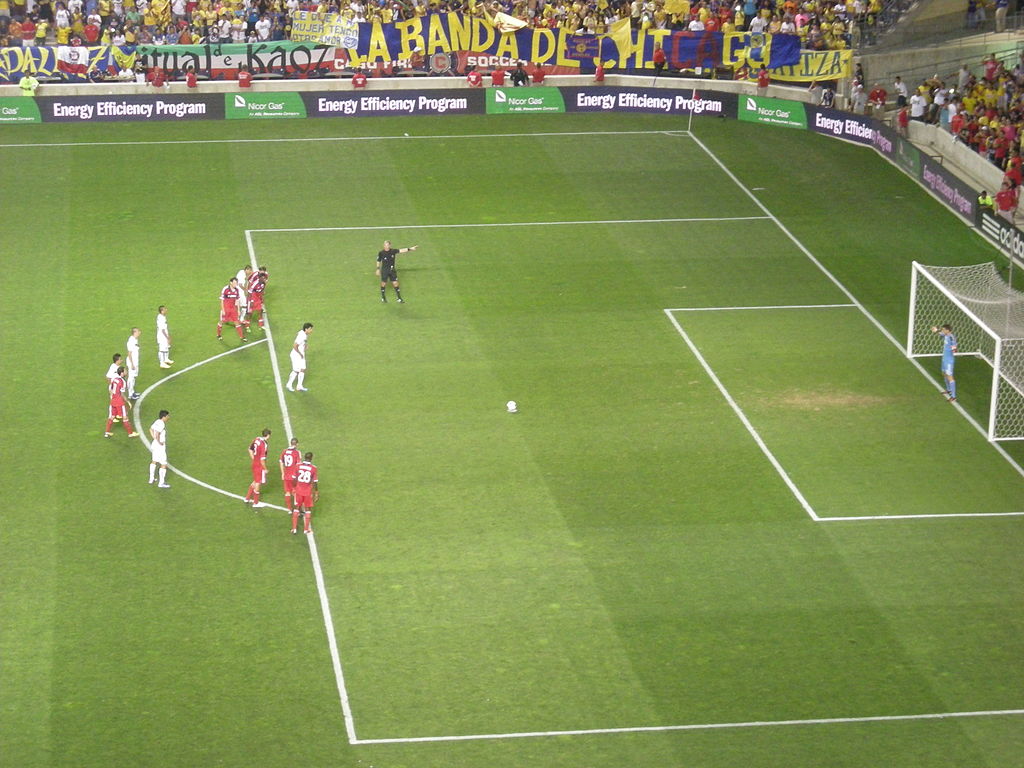
The characteristic distance a ball travels before air slows it down is the "Newton length". This distance can be estimated by setting the mass of the ball is equal to the mass of the air the ball passes through.
Mass of a soccer ball              =  M  =  .437  kg
Ball radius                        =  R  =  .110  meters
Ball cross-sectional area          =  A  =  .038  meters2
Ball density                       =  D  =78.4    kg/meters3
Air density                        =  d  = 1.22   kg/meter3   (Air at sea level)
Ball initial velocity              =  V
Newton length                      =  L
Mass of air the ball passes through=  m  =  A L d

m  =  M

L  =  M / (A d)  =  (4/3) R D / d  =  9.6 meters
The depth of the penalty box is 16.45 meters (18 yards). Any shot taken outside the penalty box slows down substantially before reaching the goal.
Newton was also the first to observe the "Magnus effect", where spin causes a ball to curve.
 |
|---|
 |
|---|
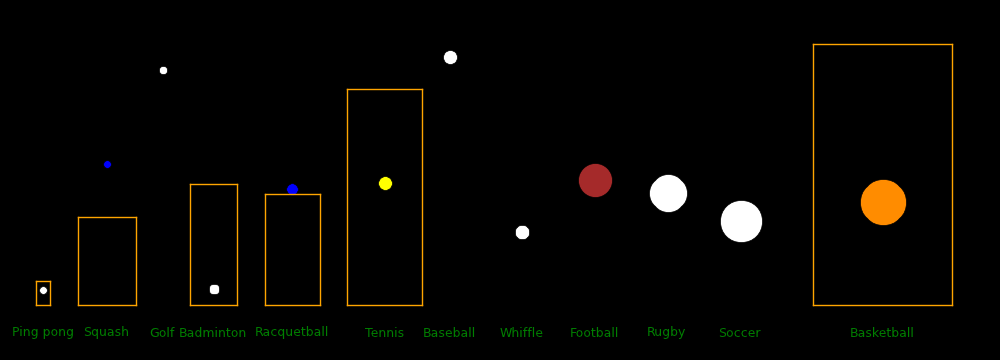
The orange boxes depict the size of the court and the Newton length is the distance from the bottom of the court to the ball. Ball sizes are magnified by a factor of 20 relative to the court sizes.
          Diameter  Mass  Drag  Shot   Drag/  Density   Ball   Max    Spin
             mm      g     m     m     Shot    g/cm3    speed  speed   1/s
                                                         m/s    m/s
Ping pong    40      2.7   1.8    2.74    .64   .081     20    31.2    80
Squash       40     24    15.6    9.75   1.60   .716
Golf         43     46    25.9  200       .13  1.10      80    94.3   296
Badminton    54      5.1   1.8   13.4     .14   .062
Racquetball  57     40    12.8   12.22   1.0    .413
Billiards    59    163    48.7    2.7   18     1.52
Tennis       67     58    13.4   23.77    .56   .368     50    73.2   119
Baseball     74.5  146    27.3   19.4    1.4    .675     40    46.9    86
Whiffle      76     45     8.1                  .196
Football    178    420    13.8   20       .67   .142     20    26.8    18
Rugby       191    435    12.4   20       .62   .119
Bowling     217   7260   160     18.29   8.8   1.36
Soccer      220    432     9.3   16.5     .56   .078     40            29
Basketball  239    624    11.4    7.24   1.57   .087
Cannonball  220  14000   945   1000       .94  7.9
"Drag" is the Newton drag length and "Shot" is the typical distance of a shot, unless otherwise specified. "Density" is the density of the ball.
For a billiard ball, rolling friction is greater than air drag.
A bowling pin is 38 cm tall, 12 cm wide, and has a mass of 1.58 kg. A bowling ball has to be sufficiently massive to have a chance of knocking over 10 pins.
Mass of 10 bowling pins / Mass of bowling ball = 2.18
To estimate the distance a bullet travels before being slowed by drag,
Air density              =  Dair    =   .012 g/cm3
Water density            =  Dwater  =  1.0   g/cm3
Bullet density           =  Dbullet = 11.3   g/cm3
Bullet length            =  Lbullet =  2.0   cm
Bullet distance in water =  Lwater  ≈  Lbullet Dbullet / Dwater ≈ 23  cm
Bullet distance in air   =  Lair    ≈  Lbullet Dbullet / Dair  ≈ 185 meters
 |
|---|
         g/cm3                                    g/cm3

Air        .00122  (Sea level)           Silver     10.5
Wood       .7 ± .5                       Lead       11.3
Water     1.00                           Uranium    19.1
Magnesium 1.74                           Tungsten   19.2
Aluminum  2.70                           Gold       19.3
Rock      2.6 ± .3                       Osmium     22.6   (Densest element)
Titanium  4.51
Steel     7.9
Copper    9.0
 |
 |
 |
 |
|---|---|---|---|
                         Cartridge  Projectile  Length  Diameter  Warhead  Velocity
                            (kg)      (kg)       (m)     (m)       (kg)     (m/s)

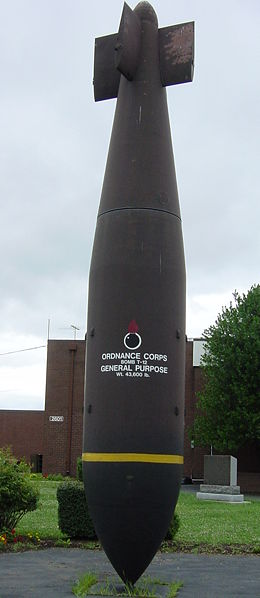
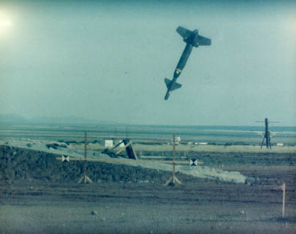
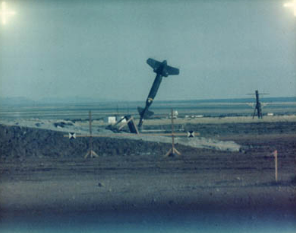
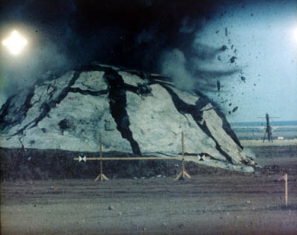
Massive Ordnance Penetrator   -       13608     6.2     .8        2404
PGU-14, armor piercing       .694     .395       .173   .030               1013
PGU-13, explosive            .681     .378       .173   .030               1020
The GAU Avenger armor-piercing shell contains .30 kg of depleted uranium.
The massive ordnamce penetrator typically penetrates 61 meters of Earth.
The PGU-13 and PGU-14 are used by the A-10 Warthog cannon.
The composition of natural uranium is .72% uranium-235 and the rest is uranium-238. Depleted uranium has less than .3% of uranium-235.
 |
 |
|---|---|
The drag force on an object moving through a fluid is
Velocity             =  V
Fluid density        =  D  =  1.22 kg/m2   (Air at sea level)
Cross-sectional area =  A
Drag coefficient     =  C  =  1            (typical value)
Drag force           =  F  =  ½ C D A V2
Drag power           =  P  =  ½ C D A V3  =  F V
Terminal velocity    =  Vt
"Terminal velocity" occurs when the drag force equals the gravitational force.
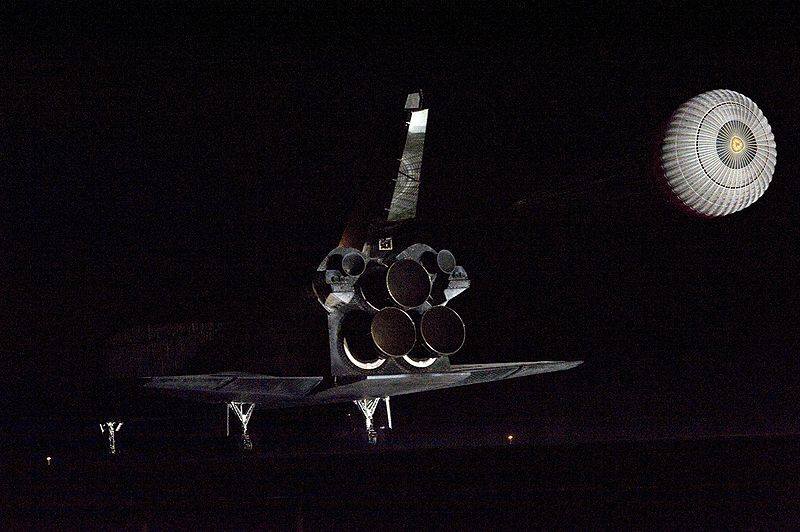
M g = ½ C D A Vt2Suppose we want to estimate the parachute size required for a soft landing. Let a "soft landing" be the speed reached if you jump from a height of 2 meters, which is Vt = 6 m/s. If a skydiver has a mass of 100 kg then the area of the parachute required for this velocity is 46 meters2, which corresponds to a parachute radius of 3.8 meters.
 |
|---|
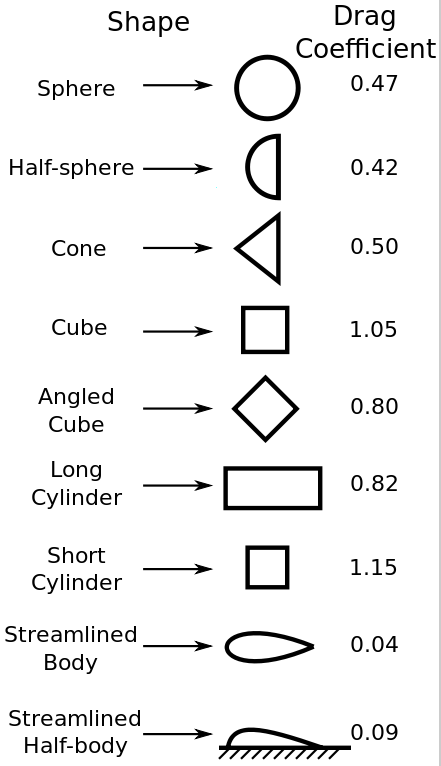
               Drag coefficient

Bicycle car         .076        Velomobile
Tesla Model 3       .21         2017
Toyota Prius        .24         2016
Bullet              .30
Typical car         .33         Cars range from 1/4 to 1/2
Sphere              .47
Typical truck       .6
Formula-1 car       .9          The drag coeffient is high to give it downforce
Bicycle + rider    1.0
Skier              1.0
Wire               1.2
                  Mach

X-15              6.7      Rocket
Blackbird SR-71   3.5
X-2 Starbuster    3.2
MiG-25 Foxbat     2.83
XB-70 Valkyrie    3.0
MiG-31 Foxhound   2.83
F-15 Eagle        2.5
Aardvark F-111    2.5      Bomber
Sukhoi SU-27      2.35
F-22 Raptor       2.25     Fastest stealth aircraft
 |
|---|
Fluid density    =  D
Cross section    =  A
Drag coef        =  C
Drag force       =  F  =  ½ C A D V2
Drag power       =  P  =  ½ C A D V3  =  K D V3  =  F V
Drag parameter   =  K  =  ½ C A


                 Speed   Density   Drag force   Drag power    Drag
                 (m/s)   (kg/m3)      (kN)       (kWatt)    parameter

Bike                 10       1.22      .035        .305   .50
Bike                 18       1.22      .103       1.78    .50
Bike, speed record   22.9     1.22      .160       3.66    .50
Bike, streamlined    38.7     1.22      .095       3.66    .104
Porche 911           94.4     1.22     7.00      661      1.29
LaFerrari            96.9     1.22     7.31      708      1.28
Lamborghini SV       97.2     1.22     5.75      559      1.00
Skydive, min speed   40       1.22      .75       30       .77        75 kg
Skydive, max speed  124       1.22      .75      101       .087       75 kg
Airbus A380, max    320        .28  1360      435200     94.9
F-22 Raptor         740        .084  312      231000      6.8
SR-71 Blackbird    1100        .038  302      332000      6.6
Sub, human power      4.1  1000         .434       1.78    .052
Blue Whale           13.9  1000      270        3750      2.8         150 tons, 25 Watts/kg
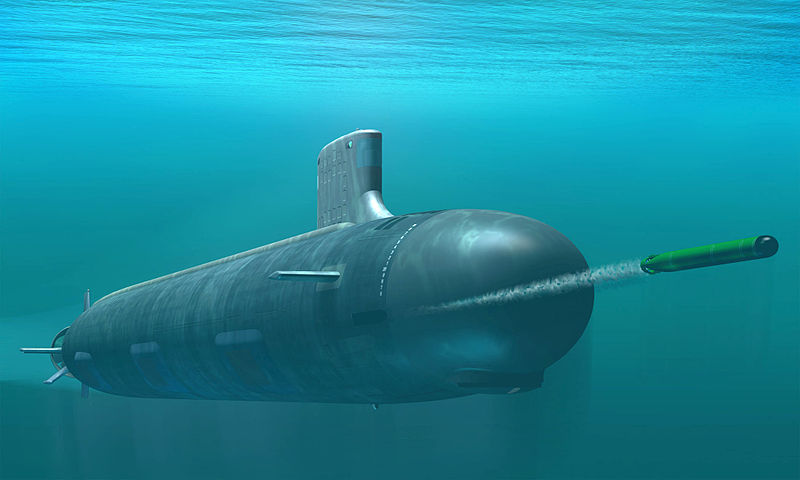
Virginia nuclear sub 17.4  1000     1724       30000     11.4
The drag coefficient is an assumption and the area is inferred from the
drag coefficient.
For the skydiver, the minimum speed is for a maximum cross section (spread eagled) and the maximum speed is for a minimum cross section (dive).
Wiki: Energy efficiency in transportation
 |
|---|
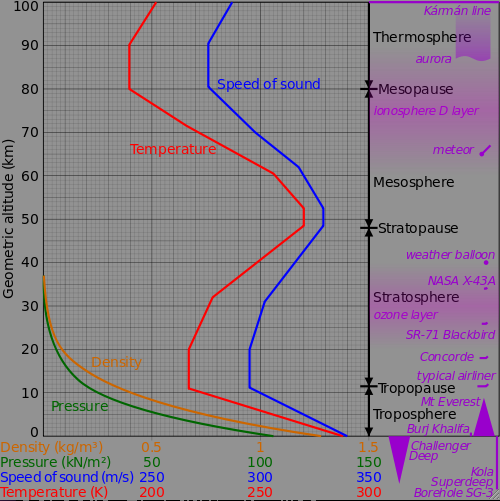
Airplanes fly at high altitude where the air is thin.
                Altitude   Air density
                  (km)     (kg/m3)

Sea level          0       1.22
Denver (1 mile)    1.6      .85
Mount Everest      9.0      .45
Airbus A380       13.1      .25    Commercial airplane cruising altitude
F-22 Raptor       19.8      .084
SR-71 Blackbird   25.9      .038
 |
 |
_overhead_photo_in_August_2014.JPG) |
|---|---|---|
                       m/s     Mach

Swim                    2.39
Boat, human power       5.14
Aircraft, human power  12.3
Run                    12.4
Boat, wind power       18.2
Bike                   22.9
Car, solar power       24.7
Bike, streamlined      38.7
Land animal            33               Cheetah
Bird, level flight     45               White-throated needletail
Aircraft, electric     69
Helicopter            111       .33
Train, wheels         160       .54
Train, maglev         168       .57
Aircraft, propeller   242       .82
Rocket sled, manned   282       .96
Aircraft, manned      981      3.33
Rocket plane, manned 2016      6.83
Rocket sled          2868      9.7
Scramjet             5901     20
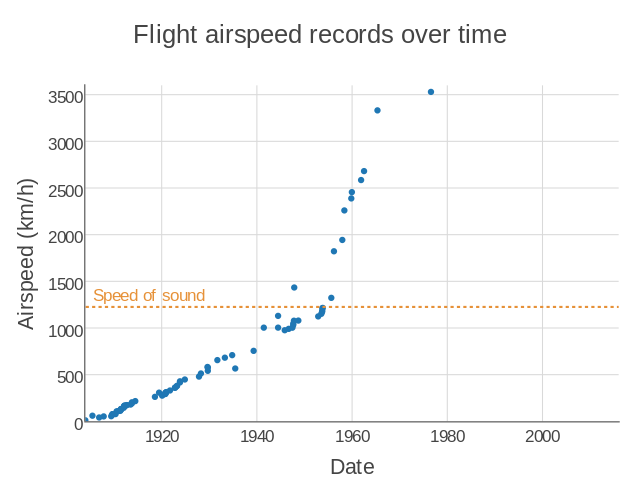
Mach 1 = 295 m/s at high altitude.
 |
|---|
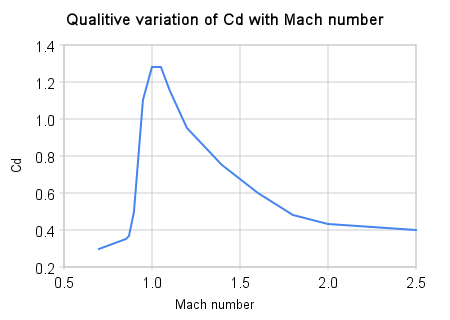
Commercial airplanes fly at Mach .9 because the drag coefficient increases sharply at Mach 1.
The drag coefficient depends on speed.
Object length    =  L
Velocity         =  V
Fluid viscosity  =  Q                  (Pascal seconds)
                 =  1.8⋅10-5 for air
                 =  1.0⋅10-3 for water
Reynolds number  =  R   =  V L / Q      (A measure of the turbulent intensity)
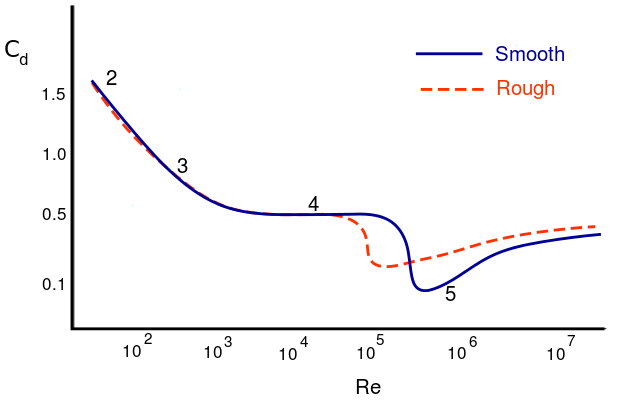
The drag coefficient of a sphere as a function of Reynolds number is:
 |
|---|
Golf balls have dimples to generate turbulence in the airflow, which increases the Reynolds number and decrease the drag coefficient.
Reynolds  Soccer  Golf   Baseball   Tennis
 number
  40000   .49    .48      .49       .6
  45000   .50    .35      .50
  50000   .50    .30      .50
  60000   .50    .24      .50
  90000   .50    .25      .50
 110000   .50    .25      .32
 240000   .49    .26
 300000   .46
 330000   .39
 350000   .20
 375000   .09
 400000   .07
 500000   .07
 800000   .10
1000000   .12             .35
2000000   .15
4000000   .18    .30
Data
 |
 |
|---|---|
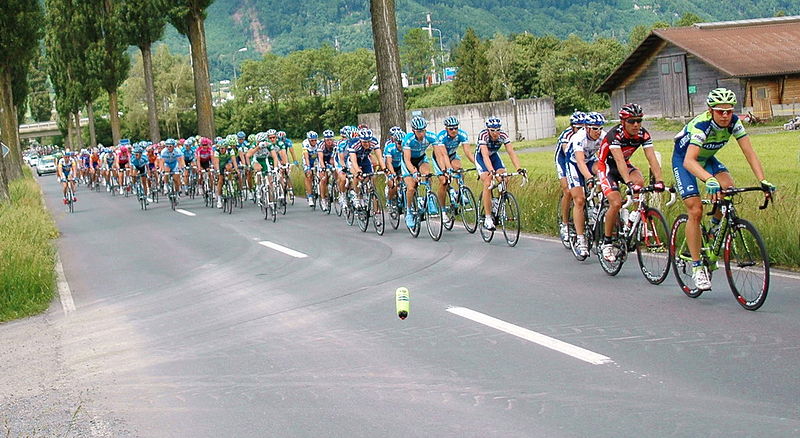
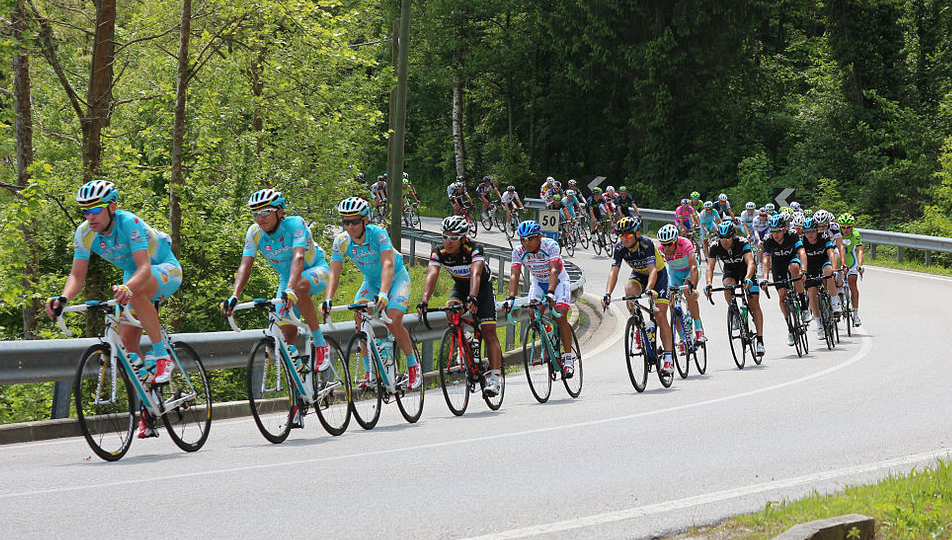
If the cyclists are in single file then the lead rider has to use more power than the following riders. Cyclists take turns occupying the lead.
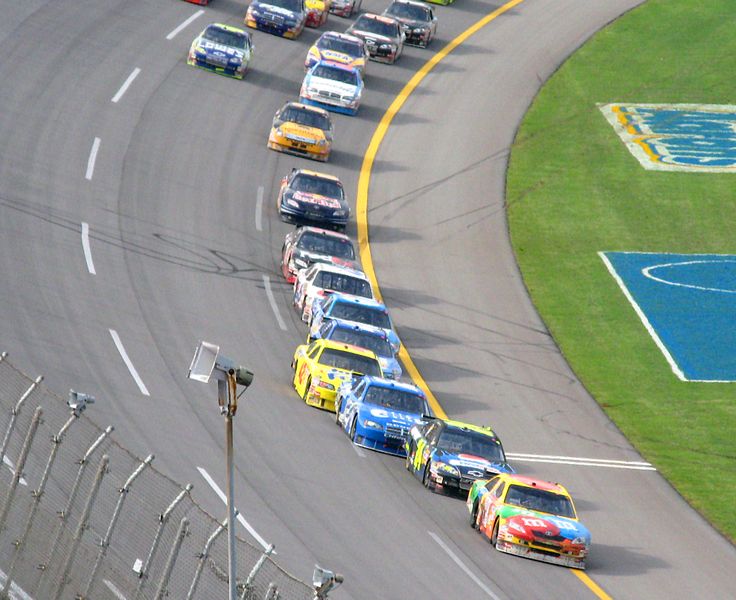
A "slingshot pass" is enabled by drafting. The trailing car drops back by a few lengths and then accelerates. The fact that he is in the leading car's slipstream means he has a higher top speed. As the trailing car approaches the lead car it moves the side and passes.
 |
 |
|---|---|
For an object experiencing drag,
Drag coefficient  =  C
Velocity          =  V
Fluid density     =  D
Cross section     =  A
Mass              =  M
Drag number       =  Z  =  ½ C D A / M
Drag acceleration =  A  =  -Z V2
Initial position  =  X0 =  0
Initial velocity  =  V0
Time              =  T
The drag differential equation and its solution are
A  =  -Z V2
V  =  V0 / (V0 Z T + 1)
X  =  ln(V0 Z T + 1) / Z
 |
 |
|---|---|
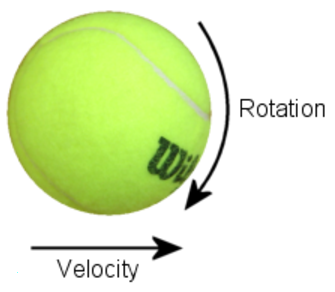
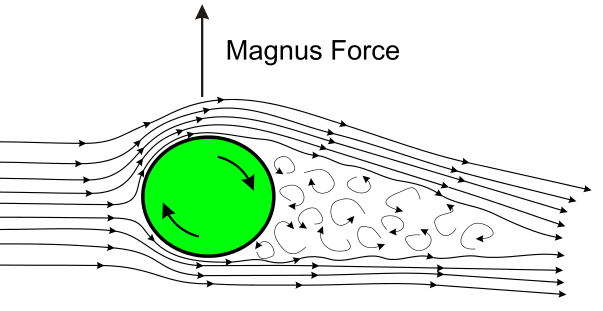
1672  Newton is the first to note the Magnus effect while observing tennis players
      at Cambridge College.
1742  Robins, a British mathematician and ballistics researcher, explains deviations
      in musket ball trajectories in terms of the Magnus effect.
1852  The German physicist Magnus describes the Magnus effect.
For a spinning tennis ball,
Velocity    =  V                          =    55 m/s             Swift groundstroke
Radius      =  R                          =  .067 m
Area        =  Area                       = .0141 m2
Mass        =  M                          =  .058 kg
Spin number =  S   =  W R / V             =   .25                 Heavy topspin
Spin rate   =  W   =    V / R             =   205 Hz
Air density =  Dair                       =  1.22 kg/m3
Ball density=  Dball
Drag coef   =  Cdrag                      =    .5                 For a sphere
Spin coef   =  Cspin                      =     1                 For a sphere and for S < .25
Drag force  =  Fdrag = ½ Cdrag Dair Area V2   =  13.0 Newtons
Spin force  =  Fspin = ½ Cspin Dair Area V2 S =   6.5 Newtons
Drag accel  =  Adrag                      =   224 m/s2
Spin accel  =  Aspin                      =   112 m/s2
Gravity     =  Fgrav = M g
For a rolling ball the spin number is S=1.
If the spin force equals the gravity force (Fspin = Fgrav),
The drag force on an object moving through a fluid is
V2 S C R-1 Dair/Dball = .0383
Velocity             =  V
Fluid density        =  D  =  1.22 kg/m2   (Air at sea level)
Cross-sectional area =  A
Drag coefficient     =  C
Drag force           =  F  =  ½ C A D V2
Drag power           =  P  =  ½ C A D V3  =  F V
Drag parameter       =  K  =  C A
"Terminal velocity" occurs when the drag force equals the
gravitational force.
M g = ½ C D A V2
Suppose we want to estimate the parachute size required for a soft landing.
Let a "soft landing" be the speed reached if you jump from a height of 2
meters, which is Vt = 6 m/s. If a skydiver has a mass of 100 kg
then the area of the parachute required for this velocity is 46
meters2, which corresponds to a parachute radius of 3.8 meters.
               Drag coefficient

Bicycle car         .076        Velomobile
Tesla Model 3       .21         2017
Toyota Prius        .24         2016
Bullet              .30
Typical car         .33         Cars range from 1/4 to 1/2
Sphere              .47
Typical truck       .6
Formula-1 car       .9          The drag coeffient is high to give it downforce
Bicycle + rider    1.0
Skier              1.0
Wire               1.2
© Jason Maron, all rights reserved.
Data from Wikipedia unless otherwise specified.