

|
|
|
|
|
|
|---|---|---|---|---|---|
 |
 |
 |
 |
 |
|---|---|---|---|---|
 |
 |
 |
|---|---|---|
 |
 |
 |
 |
 |
|---|---|---|---|---|
 |
 |
 |
 |
 |
|---|---|---|---|---|
 |
 |
 |
 |
|---|---|---|---|
 |
 |
 |
 |
 |
 |
 |
|---|---|---|---|---|---|---|
 |
 |
 |
 |
 |
 |
 |
|---|---|---|---|---|---|---|
 |
 |
 |
 |
 |
|---|---|---|---|---|
 |
 |
|---|---|
 |
|---|
 |
 |
 |
 |
 |
|---|---|---|---|---|
 |
 |
 |
 |
 |
|---|---|---|---|---|
 |
|
|---|---|
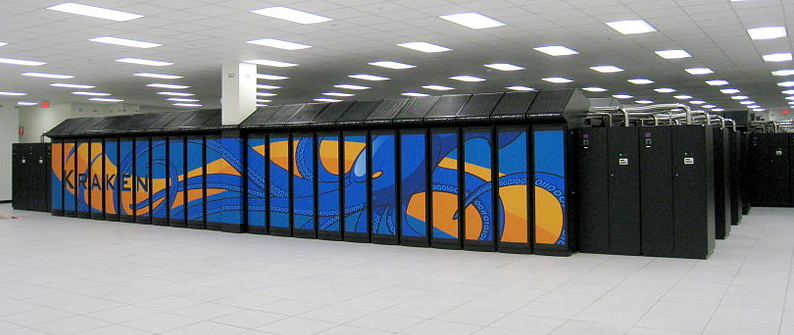
To compare computers and brains, we need to define an "operation". For a computer, we use "floating point operation" and for a brain, we use a synapse action.
With these definitions, the world's fastest supercomputer is 10 times faster than a brain for operations per second, and a gamestation is 2500 times slower.
A brain is 3 orders of magnitude better than a computer for speed per power.
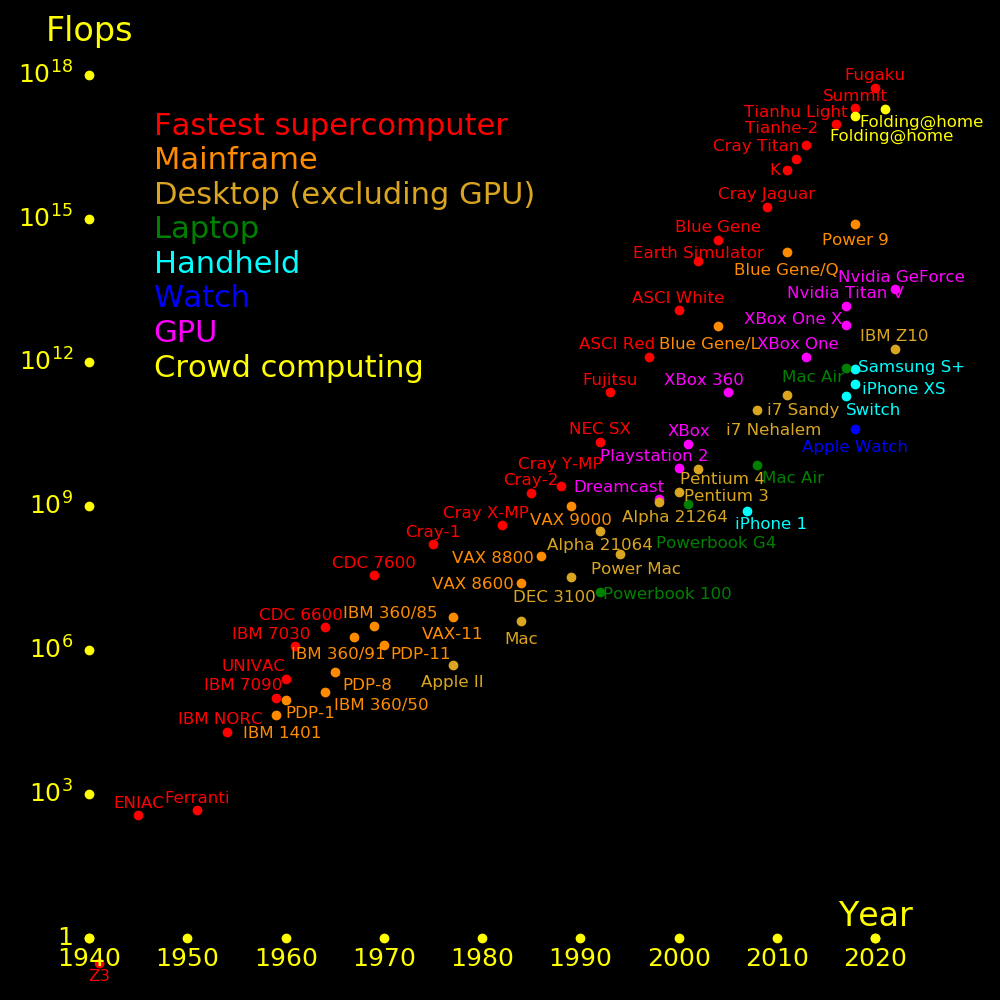 |
|---|
For a computer, "elements" is the number of floating point units, and for a brain, it's the number of synapses. A floating point operation (Flop) is an add or a multiply.
A brain's clock time is the time of a chemical synapse (2 milliseconds) plus the signal crossing time across the brain (2 milliseconds), for a total of 4 milliseconds, or 250 Hertz.
              Speed   Clock   Elements  Power  Speed/Power  Fuel/Year   Memory   Fuel
             Ops/sec  Hertz             Watts   Ops/Joule    $/year      Byte

Brain          2⋅1016  250        1014      20      1014       3000      1014      Food
Supercomputer  2⋅1017  4⋅109  25000000  700000    3⋅1011     600000      1016      Electricity
Gamestation    8⋅1012  4⋅109      1000    1000    3⋅1011       1000      1011      Electricity
Supercomputing is driven by Flops/$ and mobile computing is driven by Flops/Watt. For 2023,
Speed per dollar, CPU   =    2   GFlop/$
Speed per dollar, GPU   =   40   GFlop/$
Memory, RAM             =     .4 GByte/$
Memory, solid state     =    7   GByte/$
Memory, disk            =   33   GByte/$
Speed per power, GPU    =  300   GFlop/Watt

Battery energy per mass =     .6 MJoule/kg
Battery power  per mass =  500   Watt/kg
Battery energy/mass and power/mass advance slowly. Computer speed/$ and speed/power advance rapidly.
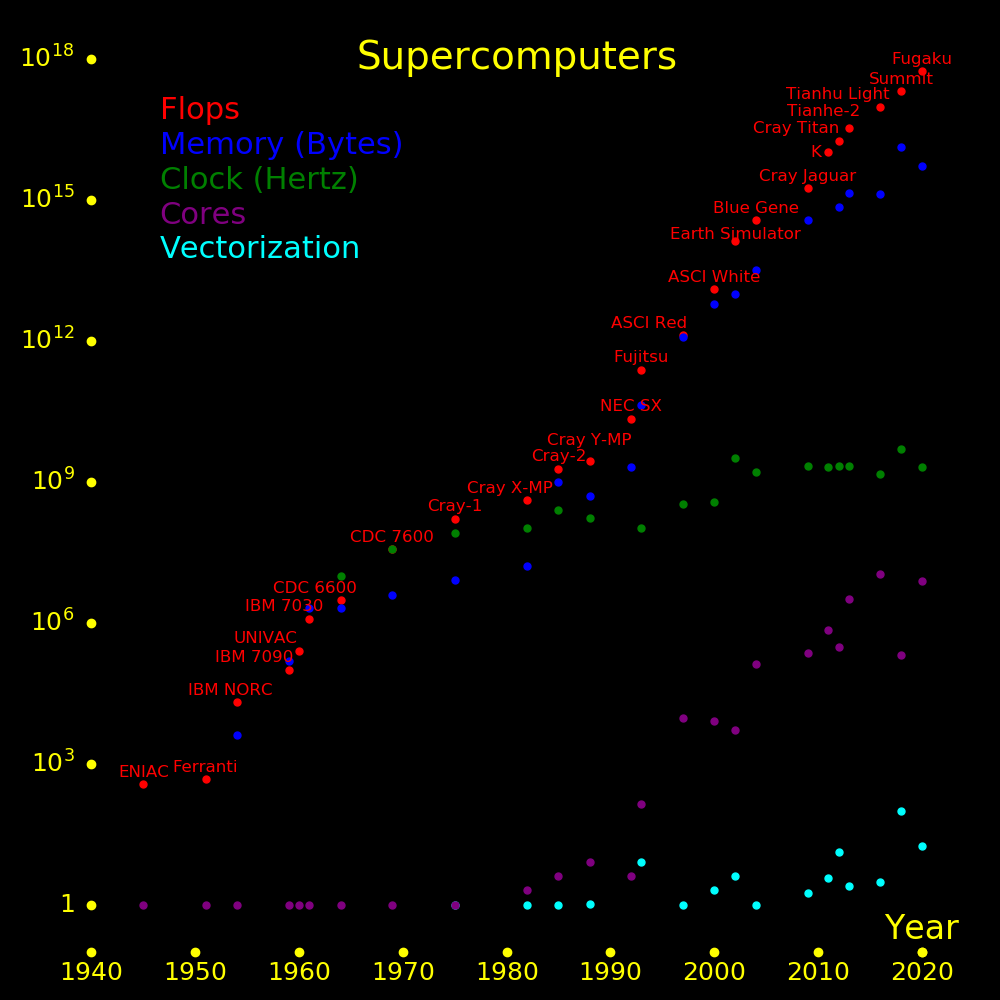
Clock speed topped out. The way forward is parallelization and vectorization.
 |
|---|
Computation speed is measured in Flops (Floating point operations per second). A floating point operation (Flop) is an add or a multiply.
A "core" is an independent floating point unit. Different cores can do different operations.
A core produces an add and a multiply every clock cycle, hence it produces 2 floating point operations per cycle.
A core can be "vectorized" (a GPU), which means that it does many adds and multiples simultaneously. For vectorization, each element in the vector has to do the same operation. Gaming hardware is heavily vectorized. Computers became parallelized in the 1990s and vectorized in the 2010s.
The speed of a computer is
Computer speed   = S = 2FCV
Clock frequency  = F
Cores            = C                Independent CPUs
Vectorization    = V                Number of GPU vectors per core
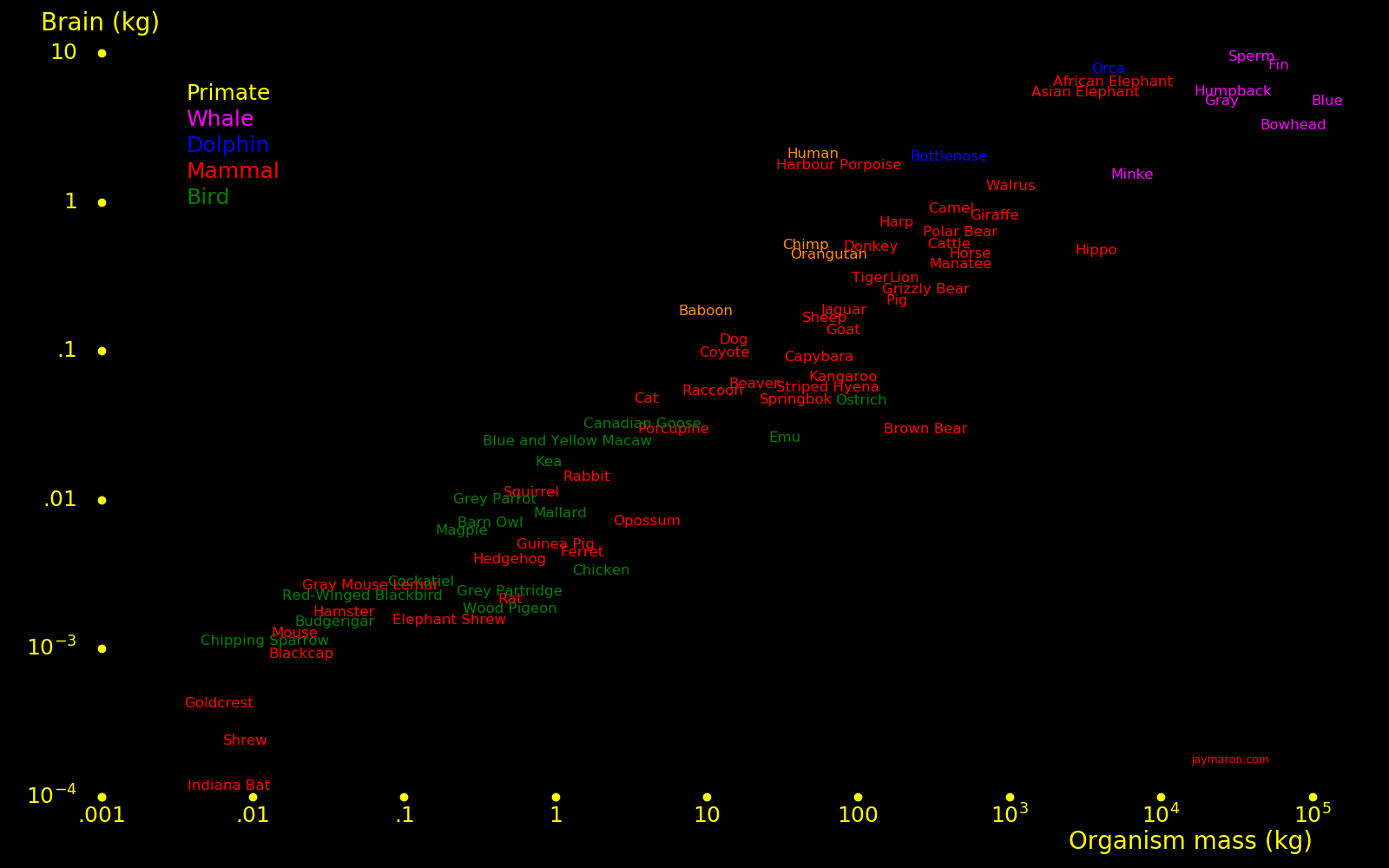
A sperm whale brain is 5 times larger than a human brain. It has 10 tons of audio organs and sings louder than a jet engine.
 |
|---|
The table gives the year that a computer eclipsed the world champion.
            Year    World Champion      Year the game was invented

Checkers    1990    Alexei Chizhov      1243
Scrabble    2000                        1938       There was no consensus world #1 player at the time
Chess       2006    Vladimir Kramnik     650
Go          2016    Lee Sedol           -400
Shogi       2017    Yoshiharu Habu      1058       Japanese chess
The chess player Edward Lasker said:
"While the Baroque rules of Chess could only have been created by humans, the rules of Go are so elegant, organic, and rigorously logical that if intelligent life forms exist elsewhere in the universe, they almost certainly play Go."
The rules of chess are an example of "fine tuning" and there are lots of free parameters (the moves allowed by each piece).
 |
|---|
Most stars in the galaxy were formed before the sun. If alien exist, they likely have a head start on us by billions of years.
The sun is 23000 light years from the galactic center. A fusion drive can move at 1/10 the speed of light and can cross the galaxy in 100,000 years. If aliens want to be here, they would be.
Intelligent life likely requires an oxygen atmosphere because aerobic respiration yields vastly more energy than anaerobic respiration. Glucose gives 30 ATP of energy aerobically and 2 ATP anaerobically. A human brain uses 20 Watts and would be hard to power anaerobically.
There are likely few planets that achieve an oxygen atmosphere. You need abundant water, biomass, and photosynthesis. You also need to not overdo it with water and be a waterworld. You need both continents and oceans.
In the Age of Dinosaurs, there was much more biomass than today, and the atmospheric oxygen fraction peaked at 38%. This enabled 80-kg organisms to fly.
 |
 |
 |
 |
|---|---|---|---|
 |
 |
 |
 |
|---|---|---|---|
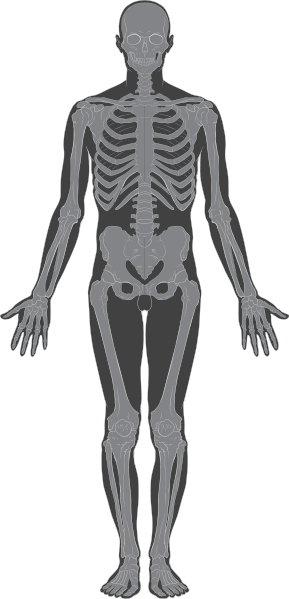
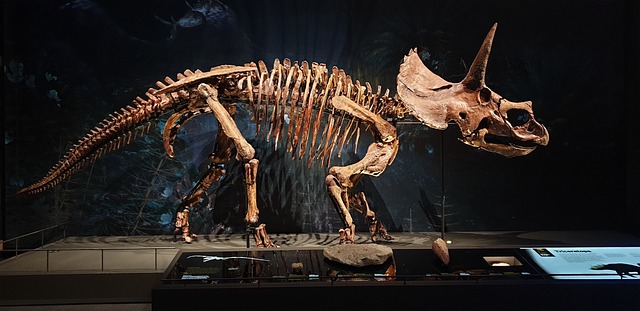
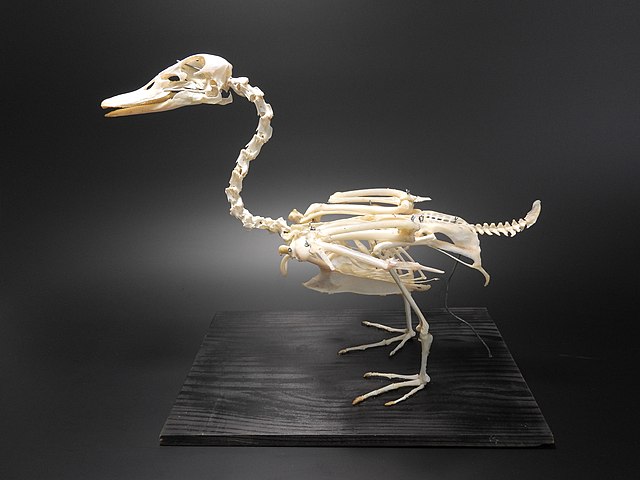
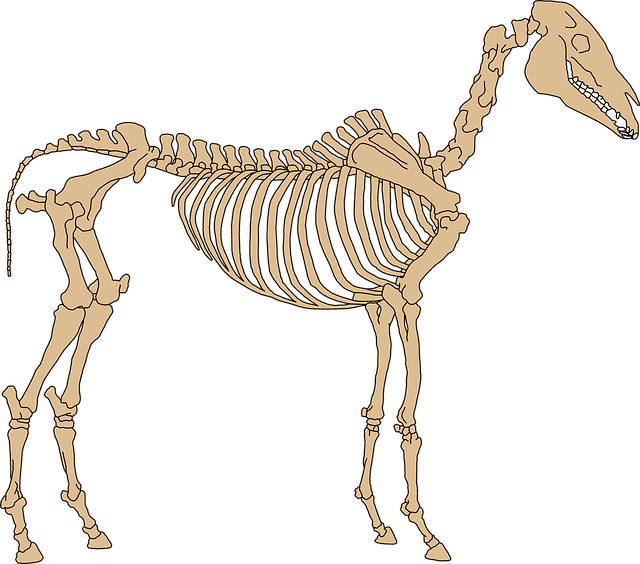
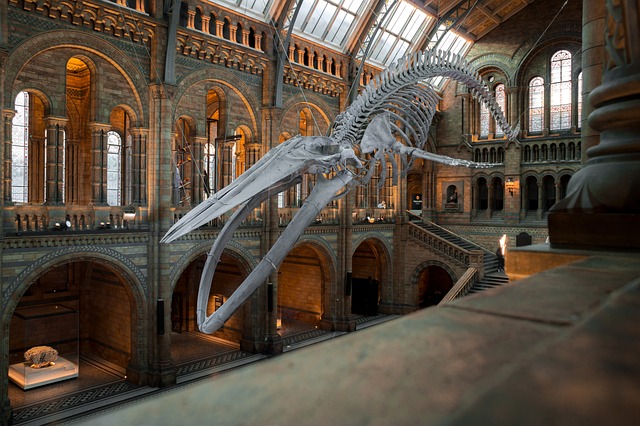
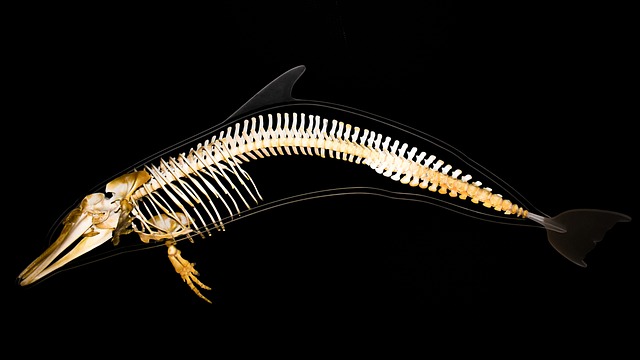
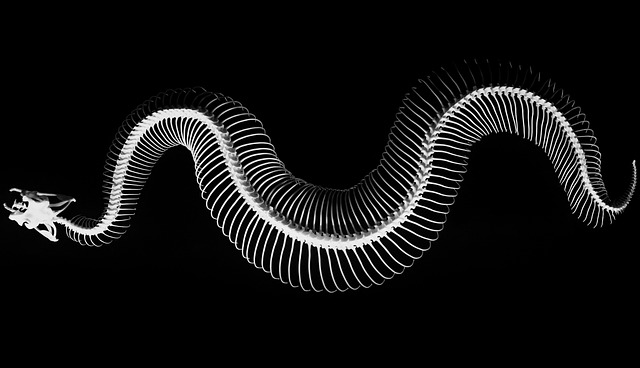
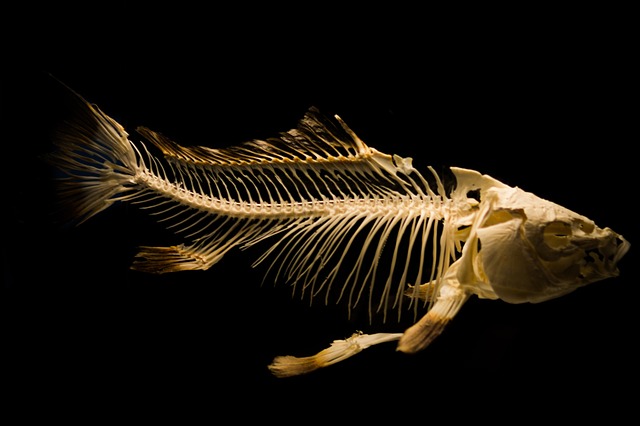
Elements of the tetrapod design include:
A spine
A skull
A ribcage
Four limbs
One bone in the upper limbs, enabling shoulders and hips to be universal joints.
Two bones in the lower limbs, meaning that elbows and knees are linear joints.
The reason for 2 bones in the lower limbs is to control torque in hands and feet.
The diaphragm works with the ribcage and gut to generate suction to take in air.
Humans have the most complex wrists and hands in the animal kingdom. Only humans can throw rocks accurately.
Tetrapods include mammals, birds, lizards, and amphibians. Fish aren't tetrapods. Whales and dolphins are tetrapods. Snakes once had limbs and many snakes lost them.
The tetrapod design emerged 370 million years ago and the first land animals emerged 350 million years ago.
Bruce Lee: There is only one type of body. 2 arms, 2 legs, etc. that make up the
human body. Therefore, there can only be one style of fighting. If the other
guy had 4 arms and 2 legs, there might have to be a different one.
 |
|---|
The 12-tone system is fortuitous. For a 12-tone octave, ratio tuning and logarithmic tuning give nearly the same frequencies. Aliens will use the 12-tone scale.
The 7 harmonic scales and the 7 melodic scales are decided naturally, by mathematics. Aliens will use these scales.
 |
|---|
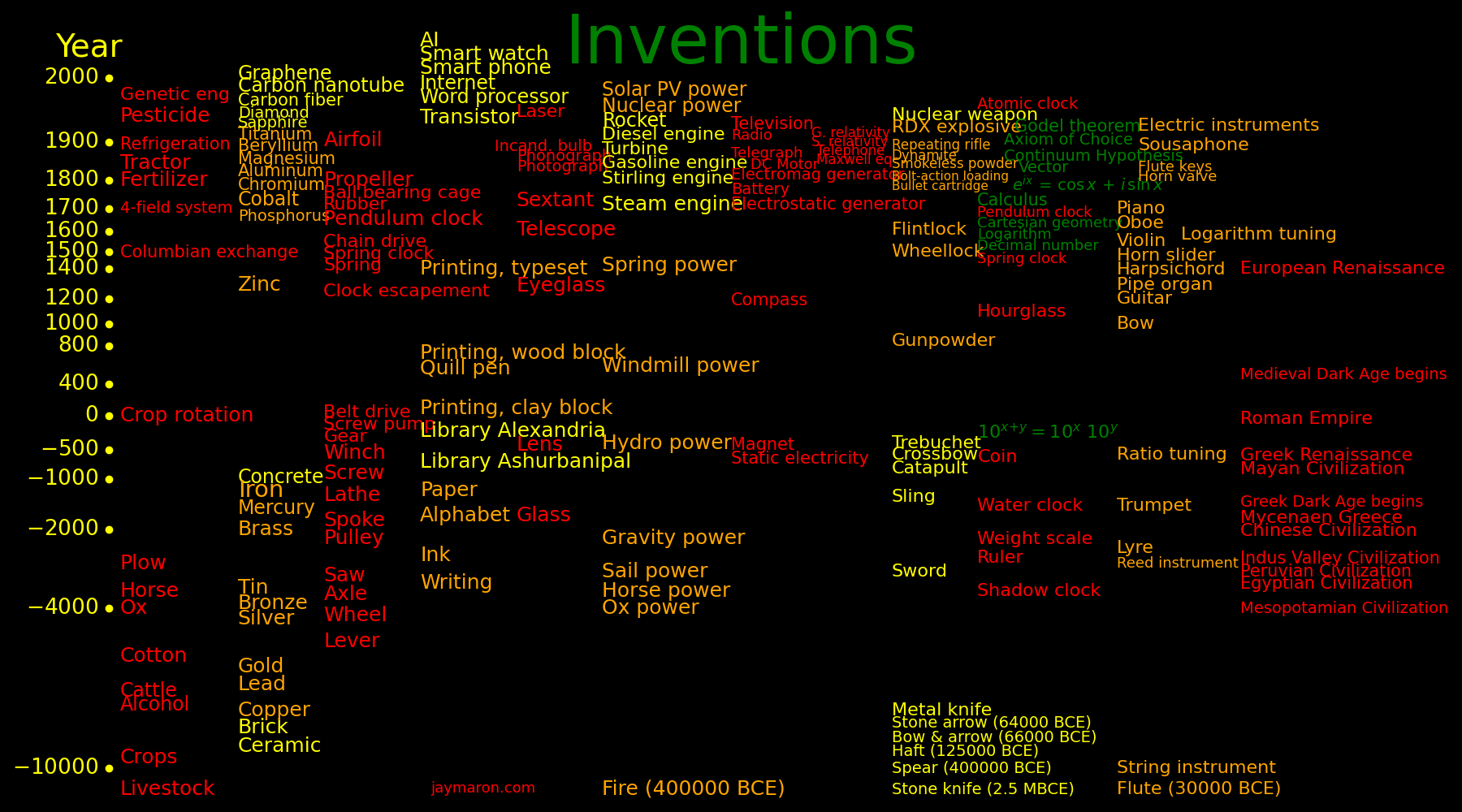
One can speculate as to if aliens helped human technology. If aliens were maximum helpful, the strategic inventions to give are:
Writing with a phonetic alphabet. Paper, quill pen, and ink.
Farming: Crops, livestock, work animals, and fertilizer.
Iron smelting. Point out that exotic minerals yield exotic metals if smelted.
Sail and windmill
Heat engine such as a steam engine or gasoline engine.
Electrochemical cell. This begets electromagnetism and modern chemistry. It
enables the isolation of most elements.
Mechanical engineering, such as wheels, axles, springs, gears, chain drive, and caged ball
bearings.
Mathematics. Decimal numbers, exponential, logarithm, Cartesian geometry, calculus.
 |
|---|
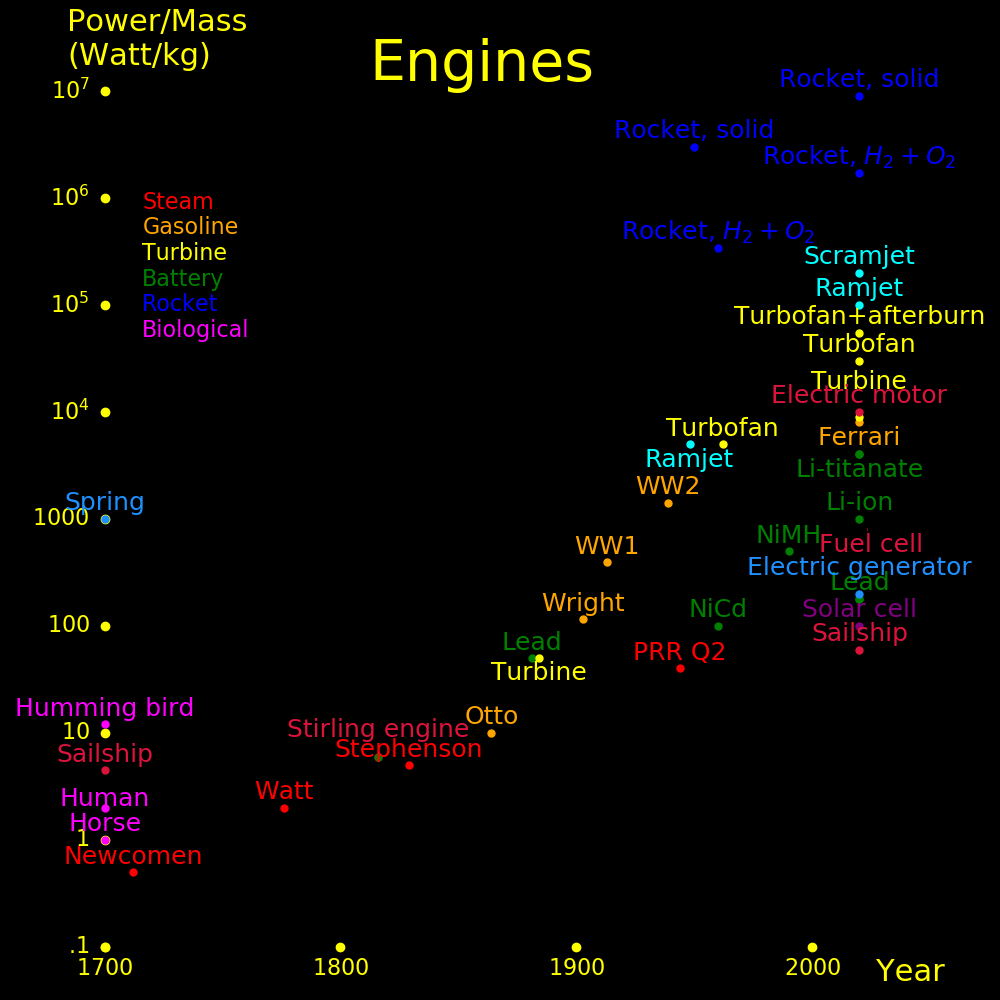
Flight became possible when engines reached a critical power/mass of 100 Watts/kg.
 |
|---|
 |
|---|
 |
|---|
The Kardashev scale ranks civilizations by power. A civization can alternatively be ranked by its means for generating power.
Civilization                Level   Year   Max power  Max energy
                                             Watts      Joule

Human power                     1  Ancient                 Human = 100 Watts of sustained power
Fire                            2  -400000
Elastic power (bow & arrow)     3   -60000
Domestic animal power           4    -4000                 One horsepower = 746 Watts
Sail                            5    -3000                 A large ship from Ancient Greece is 10000 Watts of wind power
Hydro power                     6     -400
Windmill                        7      850
Explosion power. Gunpowder      8      850
Whale oil                       9      875
Spring                         10     1420
Heat engine                    11     1714                 Convert heat to mechanical power
Battery                        12     1800
Electrical generator           13     1831                 Convert mechanical energy to electric energy
Nuclear fission                14     1945           e25   Energy in uranium & thorium reserves
Photoelectric                  15     1976
Fusion                         16   Future
Kinetic energy, asteroid belt  17   Future           e30
Kinetic energy, moons          18   Future           e32
Photoelectric cells around sun 19   Future    4e26         Solar luminosity. e34 Joules in 1 year
Photoelectric cells, big star  20   Future    2e33         eta Carinae luminosity
Galactic central stars         21   Future     e36         The Milky Way center has thousands of blue giant stars, each with more than 1 million solar luminosity
Milky Way central black hole   22   Future    4e37         Eddington limit for accretion
Milky Way, all stars           23   Future     e36
Massive galaxy, all stars      24   Future     e37         Virgo central galaxy
Galaxy cluster                 25   Future     e39         Virgo cluster
Define a civilization power index as the base 10 logarithm of the power produced.
Civilization   Power index  Population  Power/person  Kardashev scale
                             million    Watt/person

Human, 100000 BCE       6          .01       140                    Fire
Human, 10000 BCE        9         4          200                    Before domestic animal power
Human, 0 AD            11       200          450                    Domestic animal power
Human, 1800 AD         12      1000          600                    Before steam power
Human, 1900 AD         12.5    1650          820                    Steam power. Before electrical power
Human, Today           13      8300         2750           .5
Earth photocell max    16                 100000          1
Asteroid power         16                                 1
Solar Dyson swarm      26                                 2
Blue giant Dyson swarm 31                                 2.5
Milky Way power        36                                 3
Galaxy cluster power   39                                 3.5
Universe power         43                                 4
Galaxy power can be delivered to a central location with particle beams. There are relay stations to focus the beams and merge them.
Energy                      Practical   Perfect   Energy/Mass
source                       exhaust    exhaust
                              speed      speed
                              km/s       km/s      MJoule/kg

Antimatter                  100000             90000000000
Fusion       Deuterium+Li6    6900      23000    270000000
Fission      Uranium-235      4000      12000     74000000
Fission      Plutonium-239    4000      12000     76000000
Radioactive  Plutonium-238      50       2100      2300000
Chemical     Hydrogen+O2         4.4        5.1         13.2
Chemical     Methane +O2         3.7        4.7         11.1
Chemical     Kerosene+O2         3.3        4.5         10.3
Chemical     Al+NH4NO3           2.7        3.7          6.9
A goal of science fiction is to predict future technology. Few authors are successful. Most sci fi is merely fi.
Imagine an advanced civilization with a mall. What's in it?
An example is radioisotopes. They exist and they do cool things. We can assume that a future civilization can make any isotope in bulk. What devices could be made with them?
We can identify cases. Define the "standard case" as:
*) No faster-than light travel
*) no time travel
*) No parallel worlds
*) No antigravity
These things are unlikely, even for advanced technology. If new laws of physics are discovered, they're unlikely to impact technology.
The standard case presents the challenge to work within the known laws of physics.
Each technology has a current state-of-the-art and a future maximum. Sometimes the future maximum can be calculated and sometimes not.
                               Current   Future    Unit           Current state             Future state
                                limit    limit                    of the art                of the art

Tensile strength                     60     130    GPascal        Graphene                  Graphene                  Density of 2.27 g/cm3
Tensile strength/density             26      57    MJoule/kg      Graphene                  Graphene
Shear strength/density              860    3000    MJoule/kg      Carbon fiber              Diamond nanobeams of pure carbon-12
Melt temperature                   4232    4370    Kelvin         HfTaC                     HfCN

Electric conductivity               100     100    S/m            Graphene                  Graphene
Thermal conductivity               3300    3300    W/(m K)        Diamond of pure carbon-12 Diamond of pure carbon-12
Superconducting max temperature     134       ?    Kelvin         HgBa2Ca2Cu3O8              ?
Breakdown electric field           2000       ?    MV/meter       Diamond or BaTi3          ?
Permittivity (relative)          250000       ?    Dimensionless  CaCuTiO3                  ?
Permeability (relative)         1000000       ?    Dimensionless  Amorphous alloy           Amorphous alloy

Transistor size                      80       1    nm             Silicon semiconductor     Molecular
Motor size, electromechanical         6.7     ?    nm             Butyl methyl sulfide      ?

Particle energy                    6500     e11    GeV            Large Hadron Collider     Muon linear accelerator, galaxy-sized
Neutron flux                       3e19       ?    Neutron/meter2/second         Neutron compressor

Temperature low                38*10-12        ?   Dimensionless  Laser cooling              ?
Infrared detector limit              28       ?    micron         Gallium arsenide          ?
Particle accelerator force          100       ?    MeV/meter      Dual-beam system          ?
Time precision                    10-16        ?   Dimensionless  Caesium clock              ?
Length precision                  10-21        ?   Dimensionless  LIGO                       ?

Battery energy/mass, Li-ion cobalt     .8     1    MJoule/kg
Battery energy/mass, Li-ion sulfur    1       1.8  MJoule/kg

Thermoelectric efficiency              .2     ?    Dimensionless  SnSe                      ?
Generator, radioisotope, efficiency    .2     ?    Dimensionless
Turbine efficiecy                      .64    ?    Dimensionless
Photocell efficiency                   .48    ?    Dimensionless

Generator, gasoline -> electric    2000       ?    Watt/kg        Superconducting
Rocket, fusion plasma torus          30       ?

Magnetic field, permanent magnet      1.25    ?    Tesla          Neodymium magnet          ?
Magnetic field, continuous, supercon 32       ?    Tesla
Magnetic field, continuous, resist   38       ?    Tesla
Magnetic field, superconduct crit    55       ?    Tesla          MgB2
Chromium is stronger, harder, and less dense than iron, and has the properties of mithril and Valyrian steel.
Tungsten is stronger, harder, and denser than iron, and has the properties of adamantium, vibranium, and duranium.
Types of exotic matter:
                       Exist   Found

Gold                     Yes  Ancient   Naturally-occuring. Smelting was discovered in 6000 BCE.
Silver                   Yes  Ancient   Naturally-occuring. Smelting was discovered in 4000 BCE.
Copper                   Yes  -5000
Tin                      Yes  -3200     Bronze = Copper + Tin.   Bronze is stronger than copper
Iron                     Yes  -1200     Iron is stronger than bronze
Cobalt                   Yes   1735     First metal discovered since ancient times
Chromium                 Yes   1797     Stronger, harder, and less dense than iron. Candidate for mithril and Valyrian steel
Tungsten                 Yes   1783     Stronger, harder, and denser than iron. Candidate for adamantium, vibranium, and duranium
Magnesium                Yes   1808     First metal produced by electrolysis

Charged matter           Yes   -600     Static electricity
Magnet                   Yes   -500

Light, Infrared          Yes   1800
Light, UV                Yes   1801
Light, X-ray             Yes   1896     Discovered with high voltage
Light, Gamma             Yes   1900     Discovered as gamma decay
Photon                   Yes   1905     Photoelectric effect

Electron                 Yes   1897
Proton                   Yes   1919
Neutron                  Yes   1932

Lepton: Muon             Yes   1937
Lepton: Tau              Yes   1975
Quark: Up                Yes   1968
Quark: Down              Yes   1968
Quark: Strange           Yes   1968
Quark: Charm             Yes   1968
Quark: Bottom            Yes   1977
Quark: Top               Yes   1995

Neutrino                 Yes   1956
Neutrino, sterile     Likely     No     Interact only by gravity and not by the weak force
Neutrino, superheavy    Possibly No
Neutrino, right-handed  Possibly No

Gluon                    Yes   1978     Boson that carries the strong force and binds quarks
W boson                  Yes   1983     Carries the weak force
Z boson                  Yes   1983     Carries the weak force
Higgs boson              Yes   2012
Graviton                 Yes     No     Boson that carries the gravitational force
Dark matter              Yes     No     DoesnO’t feel the strong or electric force
Dark photon         Possibly     No     Boson that carries a force that is felt by dark matter
Strong matter            Yes     No     Bosons that mediate the strong force, such as X and Y bosons. Likely extremely massive
Feeble matter         Likely     No     New weak bosons
Inflaton                 Yes     No     Cause of cosmic inflation. There may be multiple inflatons
Dark energy              Yes     No     Matter with negative pressure

Antielectron             Yes   1932
Antiproton               Yes   1955
Antineutronn             Yes   1956
Antimetal                Yes     No     Requires an antistar
Antiuranium              Yes     No     Requires an antisupernova

Magnetic monopole     Likely     No
Magnetic photon     Possibly     No     Boson that exerts a force on magnetic monopoles
Mirror matter       Possibly     No     Mirror versions of conventional particles
Primordial black hole Unknown    No
Anyon               Unlikely     No     Particles with spin other than 0, 1/2, 1, 3/2, 2.
Tachyon             Unlikely     No     Particles that are faster than light

Biquark (meson)          Yes   1947     2 quarks
Tetraquark               Yes    Yes     2 mesons bound together
Pentaquark               Yes    Yes     5 quarks. 4 quarks and an antiquark
Glueonium                Yes   2020     Composite particle consisting of gluons
Quark-gluon plasma       Yes   2000

Suburanics               Yes   1911     Polonium, radium, actinium, protactinium. Proton number from 84 to 89.
Transuranics             Yes   1942     Plutonium through Fermium. Proton number from from 94 to 100.
Neutronic matter         Yes    Yes     Radioisotopes that are neutron-rich.
Protonic matter          Yes    Yes     Radioisotopes that are proton-rich. Most medical isotopes are protonic
Superheavy matter     Likely     No     Nuclei in the hypothetical "island of stability", with atomic number around 112
                                        A 2nd island of stability exists around atomic number 122
Up-down quark matter Unknown     No     Nuclei with more than 300 nucleons may transition to udQM and be long-lived
Strange matter      Unlikely     No     Superheavy nuclei with strange quarks

Aether              Unlikely     No     Carrier of photons
Negative energy     Unlikely     No

Synthetic sapphire       Yes   1902
Synthetic diamond        Yes   1954
Amorphous alloy          Yes   1980     Light and strong
Buckyball                Yes   1984
Carbon nanotube          Yes   1993
Graphene                 Yes   2004

Superconductor           Yes   1911
Room-T superconduct  Unknown     No     The record is 133 Kelvin, as of 2021
The following questions are up for grabs.
Does a superconductor exist at room-temperature and zero pressure?
Does a gamma laser exist that uses nuclear transitions?
Do superheavy nuclei exist?
An advanced civiliztion will be able to make any isotope in bulk. Isotopes with technological value include:
          Half life (year)   Use

Tritium              12.3    Fusion fuel
Helium-3         Stable      Fusion fuel.  Dilution refrigerator.  Fission afterburner rocket

Uranium-235   704000000      Fission fuel.  Fission bomb
Plutonium-239     14100      Fission fuel.  Fission bomb

Iridium-192            .202  Power at high temperature
Tantalum-182           .313  Power at high temperature
Tungsten-181           .332  Power at high temperature
Osmium-194            6.02   Power at high temperature

Polonium-210           .379  Power.  Alpha rocket
Thorium-228           1.91   Power.  Alpha rocket
Uranium-232          68.9    Power.  Alpha rocket
Plutonium-238        87.7    Power.  Alpha rocket

Rubidium-83            .236  Power.  Low shielding requirement. Low-energy gamma of .0322 MeV
Thulium-170            .352  Power
Thulium-171           1.91   Power.  Low shielding requirement. Low-energy gamma of .096 MeV
Caesium-134           2.06   Power
Cobalt-60             5.27   Power
Europium-152         13.5    Power
Strontium-90         28.9    Power
Radium-226         1599      Power.  Breeder for Thorium-228 and Uranium-232

Lithium-6        Stable      Fission afterburner rocket.  Fusion bomb
Boron-10         Stable      Fission afterburner rocket.  Cancer treatment
Beryllium-7            .146  Fission afterburner rocket
Sodium-22             2.602  Fission afterburner rocket
Americium-242m      141      Fission afterburner rocket
Californium-251     900      Fission afterburner rocket. Compact fission bomb. Large neutrons/fission

Californium-252       2.65   Spontaneous fission.        Compact fission bomb. Large neutrons/fission
Curium-250         8300      Spontaneous fission

Carbon-12        Stable      Isotopically-pure diamonds, nanotubes, and graphene
Carbon-14          5700      Low neutron capture cross section
 |
|---|
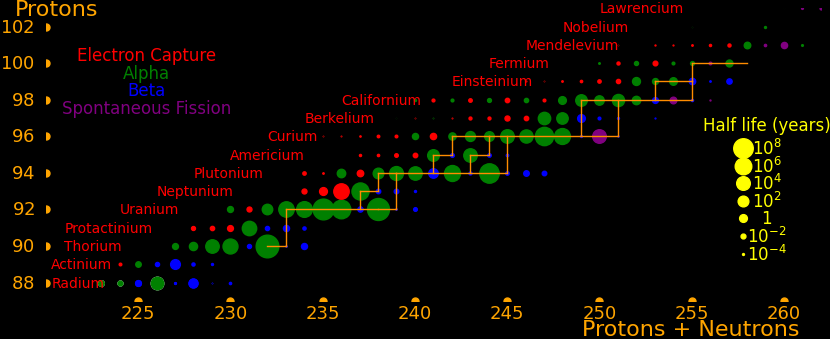
Many exotic isotopes are actinides, the elements surrounding uranium. The orange lines show which isotopes can be made with neutron transmutation.
 |
|---|
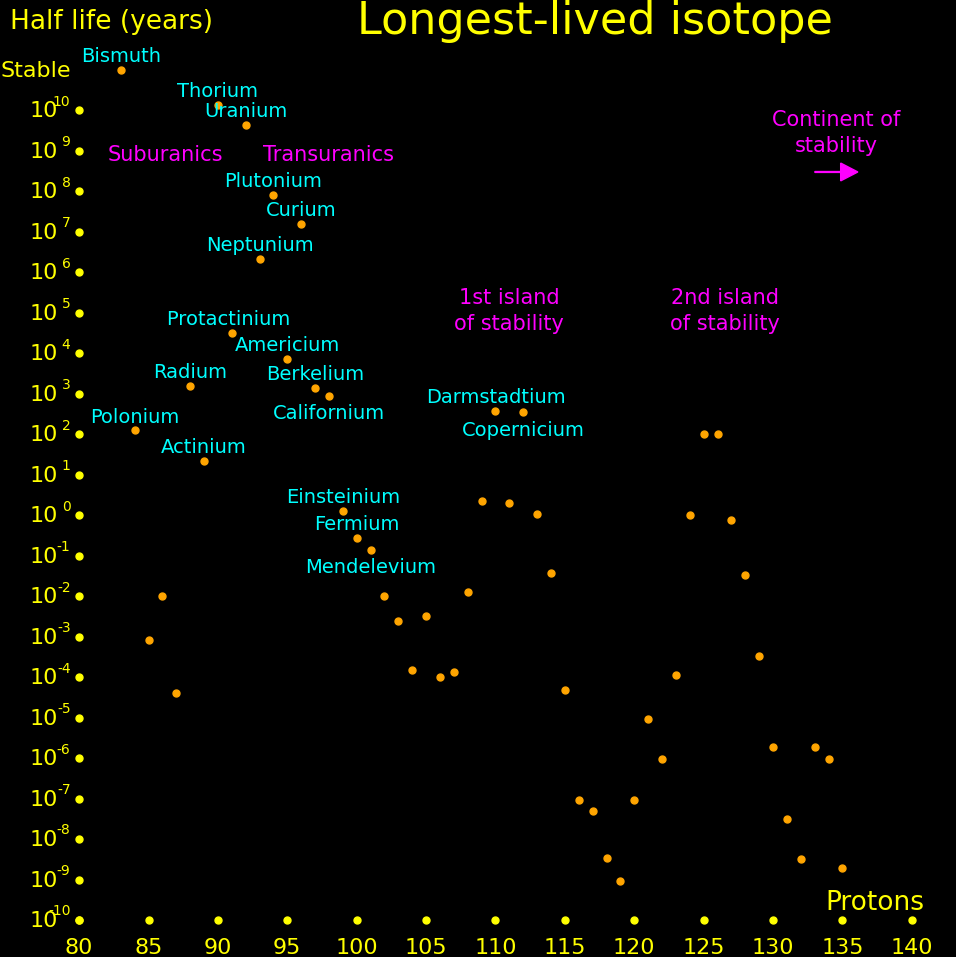
There is a hypothetical "island of stability" around atomic number 112 where nuclei may be long-term stable.
Experiments can only measure the longest-lived isotope up to a proton number of 105, and beyond that we plot theory. Theoretical half lives are uncertain by an order of magnitude.
It's possible that for large nucleon number, larger than around 300, that the nucleus transitions to a lower-energy state, called "Up down quark matter", or "udQM". The existence of udQM is unresolved. Theory is uncertain, and it hasn't been experimentally produced. The largest nucleus that's been produced is oganesson-294, with 118 protons and 294 nucleons. It shows no sign of udQM, so if udQM exists, it's beyond oganesson.
If udQM nuclei exist, they could potentially be long-term stable. They don't fission because it would take the nucleus to a higher-energy state. They decay by alpha until they're too light to be udQM, at which point they fission.
If udQM nuclei exist, then there may be exist long-lived elements from Z=140 to way beyond. These are "continental elements".
The largest nucleus that standard nuclei can make has Z=140. Nuclei larger than this fission with a short half life. The only way that nuclei with Z>140 can exist is if udQM exists.
 |
|---|
If continental elements exist, we can guess their properties by extrapolating from homolog elements. Homologs are elements in the same column of the periodic table.
Continental  Homolog        Extrapolated properties
  element    element

   118       Radon          Noble gas
   119       Caesium        Good for atom traps
 121-153     Lanthanides    Exotic properties for solid state physics
   154       Hafnium        High melting point. High hardness
   155       Tantalum       High melting point. High hardness. STaC melt 4600 Kelvin
   156       Tungsten       High melting point. High hardness. SW melt 4800 Kelvin
   157       Rhenium
   158       Osmium         Density ~ 40 g/cm3
   159       Iridium
   160       Platinum       Catalyst at high-temperature
   161       Gold
   162       Mercury
Science fiction authors often invoke antimatter, but they rarely give a recipe for making it. A recipe that respects the laws of physics.
Making antimatter takes big energy. Making an antiproton takes the energy of 10 million proton rest energies.
Making antihelium is even harder. Only a star can do it. A star can fuse up to antibismuth. Continuing to antiuranium takes a supernova.
Antiprotons and antihelium are useless as a power source because they can't be confined in bulk. You need antimetal. Antimetal can also be made into antimachinens and antispaceships.
Recipe:
Make a star of antiprotons. The more massive, the shorter the star's lifetime. The star makes antielements up to antibismuth. At the end of the star's life it goes supernova and ejects material into space.
The more massive the star, the shorter the time to supernova. A supernova needs a star with at least 10 solar masses, and a 10 solar mass star has a lifetime of 10 million years. Making a 10 solar mass star of antiprotons takes the energy of 100 billion solar masses of stars. This can only happen at a galactic central region. A galactic supermassive central black hole is a good place for an antimatter factory.
The ejected material can be confined by a compact object such as a white dwarf, neutron star, or black hole. The material settles into an accretion disk and makes planets, and planets focus antimetal to the cores. Bust up planets into asteroids and collect antimetal asteroids, which can be herded electromagnetically. Use antimetal to herd antirock asteroids. The more massive the compact object, the better, because it gives more room for antiplanets.
Once you have antimetal, you can make antimachines by etching. Antimachines are powered electromagnetically by ordinary machines. Antimachines can make better antimachines and they'll reach a point where they're self-powered.
For stellar fusion, the first step is to fuse protons to He3:
P + P  →  D + e-  +   .42  MeV     Takes billions of years
P + D  →  He3                +  5.493 MeV     Takes 1 second
"P" is a proton, "N" is a neutron, "D" is a deuteron, and "T" is triton.
The first reaction is slow because it needs the weak force. This is why you need a star to fuse antiprotons.
A star with a temperature less than 18 MKelvin makes He4 by:
He3 + He3 → He4 + 2 P + 12.859 MeV Takes 400 seconds
If the temperature is between 18 and 25 MKelvin, He4 is made by:
He3 + He4  →  Be7    +  1.59  MeV
Be7 + e    →  Li7    +   .861 MeV          Half life of 53 days
P   + Li7  →  2 He4  + 17.35  MeV
If the temperature is more than 25 MKelvin, He4 is made by:
He3 + He4  →  Be7   +  1.59  MeV
Be7 + P    →  B8
B8         →  Be8 + e+         Half life of 1 second
Be8        →  2 He4           Half life of 10-16 seconds
For each kind of object, the table gives the nearest example, and also superlative examples.
                                Distance           Mass      Radius   Luminosity
                               light year          Sun=1     Sun=1      Sun=1

Star           Proxima Centauri         4.24           .123     .141        .0017 Nearest
Star           Alpha Centauri A         4.36          1.10     1.23         1.52  Nearest sun-sized star
Star           Sirius A                 8.7           2.063    1.71        25.4   Nearest blue star
Star           Regulus                 77             3.8      4.35       316
Star           Dschubba               136            13        6.7      38000
Star           Naos                  1080            56       20       813000
Star           Eta Carinae           7500           100      240      4600000     Among the most luminous stars

Red giant      Arcturus                37             1.1     26          170     Nearest
Red giant      Betelgeuse             700            18      764       126000

White dwarf    Sirius B                 8.7           1.02      .0084        .056 Nearest

Neutron star   RX-J1856               400              .9                         Nearest

Pulsar         J0108                  424                                         Nearest
Pulsar         Vela pulsar            959                                         89 Hertz
Pulsar         PSR J1614-2230        1200             1.91                        317 Hertz
Pulsar         Crab pulsar           6500                                   .9    30 Hertz. Brightest gamma source. Gammas up to 10 TeV. 1.6 mllion Kelvin
Pulsar         PSR J1748-2446ad     18000                                         716 Hertz. Highest spin rate

Magnetar       AXP 1E 1048.1-5937    9000                                         Nearest
Magnetar       SGR1806-20           42000                                         Strongest magnetic field at 1011 Tesla
Supernova      SN1250                 700                                         Nearest

Star-forming cloud   Corona Nebula    430                                         Nearest
Star-forming cloud   Orion Nebula    1344

Black hole     Gaia BH1              1560             9.6                         Nearest
Black hole     Cygnus X-1            7300            30
Black hole     Milky Way center     25600       4200000         .019              Nearest supermassive black hole
Black hole     Andromeda          2300000     200000000         .85
Black hole     Sombrero galaxy   31100000    1000000000
Black hole     Virgo A           53500000    6500000000                           Virgo Cluster
Black hole     NGC1600          149000000   17000000000                           Not in a cluster of galaxies
Black hole     NGC6166          490000000   28000000000                           Abell 2199
Black hole     Holmberg 15A     700000000   40000000000                           Abell 85
Black hole     4C+37.11         750000000   15000000000                           2 holes separated by 24 light years. Total mass given
Black hole     MS0735.6        2600000000   51000000000
Black hole     Phoenix A       8610000000 1070000000000   424000                  Most massive. 3e39 Watts

Active galaxy  Centaurus A       12000000      55000000
Active galaxy  Messier 81        11700000      70000000

Quasar         Markarian231     581000000       4000000                           Nearest
Quasar         3C 273          2440000000     886000000                  4e12
Quasar         Ton 618        10800000000   50000000000                   e14     4e40 Watts
Quasar         MSS J215728    12500000000   34000000000                  7e14     Most luminous. 2.6⋅1041 Watts

Galaxy         Milky Way                0 1200000000000
Galaxy         Andromeda          2300000 1500000000000                           Nearest galaxy that's the size of the Milky Way
Galaxy         Virgo central     53000000 6000000000000                           Biggest galaxy in the nearest cluster of galaxies
 |
|---|
Some authors educate in science and some don't. Some stick to the known laws of physics and some don't.
If you invent new laws of physics, try to make them consistent. Also make them elegant, where a small number of new rules yields rich structure. For example, the rules of the game of go are simple and they yield rich structure.
Authors that educate: Tom Clancy, Neil Stephenson.
 |
|---|
If an advanced civilization decides to broadcast knowledge to the universe, it's hard to stop. It can beam radio waves or it can pulse a star with a Dyson swarm of occulters. A pulsing blue giant can transmit across galaxies.
 |
 |
 |
|---|---|---|
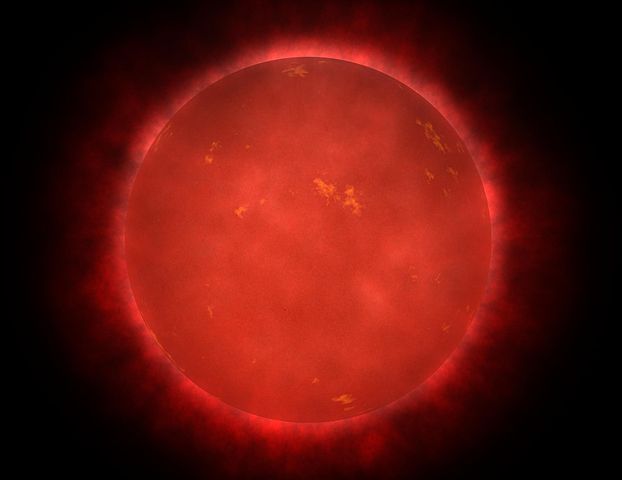
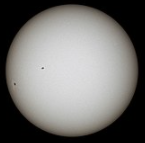
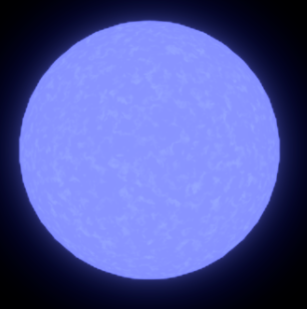
Sizes are to scale and colors are as your eye perceives.
Suppose a blue giant star is surrounded by a Dyson swarm of occulters that can pulse the star. An aluminum telescope mirror can reflect photons with energy as high as 8 eV, so we assume photons with this energy. Assume that 1 bit of information is 100 eV of such photons.
A blue giant is 1010 meters in diameter, and the pulse time should be on the order of the light travel time across the diameter.
Suppose a telescope has an aperture of 1 meter2 and that it collects 1 bit of information per pulse. The distance to the blue giant is 1 billion light years. A megatelescope can detect pulsing blue giants across the universe.
No intelligent pulsing stars have been discovered.
Star diameter            =     =  e10  meter  =  10 solar diameters
Light speed              =     =  3e8  meter/second
Pulse time               =     =   30  second
Sun power                =     = 4e26  Watt
Blue giant power         =     =  e33  Watt  =  2.5e6 solar luminosities
Energy in one pulse      =     = 3e34  Joule
Energy of 1 bit of info  =     =  100  eV    ~  e-17  Joule
Bits in 1 pulse          =  B  = 3e51  bit
Max distance to receiver =  R  =  e25  meter  = 1 billion light years
Bits/pulse/meter2        =  b  =  (B/4πR2)  =  1
An accreting object has a maximum luminosity, the "Eddington luminosity".
If the sun accretes at the Eddington luminosity, it would have 32000 solar luminosities.
If the Milky Way central black hole accretes at the Eddington luminosity, the power is 6e37 Watts, easily seen across the observable universe.
Solar mass                =  m      =  2e30     kg
Mass of central hole      =  M      =  4e6 m
Solar luminosity                    =  3.83e26  Watt
Milky Way luminosity                =  5e36     Watt
Eddington constant        =  Q      =  1.26e31  Watt
Black hole Eddington lum. =  Q M/m  =  6e37     Watt
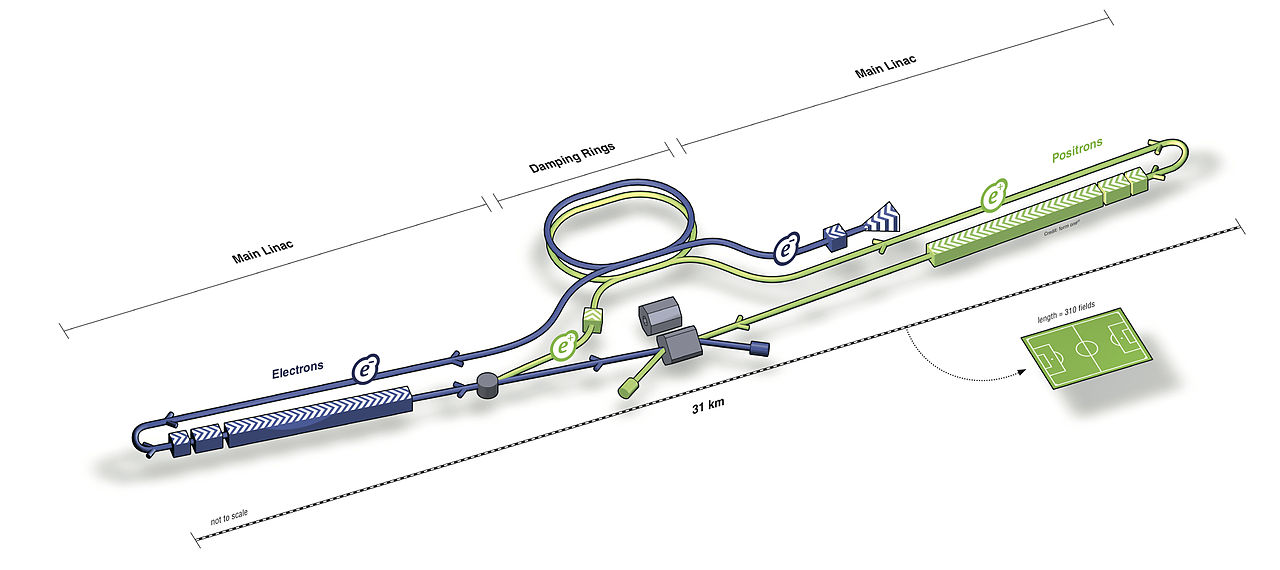
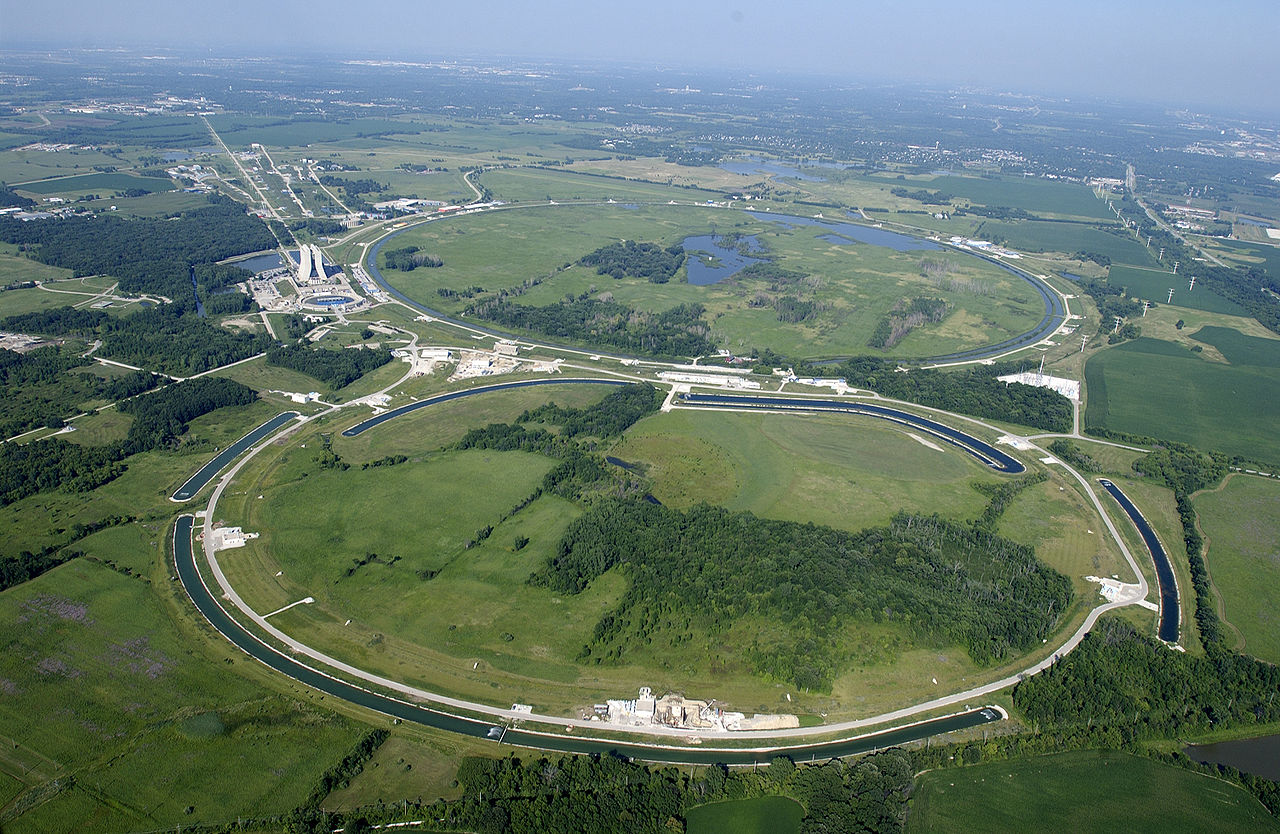
Particle physics is starved for data. The Large Hadron Collider discovered all particles it's capable of discovering and now we need a bigger collider. The options are a linear electron collider and a ring proton collider.
 |
 |
|---|---|
An electron collider gives more precise data than a proton collider, and an electron collider can be built incrementally. A proton collider is all or nothing.
A linear electron collider that is longer than 100 km has to follow the Earth's curvature, giving it a maximum energy of 23 TeV. Above this energy, electrons lose energy by synchrotron radiaton. The collider can have a straight section before the collision to get the energy to 30 TeV.
 |
|---|
For particle acceleration, if superconducting radiofrequeny acceleration is used, the force is 30 MeV/meter. For dual-beam acceleration, the force is .1 MeV/meter. An advanced civilization will likely be able to deliver more force, perhaps with a 3-beam system, or with even more beams.
A collider that reaches the inflation scale (1016 GeV) is likely to be colossally long. With a force of 1 GeV/meter, this is 1 light year. A Planck-scale collider (1019 GeV) is even longer.
A collider with superhigh energy can't use electrons, because electrons lose energy by synchrotron radiation. At superhigh energy, the act of focusing the electron beam drains the beam of energy faster than the accelerator can add energy. A collider with superhigh energy has to use muons, which are less susceptible to synchrotron radiation than electrons.
A collider with superhigh energy has a low cross section for collisions, and hence needs colossal luminosity and colossal energy. It would need a Dyson swarm for power.
 |
|---|
Farm productivity increases with technology. It also increases if fertilizer becomes cheaper. Fertilizer cost hinges on energy cost.
Hydroponics gives more produce/area than land farming. Hydroponics hinges primarily on fertilizer cost.
The following numbers are suggestive because they vary widely.
            Production   Energy/Mass    Power    Type of energy
         kg/meter2/yr   MJoule/kg  Watt/meter2

Solar cell           -         -        40         Electricity
Wind turbine         -         -        15         Electricity

Algae               10        16         5.1       Biomass
Bamboo               2        16         1.0       Biomass
Grass                1        16          .50      Biomass
Typical tree          .5      16          .25      Biomass

Sugar cane           8        16         4.1       Food
Wheat                 .5      14          .22      Food
Milk                  .6       2.1        .040     Food
Fish                  .1       9          .028     Food
Goose (grazing)       .1       9          .028     Food
Beef (grazing)        .05      9          .014     Food
Tomato               8        .8          .20      Food
Tomato, hydroponic 150        .8         3.8       Food
Suppose a human is fed with wheat. The land needed is:
Human power         =  120  Watt
Wheat power/area    =  .22  Watt/meter2
Wheat area          =  545  meter2
Population density  = 1830  people/km2
World farming area  =   50  Mkm2
World max population=   92  billion people
Hydroponics can yield far more productivity, by a factor of at least 20. With hydroponics, the world can support more than 1 trillion people. The ultimate limit is energy for fertilizer.
An object can be given water by crashing an icy asteroid into it. The collision also outgasses CO2. Fusion bombs can steer asteroids.
Nitrogen is rare in the solar system. Objects at Neptune's orbit and beyond have frozen nitrogen. Nitrogen is a gas if closer to the sun than Neptune.
Growing 1 kg of biomass requires, in grams:
Nitrogen    15
Potassium   15
Phosphorus   2
Calcium      2
Magnesium    2
Sulfur       2
The moon has all of the above except nitrogen. Mars' atmosphere has nitrogen.
 |
|---|
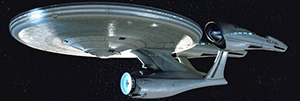
Kirk's interpretation of the Prime Directive is often overly-liberal. You could say that he considers it to be the "Prime Suggestion". If aliens exist then it's reasonable to suppose that they may have something like a Prime Directive, because as yet, no evidence for them has been found.
 |
|---|
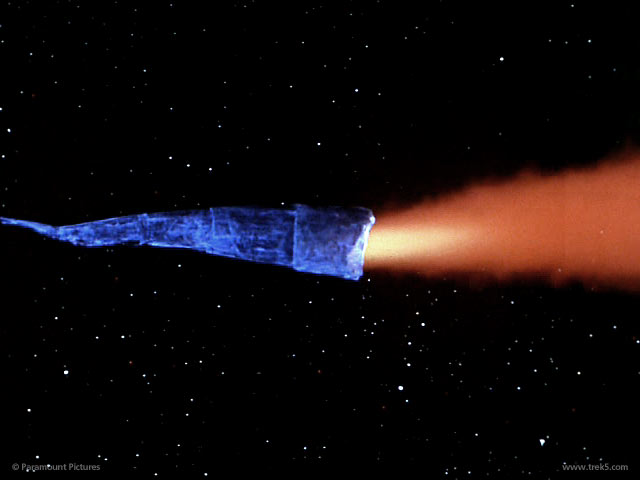
One could imagine aliens creating a "doomsday machine" with orders to replicate itself and travel to every star in the galaxy, and upon arriving, exterminate all life present. If this had happened then we would not be here now. The non-existence of a doomsday machine is one of the few solid assertions that we can make about aliens.
That being said, it may be that there is a doomsday machine waiting to exterminate Earth once we reach a specified technological level.
 |
|---|
 |
|---|
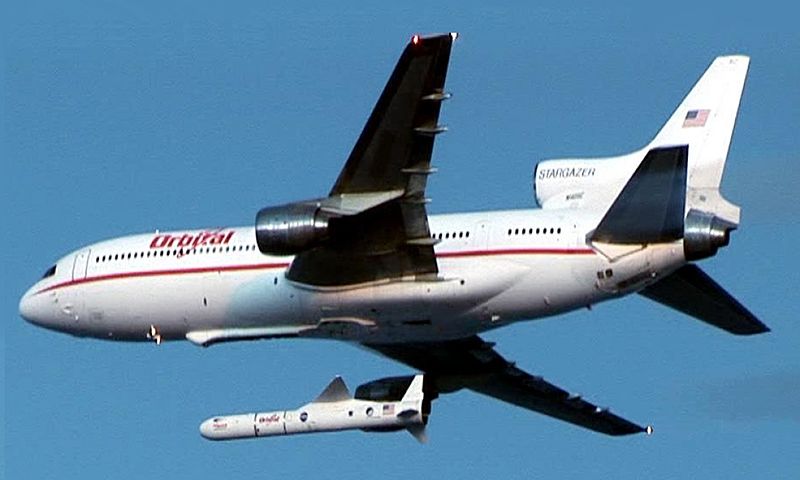
The future of rocket launch is air launch, giving the rocket a speed boost from the aircraft. Launching at high altitude also reduces air drag. Launch cost is presently $2000/kg and air launch will reduce this. Article.
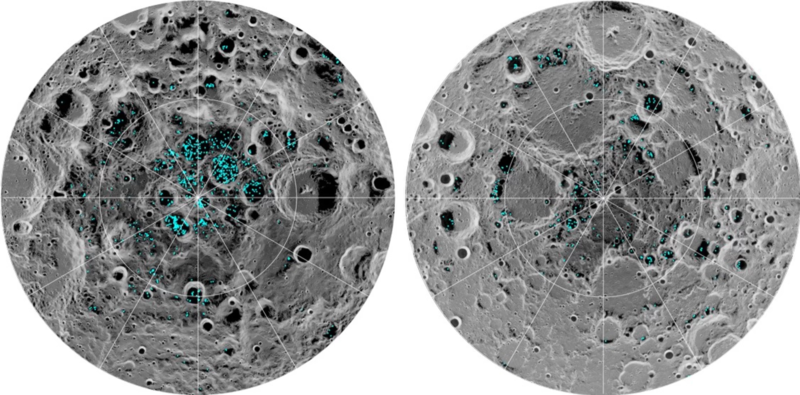
The moon has metal asteroid craters, which are primarily iron, nickel, and cobalt, and these can be used for space megastructures. They also have platinum-group elements. Article.
 |
|---|
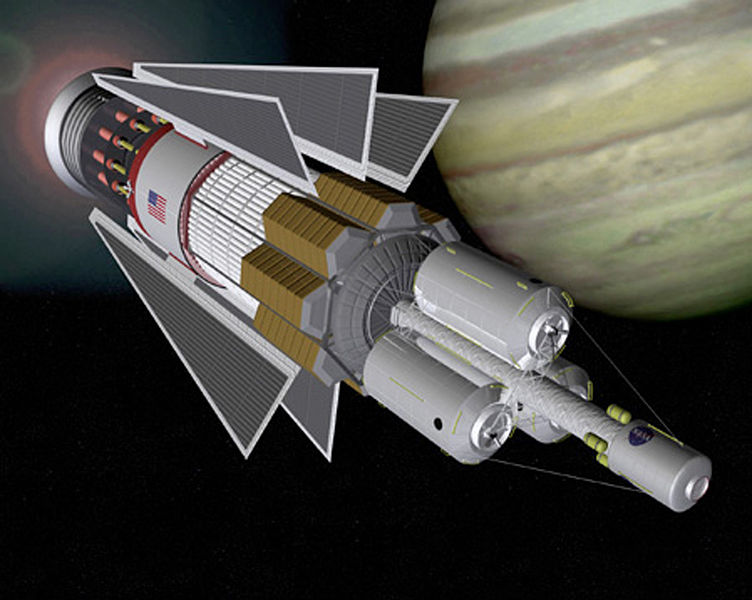
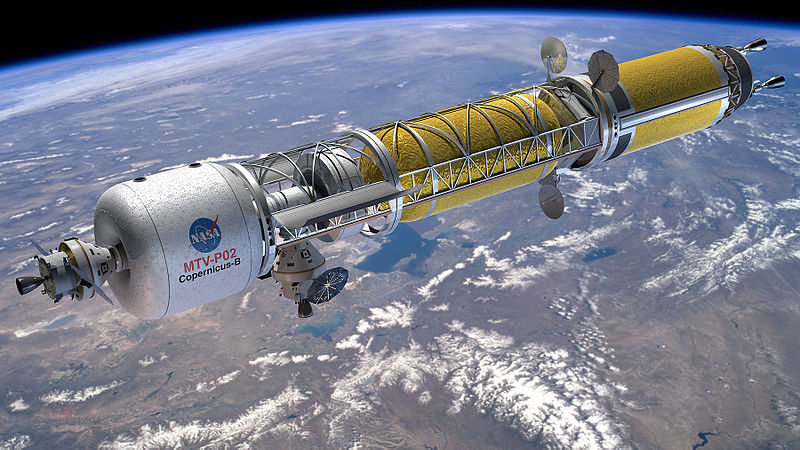
In the future, interplanetary travel will be dominated by fission thermal hydrogen rockets, which have a faster exhaust speed than chemical rockets. In a thermal hydrogen rocket, a nuclear reactor or a solar mirror heats hydrogen exhaust. Article.
 |
|---|
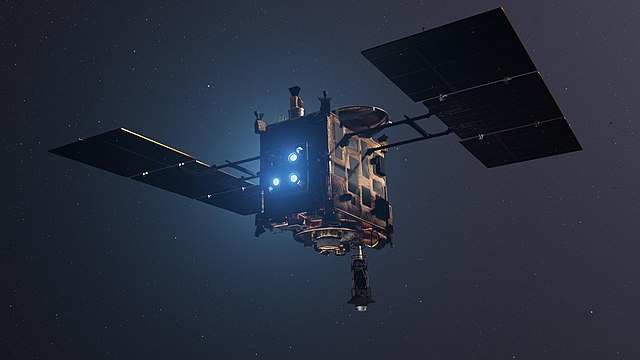
Ion drives use electricity to accelerate ions, with electricity coming from nuclear power. Article.
|
|
|---|---|
The best place for telescopes is the Lagrange point L2. A manned base should be built here so that colossal telescopes can be assembled on site. Lunar ice supports the station. Article.
 |
|
|---|---|
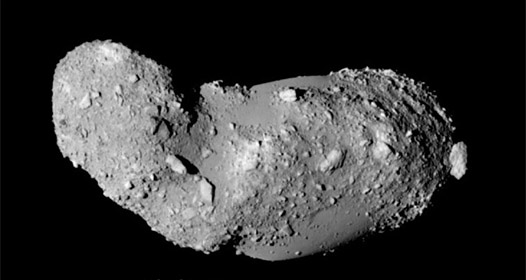
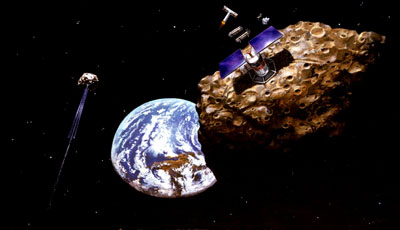
Metallic asteroids contain trillions of dollars of platinum group metals. They can be mined and moved with hydrogen bombs or space mirrors. Article.
For tension, what usually matters is tensile strength divided by density. Materials with a high value include:
               Young's  Yield   Tensile  Tensile  Strength/   Tough/   Density  Poisson
               modulus  stress  strengh  strain    density    density
                 GPa     Gpa      GPa             MNewton/kg  kJ/kg    g/cm^3

Graphene           1050         160       .152     160      12100      1.0
Nanotube           1000          63       .063      48       1480      1.34        Carbon nanotube
Colossal tube      1000           7       .007                211       .116       Carbon nanotube with large radius

Aramid (Zylon)      270           5.8     .010       3.7        8.7    1.56   .5
Kevlar              155           3.76    .023       2.6               1.44   .5
Vectran HT           75           3.2     .043                         1.4    .5
Spider silk          10    1.65           .16                           .16   .5
Polyamide (Torlon)    4.5   .152          .076                         1.42
Rubber, butyl          .007        .020  2.86                  31       .92   .5

Carbon fiber        181           1.6     .022        .91      25.0    1.75

Diamond microbeam  1220    8              .0066                 7.8    3.98        Pure Carbon-12
Diamond            1220    1.6    2.8     .0013       .80        .30   3.5
Sapphire microbeam  345   20              .0058                 1.46   3.98
Sapphire            345     .4    1.9     .0055       .48       1.31   3.98

Balsa                 3.7   .020          .0054                  .45    .12
Pine, white           9     .063                                        .37
Bamboo               20     .15                                         .85
Ironwood             21     .181   .181   .0086                  .65   1.1

Magnesium alloy      45     .4     .232                                1.74
Magnesium + Li       45     .14                                        1.43
Magnesium + Y2O3     45     .31                                        1.76
Magnesium amorphous  45    1.0            .022                  5.7    1.9           Mg+Cu+Ag+Gd
Beryllium pure      287     .345   .448   .0016                  .189  1.85
Beryllium + Al      214     .65           .0028                  .50   2.13          2/3 Be and 1/3 Al
BeTiZr    amorphous  93    2              .02                  10.1    3.59   .32    Be40Ti50Zr10
Aluminum alloy       70     .414   .483   .0059                  .595  2.8
Aluminum  + Be       70     .41           .0059                        2.27
Aluminum  amorphous  70    1.97           .028                 10.3    2.67          LiMgAlScTi
Titanium  amorphous 120    2.1            .017                  3.3    5.2           Ti-Zr-Cu-Ni-Sn
Chromium  amorphous        2.26                                        6.5           AlCrFeCoNiTi
Steel + Co & Ni     220     2.07           .0094                        8.6
Copper + Be         130    1.4                                         8.8           Between .5% and 3% Be
Molybdenum + W, Hf         1.8                                        14.3
Moly      amorphous        1.22                                       12.3           VNbMoTaW
Tungsten  amorphous 309    6              .019                  2.5   18

Beryllium carbide   303            .517                                1.9    .12
Suppose we make a pressurized balloon out of kevlar. There is zero artificial gravity. There is no limit to the balloon size. A 10 ton balloon has a radius of 14 meters.
Balloon thickness    =  z
Balloon skin stress  =  t                    =5*108  Pascal    (Kevlar)
Balloon radius       =  r                    =   14  meters
Skin density         =  ρ                    = 1440  kg/meter3     (Kevlar)
Air pressure         =  P  =  z t / r        =  105  Pascal    (Equation from elasticity)
Balloon mass         =  M  =  4 π ρ r2 z     =   10  ton
                           =  4 π ρ r3 P / t
We assume that the kevlar is under a stress of 5*108 Pascals. The yield stress is 3.6*109 Pascals.
For flotation, what matters is mass/cost, where "mass" is the mass floated. The commodity price for old cargo ships is 1 kg/$ and a kevlar balloon is around 100 kg/$.
Water density             =  d                       = 1000  kg/meter3
Kevlar density            =  ρ                       = 1000  kg/meter3
Balloon mass              =  M  =  4 π ρ r3 P / t
Mass foated               =  m  =  (4π/3) d r3
Float mass / Balloon mass       = m/M  = ⅓ (d/ρ) t / P = 1160
Kevlar cost/$             =  C                       =   30  $/kg
Float mass / Cost         =  Q  =  (m/M) / C         =   39  kg/$
 |
|---|
If artificial gravity is generated by spinning a spaceship, the spin period has to be at least 30 seconds for the inhabitants to not get dizzy. If we assume a spin period of 30 seconds and a gravity of 1 g, the spin radius is 228 meters.
Acceleration   =  A  =  V2 / R       =  10  meters/second2
Spin period    =  T  =  2 π R / V    =  30  seconds
Velocity       =  V  =  2 π R / T    =  48  meters/second
Spin radius    =  R  =  T2 A / (2π)2 = 228  meters
Suppose a spaceship consists of a tether connnecting two masses, and that the entire system rotates. The largest radius that can be achieved by present materials is 33 km. One could imagine a large cylindrical ship with a radius of 33 km and arbitrary length.
You want the tether mass to be less than the mass it's supporting. The larger the radius, the more massive the tether needs to be to support a given mass. At a radius of 32 km, the tether mass is equal to the mass it supports.
For the calculation, we use Zylon, the material with the best tensile strength to density ratio.
Tether accel. at end      =  A                         =  10  meter/second2
Total spaceship mass      =  M
Mass at each end          =  M/2                  We assume that the tether mass is negligible
Tether tension force      =  F  = M A / 2
Tether radius             =  r

Tether density            =  ρ                         =1560  kg/m3
Zylon tensile strength                                 = 5.8  GPa
Tether tensile stress     =  t                         =  .5  GPa
Tether cross-section      =  S  =  F / t
Tether mass               =  m  =  2 r S ρ  =  r ρ M A / t

Mass ratio                =  Q  =  m/M  =  r ρ A / t   =   1
Maximum radius            =  R  =  t / (ρ A)           =  32  km
Suppose a pressurized cylinder is held together by spokes and that it's not spinning. The spokes have a small footprint on the cylinder. They're hardly noticeable.
There is no limit to the cylinder radius.
Air pressure              =  P          =  105  Pascal
Tether stress             =  t          =5*108  Pascal
Tether footprint fraction =  f  =  P/t  =.0002
The tether footprint is a fraction .0002 of the cylinder surface.
For a curved rope under an acceleration that's orthogonal to the rope,
Mass per length   =  k
Curvature radius  =  r
Acceleration      =  A
Tension force     =  F  =  2 r A k
Suppose a cylinder is spun to make artificial gravity. The curved part of cylinder is under an acceleration that's orthogonal to the surface.
Density           =  ρ              =  1440  kg/meter3    (Kevlar)
Cylinder radius   =  r
Acceleration      =  A              =    10  meter/second2
Tensile stress    =  t  =  2 r ρ A  = 5*108  Pascal
We assume a safety margin of 8, which is the ratio of the tensile strength to the tensile stress. The table gives the maximum cylinder radius for kevlar and graphene.
          Tensile   Tensile  Density    Radius
          strength  stress
            GPa      GPa     gram/cm3     km

Kevlar       3.6      .5      1.44        17
Zylon        5.8              1.56
Graphene   160      20.       1.0       1000
For carbon fiber, the maximum building height is on the order of 2860 meters. We assume a column of solid carbon fiber under a compressive stress of .05 GPascal.
Carbon fiber compress strength =               =     .4  GPascal
Carbon fiber density           =  ρ            = 1750    kg/meter3
Building height                =  H            = 2860    meters
Gravity                        =  A            =   10    meter/second2
Stress at column bottom        =  s  =  ρ H A  =     .05 GPascal
The table lists devices that could be part of a tricorder. Light items can be bundled in the tricorder and heavy items can be add-ons.
                    Power/mass   Minimum mass
                     Watt/kg         kg

Thermometer                  -   <.005
Barometer                    -   <.005
Hygrometer                   -   <.005
Accelerometer & gyroscope    -   <.005
Mic                          -   <.005
Bluetooth                    -   <.005
Wifi                         -   <.005
Light                      200   <.005
Speaker, treble             50   <.005
Speaker, ultrasound         50   <.005
Laser                       50   <.005
Flash & strobe               -   <.005     10 MJoules/kg
Periscope                    -   <.005
Camera, Visible              -    .01
Camera, Infrared             -    .01
Camera, Ultraviolet          -    .01
Haptic sensor                -    .01
Sensor, blood pulse          -    .01
Flare                        -    .01      10 MJoules/kg
Antenna, audio dish          -    .01
Joystick & haptic sensor     -    .01
Filters for IR, visible, UV  -    .01
Weight scale                 -    .01
Electronic multimeter        -    .015
GPS                          -    .015
Antenna, radio & audio dish  -    .02
Radio transceiver           40    .02
Cell phone, no screen       40    .02
Laser, scanning             20    .02
Drone, flying              500    .025
Microscope 20x               -    .03
Spectrometer. IR, visible, UV     .03
Cell phone screen           40    .05
Geiger counter               -    .05
Magnetometer                 -    .06
Electrometer                 -    .06
EMF, radiofrequency          -    .06
Speaker, vibrating          60    .1
Radar                             .1
Projector                   50    .1
Keyboard                     -    .15
Satellite phone              -    .15
Telescope, 7x, 25 mm         -    .15
X-ray calorimeter            -    .15      Resolution =  10%
Speaker, bass               20   1
X-ray spectrometer           -   1.5       Resolution = .02%
Power sources:
                       Power/mass   Energy/mass
                        Watt/kg      MJoule/kg

Battery, high energy/mass    500         .8        LiNiCoAlO2
Battery, high power/mass    2000         .2        Li4Ti5O12
Capacitor                 100000         .01
Generator, gasoline          100       18
Generator, photoelectric      60        -
Generator, thermoelectric     20        5          30% efficiency
Generator, radioisotope       20   200000
Laser weapons are easily reflected by an aluminum shield. Aluminum is the metal that reflects farthest into the UV, reflecting wavelengths as low as 225 nm. Only excimer lasers have a wavelength lower than this. Other lasers have to be frequency multiplied to go beyond this wavelength.
The Earth's atmosphere stops everything below 300 nm, so firing lasers from Earth to space doesn't work.
Lasers:
Excimer Ar2         126
Excimer Kr2         146
Excimer F2          157
Excimer Xe2         172
It's impractical to double an excimer laser because crystals are opaque in the far UV.
          Transmission limit (nm)

Fused silica    170
Quartz          210
Diamond         230
Glass           310
The limit is the wavelength for which transmission is half.
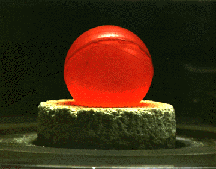
Hot tungsten can radiate as a blackbody at up to 8 MWatts/meter2.
Steffan-Boltzman      =  S        = 5.67e-8  Watt/Kelvin4/meter2
Tungsten melt                     =    3695  Kelvin
Tungsten temperature  =  T        =    3500  Kelvin
Emitted flux          =  G  =  S T4 =  8.5 MWatt/meter2
A synchrotron can make far-UV photons and x-rays. The photons aree well-focused.
An excimer laser has a range of order 1000 km.
Laser wavelength  =  w          = 126    nm            Argon excimer
Target width      =  W          =    .1  meter
Range             =  R  ~  W/w  = 800    km
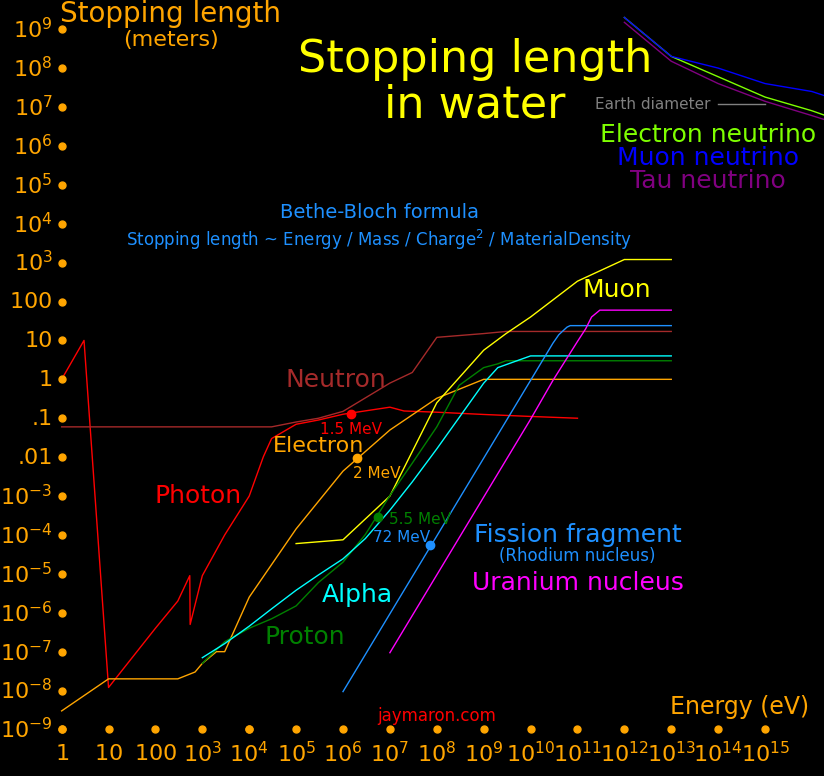
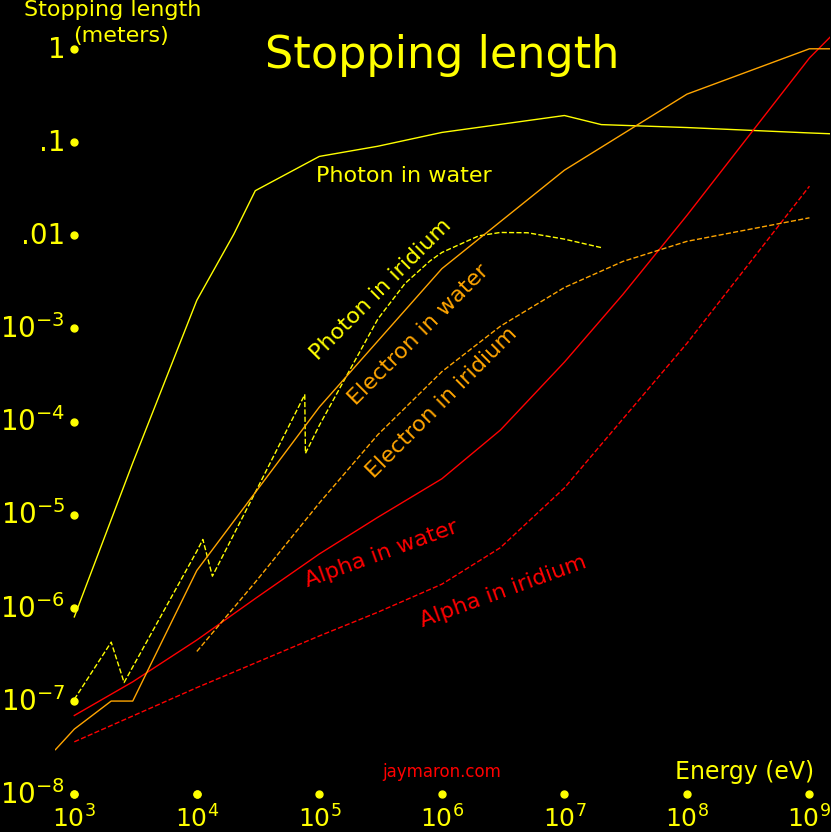
The following charts are stopping lengths for high-energy particles. As the particle stops, it makes a shower of secondary particles that travels further than the primary particle.
 |
|---|
 |
|---|
Dust can be charged and accelerated electrostatically. It can vaporize material off a target. Charged dust can have a surface electric field of up to 109 Volt/meter.
 |
|---|